Showing posts with label kefir. Show all posts

Saturday, 10 November 2018

Fermented dairy products could protect against heart attacks


Men who eat plenty of fermented dairy products have a smaller risk of incident coronary heart disease than men who eat less of these products, according to a new study from the University of Eastern Finland. A very high consumption of non-fermented dairy products, on the other hand, was associated with an increased risk of incident coronary heart disease.

Earlier studies have shown that... (the full story is here).

= = = = = = =

our view: We fully agree that fermented dairy are rich in anti-inflammatory compounds. It is not surprising that in the Med diet pyramid, cheese and yogurt occupy a lower shelf, i.e. they need to be consumed on a daily basis.
 

Wednesday, 4 July 2018

Kefir Supplementation Modifies Gut Microbiota Composition, Reduces Physical Fatigue, and Improves Exercise Performance in Mice

one more interesting paper on the value of fermented dairy products

Kefir Supplementation Modifies Gut Microbiota Composition, Reduces Physical Fatigue, and Improves Exercise Performance in Mice

(a) Effects of kefir (KF) supplementation on principal coordinate analysis (PCoA) of the gut microbiota composition in mice based on the Bray–Curtis distance measure of samples in the relative abundance profiles of an operational taxonomic unit; (b) Effects of KF supplementation on the phylum-level gut microbiota composition of mice. Only phyla with top 10 average abundances were included, with other phyla collapsed into “Others”; the effects of KF supplementation on the phylum-level gut microbiota composition of mice in the (c) KF-1X and vehicle groups; (d) KF-2X and vehicle groups, and (e) KF-5X and vehicle groups. The cladogram was generated from the linear discriminant analysis effect size (LEfSe) analysis, showing the most differentially abundant taxa enriched in the microbiota of mice in (c) the KF-1X (red) and vehicle (green) groups, (d) the KF-2X (red) and vehicle (green) groups, and (e) the KF-5X (red) and vehicle (green) groups. Significant differential abundances in LEfSe comparisons are sorted by p values in ascending order: vehicle (glucose water), KF-1X (2.15 g/kg/day KF), KF-2X (4.31 g/kg/day KF), and KF-5X (10.76 g/kg/day KF).


Abstract 
 
The present study evaluated the potential beneficial effect of kefir (KF) against fatigue. Furthermore, the composition of the gut microbiota is related to health benefits in the host; therefore, the study also investigated the effect of KF on the gut microbiota composition. Male ICR mice from four groups (n = 8 per group) were orally administered KF once daily for four weeks at 0, 2.15, 4.31, and 10.76 g/kg/day and were designated as the vehicle, KF-1X, KF-2X, and KF-5X groups, respectively. The gut microbiota was analyzed using 16S rRNA gene sequencing. The results showed a significant clustering of cecum after treatment in the vehicle, KF-1X, KF-2X, and KF-5X groups. The KF-2X and KF-5X groups showed a decreased Firmicutes/Bacteroidetes ratio compared with the vehicle group. In addition, anti-fatigue activity and exercise performance were evaluated on the basis of exhaustive swimming time, forelimb grip strength, and levels of serum lactate, ammonia, glucose, blood urea nitrogen (BUN), and creatine kinase (CK) after a swimming exercise. The exhaustive swimming time for the KF-1X, KF-2X, and KF-5X groups was significantly longer than that for the vehicle group, and the forelimb grip strength of the KF-1X, KF-2X, and KF-5X groups was also significantly higher than that of the vehicle group. KF supplementation also decreased serum lactate, ammonia, BUN, and CK levels after the swimming test. However, tissue glycogen content, an important energy source for exercise, increased significantly with KF supplementation. Thus, KF supplementation can alter the gut microbiota composition, improve performance, and combat physical fatigue. View Full-Text

Monday, 16 April 2018

Enjoy your Microbes

http://www.mdpi.com/2304-8158/7/3


Five EU member states (Estonia, Germany, Italy, Poland, Spain) have national nutrition guidelines or recommendations that include either probiotics or fermented milks containing live bacteria.

Other countries include yogurt (as part of dairy products) in their food-based dietary guidelines. It is the case in Switzerland, USA, Canada, UK, Australia, Japan, Sweden, Russia, Argentina, India and Portugal. In this case, yogurt is recommended, not for the live microbes it contains, but for its nutritional value.

So...enjoy your microbes!

In Etihad Stadium, Pep has brought his team of chefs who prepare food for all the people who work at the Stadium. All personnel in Etihad have free and quality meals with quite a few microbes
[ 1 Cup of Yogurt = 10 8-10 bacteria ]

😄


Friday, 6 April 2018

enjoy your full-fat fermented dairy !


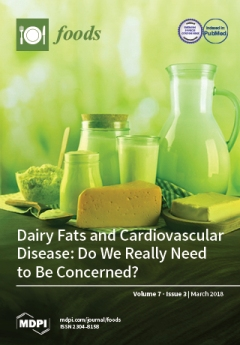
Ronan Lordan and Ioannis Zabetakis are both researchers at the University of Limerick in Ireland in the Department of Biological Sciences. They along with their colleagues recently authored a review in which they examine the effect of dairy products on the development of cardiovascular diseases. Among their findings, they noted that fermented dairy products such as yogurt and kefir had a neutral or positive effect on cardiovascular outcomes.


[you can read the full story here]

Sunday, 24 December 2017

fermentation is the Key!


I read with interest this article on food trends for 2018.

Special Ks: kefir, kimchi, kraut, kombucha

Fermented foods are filling fridges as shoppers get more gut-health aware. So far, the most impactful of this fizzing bunch is kefir, the bacteria-laden (usually yogurt-based) drink essential to balanced eastern European diets.
This year saw Russian ex-figure skater Natasha Bowes’s Bio-tiful brand get stocked nationwide by Sainsbury’s, and she’s set to unveil a new stomach-friendly creation in May. Water-based kefir sales were also up 34% at Whole Foods since last year. Meanwhile, Marks and Spencer will launch their own-brand kefir in January.

 = = =

Kefir is an ancient cultured drink rich in probiotics and known for its incredible health benefits. Its origins can be traced back more than two-thousand years to the Caucasus Mountains region, located between Russia, Turkey, Armenia, Georgia and Azerbaijan.

In FLIPS @ UL, we have an ongoing project on kefir with some interesting data on bioactivities against inflammation and CVDs.

More to come in 2018!

Happy Holidays!