Showing posts with label EPA. Show all posts

Sunday, 22 October 2023

what is going on with the water safety near Shannon Estuary?


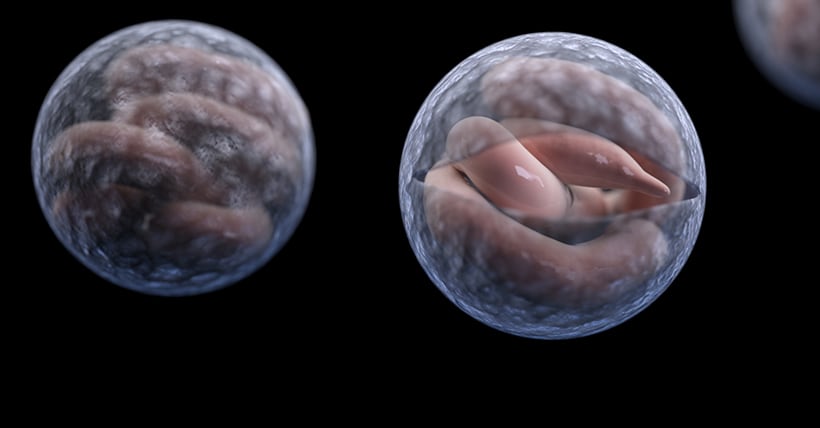
 the photos are from here : https://www.cdc.gov/parasites/crypto/index.html

 = = = = = = = = = = = = = = = = = = = = =

The news as published on Independent.

 Nearly 7,000 Limerick people impacted by boil water notice that has been in place since May.

 Erika Sassone;

Nearly 7,000 Limerick residents have been impacted by a boil water notice since last May.

A boil water notice was issued back on May 13 2023 for all Limerick residents supplied by the Foynes/Shannon Estuary Public Water Supply.

Uisce Éireann explained that the notice was issued to protect the health of the public as the water served by Foynes/Shannon Estuary PWS has been described as potentially unsafe to drink due to the detection of cryptosporidium.

[Cryptosporidium is a microscopic parasite that causes the diarrheal disease cryptosporidiosis. Both the parasite and the disease are commonly known as “Crypto.”

There are many species of Cryptosporidium that infect animals, some of which also infect humans. The parasite is protected by an outer shell that allows it to survive outside the body for long periods of time and makes it very tolerant to chlorine disinfection.

While this parasite can be spread in several different ways, water (drinking water and recreational water) is the most common way to spread the parasite. Cryptosporidium is a leading cause of waterborne disease among humans in the United States ].


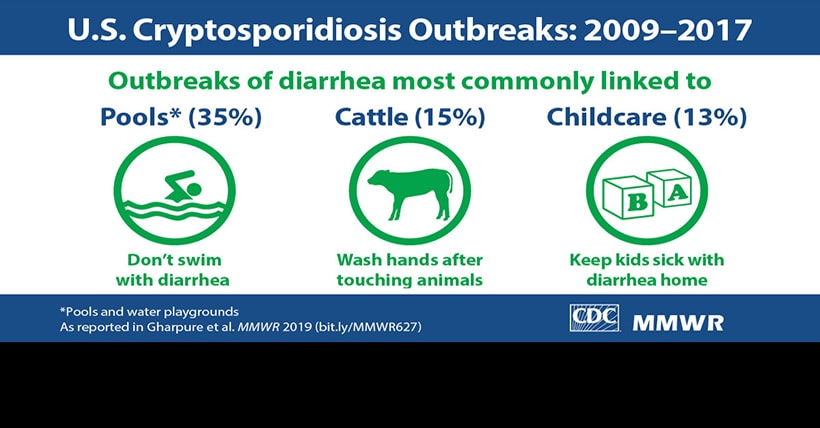
[ Cryptosporidiosis Outbreaks — United States, 2009–2017 ]


The areas impacted are Askeaton, Foynes, Ballyhahill, Loghill, Ballysteen, Pallaskenry, Kildimo and Shanagolden and surrounding areas, for an estimated residential population of 6,986 people.

Uisce Éireann ensured that works to lift the boil water notice are being carried out but, after five months, the notice is still in place.

Uisce Éireann explained they are implementing remedial measures to existing processes and are also undertaking upgrades at the plant.

Uisce Éireann’s Duane O’Brien said: “We wish to assure customers that we are working to resolve the issues at the water treatment plant and we acknowledge the impact this is having on the community. We are progressing with plans to install an ultraviolet reactor at the Shannon Estuary Water Treatment Plant. This reactor will render any cryptosporidium in the water inactive. This is a large piece of equipment, bespoke to the site and it requires a significant amount of accommodation works in advance of its installation.

“Unfortunately, there is no short-term solution available to us, and it is likely to take some months before this equipment is operational at the plant. Public health is Uisce Éireann’s number one priority and I want to acknowledge the inconvenience that this Boil Water Notice is causing to the local community.”

While drinking water experts from Uisce Éireann and Limerick City and County Council are working to rectify the issues at the treatment plant, all customers on this supply are advised to continue to boil their water before use until further notice. Customers are reminded that the water is safe to consume once boiled.

Water must be boiled for: drinking; drinks made with water; preparation of salads and similar foods, which are not cooked prior to eating; brushing of teeth; making of ice - discard ice cubes in fridges and freezers and filtered water in fridges; make ice from cooled boiled water.

What actions should be taken: Use water prepared for drinking when preparing foods that will not be cooked (e.g. washing salads); water can be used for personal hygiene, bathing and flushing of toilets but not for brushing teeth or gargling. Boil water by bringing to a vigorous, rolling boil (e.g. with an automatic kettle) and allow to cool. Cover and store in a refrigerator or cold place. Water from the hot tap is not safe to drink. Domestic water filters will not render water safe to drink. Caution should be taken when bathing children to ensure that they do not swallow the bathing water.


18 October 2023 - the text below is from here.

Uisce Éireann, in partnership with Limerick City and County Council, continues to progress works to lift the Boil Water Notice in place for customers supplied by Foynes/Shannon Estuary Public Water Supply.

The notice remains in place following the detection of cryptosporidium at the Shannon Estuary Water Treatment Plant. Uisce Éireann is implementing remedial measures to existing processes and is also undertaking upgrades at the plant. 

Areas impacted are Askeaton, Foynes, Ballyhahill, Loghill, Ballysteen, Pallaskenry, Kildimo and Shanagolden and surrounding areas. Customers can check if their property is included by visiting the www.water.ie/supply and entering the property’s Eircode or by calling the Uisce Éireann customer care helpline, open 24/7, on 1800 278 278. A map of the area is also available to view on the website. 

While drinking water experts from Uisce Éireann and Limerick City and County Council are working to rectify the issues at the treatment plant, all customers on this supply are advised to continue to boil their water before use until further notice. Customers are reminded that the water is safe to consume once boiled.

Uisce Éireann’s Duane O’Brien said, “We wish to assure customers that we are working to resolve the issues at the water treatment plant, and we acknowledge the impact this is having on the community. We are progressing with plans to install an ultraviolet reactor at the Shannon Estuary Water Treatment Plant. This reactor will render any cryptosporidium in the water inactive. This is a large piece of equipment, bespoke to the site and it requires a significant amount of accommodation works in advance of its installation. Unfortunately, there is no short-term solution available to us, and it is likely to take some months before this equipment is operational at the plant. Public health is Uisce Éireann’s number one priority and I want to acknowledge the inconvenience that this Boil Water Notice is causing to the local community.”

Uisce Éireann’s drinking water standards, as per EU Drinking Water regulations, are strict and include wide safety margins. Where risks to water quality are identified through Uisce Éireann’s enhanced testing and monitoring programme, the Health Service Executive (HSE) are consulted, and Boil Water Notices are issued to protect public health. In all instances immediate action is taken to address the cause of the issue to enable the lifting of the notice as quickly as it safe to do so, in agreement with the HSE.

Vulnerable customers who have registered with Uisce Éireann receive direct communication on Boil Water Notices. 

Water must be boiled for:

  • Drinking;
  • Drinks made with water;
  • Preparation of salads and similar foods, which are not cooked prior to eating;
  • Brushing of teeth;
  • Making of ice - discard ice cubes in fridges and freezers and filtered water in fridges. Make ice from cooled boiled water.

What actions should be taken:

  • Use water prepared for drinking when preparing foods that will not be cooked (e.g. washing salads);
  • Water can be used for personal hygiene, bathing and flushing of toilets but not for brushing teeth or gargling;
  • Boil water by bringing to a vigorous, rolling boil (e.g. with an automatic kettle) and allow to cool. Cover and store in a refrigerator or cold place. Water from the hot tap is not safe to drink. Domestic water filters will not render water safe to drink;
  • Caution should be taken when bathing children to ensure that they do not swallow the bathing water;
  • Preparing Infant Formula: Where a Boil Water Notice is in place, you can prepare infant formula from tap water that has been boiled once (rolling boil for 1 minute) and cooled beforehand. Bottled water can also be used to make up infant formula. All bottled water, with the exception of natural mineral water, is regulated to the same standard as drinking water. It is best not to use bottled water labelled as ‘Natural Mineral Water’ as it can have high levels of sodium (salt) and other minerals, although it rarely does. ‘Natural Mineral Water’ can be used if no other water is available, for as short a time as possible, as it is important to keep babies hydrated. If bottled water is used to make up infant formula it should be boiled once (rolling boil for 1 minute), and cooled in the normal way. Ready-to-use formula that does not need added water can also be used.
  • Great care should be taken with boiled water to avoid burns and scalds as accidents can easily happen, especially with children.

Updates are available on our Water Supply Updates section on water.ie, on Twitter @IWCare and via our customer care helpline, open 24/7 on 1800 278 278.


= = = 


and the ...wider picture

Urgent action needed to improve private drinking water quality, EPA warns

Latest review highlights need for legal requirement to register private water supplies to protect public health


Thursday, 5 October 2023

An (unpublished in the paper - hence published here) to the Editor of the Irish Times

 Smog city from PM 2.5 dust. Cityscape with bad air pollution. PM 2.5 concept

 = = = = = = = = = = = = = = = = = = = = = = = = = = = = = = = = = = = = = = = = = = =

PM2.5 and the Irish Cement Factory


sent: Tue 26/09/2023 11:51


Dear Sir,


We read with interest the article by Kevin O’Sullivan (Irish Times, 25th September 2023) on the risk that PM2.5 pose in relation to public health.

We would like to highlight that in December 2020, the EPA had a public oral hearing on whether or not to grant a licence to CRH (Irish Cement Factory in Mungret, Co. Limerick) to burn 90,000 tonnes of waste annually at its facility in Limerick. Included on that list are end of use tyres, animal waste, plastic, solvents etc.

Both of us are members of Limerick Against Pollution (LAP) and we presented at that EPA hearing along with a number of experts our grave concerns should a licence would be granted to CRH, but unfortunately we failed in our endeavours. Prior to the hearing LAP had organised a number of events and written a number of publications to raise public awareness should this licence be granted and the threats it would pose to public health.

Sadly, the EPA did not take into consideration our scientifically valid objections. Burning waste in Mungret will create a number of hazardous compounds that will pollute the air and with rain, they will pollute the Shannon estuary and hence the food chain.

Sadly, only time will tell how the decision to grant this licence will unfold for the thousands of people living in and around the cement plant. 


Yours sincerely,

Ms Claire Keating, Former GE Candidate for Green Party in Limerick West

Dr Ioannis Zabetakis, Associate Professor in Food Chemistry, University of Limerick


= = =

My comment  (5.10.23) : It seems that the esteemed Editor of the Irish Times did not find our letter to her/his liking. Probably, our referral to CRH (is it a state within a state?) and to EPA did not go down well.


Sunday, 12 September 2021

is US EPA corrupted?

The US Environmental Protection Agency is failing to protect children by ignoring poisons in the environment and focusing on corporate interests, according to a top children’s health official who will testify this week that the agency tried to silence her because of her insistence on stronger preventions against lead poisoning.

Read the full story here. 

Also, read here on the role of EPA and the toxic dust liberated after the collapse of the twin towers (9/11). 

So... can we claim that US EPA is corrupted? If not corrupted, it does something wrong in protecting humans' health...

More on this story, after the hearings [A hearing will be held on 13 September in which several internal EPA communications will be presented as evidence, including an email in which EPA personnel discuss using press inquiries about Etzel as “an opportunity to strike” out against her. Among many witnesses to be called to testify are several former high-level EPA officials ].


Thursday, 9 September 2021

Bush’s EPA Hid Health Risks from Toxic Dust at Ground Zero


I came across this article this morning and it is quite shocking!

According to this article: the impact of the toxic, cancer-causing smoke and dust that hung over ground zero in Manhattan as the fire burned for 100 more days was immense!

At the time, the Environmental Protection Agency told people who worked at the site and lived and went to school near it that the air was safe to breathe. In the years that followed, more than 13,200 first responders and survivors have been diagnosed with a variety of cancers and chronic respiratory and gastrointestinal illnesses. At least — well, close to 1,900 first responders, survivors and workers who recovered bodies and cleaned up the wreckage have since died from illnesses, many of them linked to their time at ground zero.


For the whole hour, we’re looking at an enraging new documentary that exposes the massive environmental and public health crisis caused by the 9/11 attack and how politicians and the EPA head, Christine Todd Whitman, the former governor of New Jersey, put Wall Street’s interests before public health in the aftermath. It also shows how 9/11 responders and survivors had to fight for healthcare justice while they were sick and dying, going to Washington scores of times, in wheelchairs, on crutches, with oxygen. Yes, tons of toxic dust fell on New York City 9/11. While concentrated in the 16-acre disaster site, wind carried the chemical contaminants throughout the city, in Manhattan, Brooklyn, Queens. 

Monday, 12 April 2021

Burning hazardous and-or toxic waste in the Irish Cement Factory


EPA has informed us today, that their decision on Irish Cement Factory will be reached by end of June 2021.

Let's remember the case.

Irish Cement Factory

The Irish Cement Factory has been built to produce cement. It has not built to burn waste, any type of waste. When the discussion comes to toxic and hazardous waste, I have some questions in relation to the toxicity of these waste and hence the toxicity of the emitted chemicals.

We need to remember that burning organic waste (i.e. waste rich in polymers, possibly tainted with heavy metals etc) is a process that can emit heavy metals entrapped in PM2.5 (particulate matter with diameter 2.5μm) and the toxicity of these PM2.5 can be extremely high as shown here.


Heavy metals and dioxins

However, it isn’t only the PM2.5 that must make us worry about the toxicity of the emissions from the chimney of any cement factory that are not built for purpose (the purpose here is the incineration of hazardous waste). Apart from PM2.5 that have entrapped heavy metals, it is the question of the carcinogenic dioxins that will be emitted to the atmosphere by burning hazardous and/or toxic waste. Dioxins are lethal. Here is what WHO have reported on the toxicity of dioxins.


Cement factories and the food chain

In the University of Limerick (UL), in the module FT4428 “Advanced Food Chemistry”, we have carried an extensive study on this problem.

Final year students of the program “Food Science and Health” at UL have worked from 4 different points of view. Some groups worked for a dairy industry in the vicinity of Irish Cement, Mungret, Ireland.

5 groups worked on assessing the production of safe foods by the dairy industry

5 groups worked as if they were working for EPA, assessing the license application (and the objections!) and operations of Irish Cement

5 groups worked for FSAI

and

3 groups worked for NGOs like Greenpeace and WWF or representing the citizens.

Each group produced a written report assessing the hazards and ways to manage them.
The results of this amazing amount of the students scholar work can be found here.


The oral hearing

The EPA has announced it will hold a virtual hearing on 2 December 2020, dealing with objections to the project from 16 individuals and groups, including the Limerick Against Pollution LAP group, the Limerick Metropolitan council, Limerick city and county council, a number of local TDs and the University of Limerick.

We are going to take part at that hearing and present our case on the:


  • Hazardous waste and the Food Chain


  • Toxicity of Emissions and the Public Health


  • Monitoring mechanisms – are they adequate?


What I am going to bring to the hearing is my more than 10 years experience working with heavy metals and the food chain as shown here and here.

Ioannis Zabetakis

Head, Biological Sciences,

UL

Monday, 29 March 2021

Investigating the abandoned quarry that, officially, is not abandoned


                The blast bunker where people would shelter during blasting at the Ballyneety quarry in                         Limerick. Picture: Dan Linehan


Source: Irish Examiner

Investigating the abandoned quarry that, officially, is not abandoned

Investigating the abandoned quarry that, officially, is not abandoned

The blast bunker where people would shelter during blasting at the Ballyneety quarry in Limerick. Picture: Dan Linehan

There is a lifebuoy next to the lake quarried out at the Ballyneety quarry in Limerick. 

The buoy is attached to a stand which states: “Area closed. No swimming in quarry.” 

Quite obviously, the warning is ignored, hence somebody thought it best to put a buoy there as a last resort. Another sign notes “Danger deep water” and another “Beware underwater obstructions”.

What is entirely missing from the lake is any effort to make it inaccessible.

There is sheer rock around most of it, and preventing entry would not be too difficult.

Over the years people have commented online on the attraction of the lake.

On the Reddit message board, one poster mentioned swimming in it and another asked whether there was any fish there.

[the full article is here]

“Nope, just a lone scubadiver, who I initially thought was the Lockness (sic) monster when I saw the moving bubbles.” 

Another wrote: “Great spot for a swim, apparently.” 

The reply: “The blue colour of quarries in Ireland is usually caused by copper leached from the stones and is not indicative of water quality and can hide hazards. Quarries are amongst the most dangerous places to swim.”


Monday, 11 January 2021

Limerick TD seeks to make EPA more accountable with new laws

 Source : Limerick Leader


WILLIE O’Dea is to bid to bring legislation holding the Environmental Protection Agency to more account, back to the table.

In the last Dail, the Fianna Fail TD bid to have a section of the act which gave life to the environmental regulator, removed, because, as it stands, it is not liable for civil actions.

The move came following calls from Limerick Against Pollution (LAP), which was set up in opposition to Irish Cement’s €10m plan for Mungret – something which was last month subject to a five-day EPA inquiry.

A ruling from the body is expected by Easter.

“No-one can ever take a civil action against the EPA for a decision they ever made. That's quite unique in Ireland. You don't have this with the Road Safety Authority or various other organisations, or public State bodies. It gives them too much licence, in my view,” Mr O’Dea said.


Tuesday, 15 December 2020

Third of Irish rivers and a quarter of lakes fail water quality standards

 source: The Irish Times.


More than a third of Irish rivers and a quarter of lakes are failing to meet environmental quality standards due to high levels of polluting nitrates and phosphates, according to a new assessment.

The Environmental Protection Agency’s report for 2019 finds that more than a fifth of groundwater, which is a critical source of drinking water, has high nitrate concentrations, as does a fifth of estuarine and coastal water bodies. Just over half of rivers and lakes have high or good biological quality.

The main threat to water quality is the presence of too many nutrients in the form of phosphates and nitrates arising from agriculture and waste-water discharges. “Nutrient concentrations in waters are too high and the trends are going in the wrong direction,” the EPA’s Water Quality Indicators report finds.

Monday, 30 November 2020

EPA's oral hearing


A very important oral hearing will take place this week.

You can view the agenda items and how you can participate at the hearing here.

I am going to talk on Thursday morning and express my great concerns as shown here.

Wednesday, 21 October 2020

White paper on Nutritional status in supporting a well-functioning immune system for optimal health with a recommendation for Switzerland


  An expert panel has written a white paper with a set of recommendations regarding the diet and micronutrient supplement needs of the Swiss and wider European population in order to support immunity during the COVID-19 pandemic. 

Their recommendations (page 8 of the white paper) include:

Vitamins C and D, DHA and EPA, Selenium and Zinc.

for EPA and DHA, they suggest 500mg /day but this is wrong as we have explained here.

The strange thing is that they quote this paper of Calder et al which suggests a daily intake of EPA and DHA of 250mg/day but in their own white paper, they feel that 250mg is low and they double it to 500mg/day.

Junk science. 

Sunday, 19 July 2020

Incinerators lay pollution waste (upd)


Letter to the Editor; Sunday Times; 19.7.2020


Incinerators lay pollution waste 

With regard to your report “Meath incinerator seeks to double hazardous waste capacity” (News, July 5) the identity of the “hazardous waste” is not fully known.

Furthermore, the system in place for monitoring gas emissions and other by-products (heavy metals?) raises doubts as to whether it can properly monitor pollutants in real time, and make the data publicly available on a continuous basis. Cross-contamination of water and the food chain cannot be excluded, given the limited data. Without this information in place, how can the Environmental Protection Agency grant an operational permit? Furthermore, the “Trojan horse” process by which polluters can apply for incineration licences and return later to apply for significant increases in gross tonnages, and the right to burn new types of hazardous waste, effectively allows them to evade scrutiny.
CRH in Platin was originally granted a licence to incinerate 120,000 tons of waste. Their latest application would increase this to 600,000, with significant increases in the proportion of hazardous materials.
Claire Keating, Derek O’Dwyer, Ioannis Zabetakis, Limerick


= = = =
here is the full letter as sent to ST.


Letter to the Editor -   Sunday Times
                                                                                                                                 Limerick, 14th July 2020
Dear Sir,

With regard to the report of Colin Coyle “Meath incinerator seeks to double hazardous waste capacity” Sunday Times 5.7.2020, we would like to highlight the following points:
1.       The identity of “hazardous waste” is not fully known at the time of application for permit.
2.       The monitoring system of gas emissions and other by-products (heavy metals?) that is in place raises some doubts around its efficacy to properly monitor pollutants in real time and make these data publicly available on a continuous basis.
3.       Possible cross-contamination of water (inland or sea) and the food chain can not be excluded given the limited data known at the time of application. Without this information in place, how can EPA grant operational permit?
4.       Lastly, there is clear conflict in how incineration (and any other possibly polluting) processes are monitored across EU. In all member states, the authority with responsibility for granting the operational permit (license) is the same authority that monitors the legal operation of the facility.  In Ireland’s case, it’s the EPA. This effectively prevents the EPA from effectively applying “the polluter pays” principle which dictates that the polluter has to pay the full amount to compensate total environmental damage (in case, for example, of a possible leak of heavy metals).
5.       Furthermore, the “Trojan Horse” process by which polluters can apply for incineration licenses and return later to apply for significant increases in gross tonnages and rights to burn new types of hazardous waste allows polluters to evade scrutiny and mask legitimate public concerns on their longer-term intentions. For example, CRH in Platin were originally granted a license to incinerate 120,000 tonnes of waste. Their latest application would increase this to 600,000 tonnes per annum with significant increases in the proportion of hazardous materials.


Sincerely,

Claire Keating, Derek O’Dwyer
Limerick Against Pollution, Limerick
and Ioannis Zabetakis, Lecturer, Univ. of Limerick

P.S. Hong Kong incineration plans blasted by Prof Paul Connett - who advocates Zero Waste