Showing posts with label Limerick. Show all posts

Wednesday, 6 December 2023

Parthenon Marbles: an interesting article on the Irish Times

the article is behind a pay wall so here it is.


Visitors look at the Parthenon Sculptures, also known as the Elgin Marbles, at the British Museum in London. Photograph: Andy Rain/EPA

my comment: it's unethical to call them Elgin Marbles, i.e. giving to the Marbles a name of a thief!

Irish Times should know better!


 = = = = = = = = = = = 

Britain’s post-colonial reckoning with its sins of the past

London Letter: the Greek friezes are not the only artefacts to end up in the British Museum in dubious circumstances


The British Museum in Bloomsbury, just north of London’s West End, has received about five million visitors this year. The bulk of them must have showed up at the same time as I did one Saturday lunchtime this summer. The queues were as biblical as any of the ancient masterpieces on display.

Lesson learned. Unless you go at an ungodly early hour, the best time to visit at the weekend is at about 3.45pm. Queuing time is minimal and once you have a clear idea of what you want to see and stay laser-focused, you will still get an hour in relative peace before staff begin ushering you out.

Last Sunday at 3.45pm we sailed through the security check and joined the human river flowing through the front door. The biggest individual stream usually peels off immediately upstairs to rooms 62 and 63. That’s where you find the mummies – the Egyptian kind, not the London ones in Lululemon yoga gear and pushing Bugaboo prams at high speed.

On Sunday, however, a large portion of people entering for the final hour swung left inside the museum’s main foyer and headed for room 18, the gallery that houses the Parthenon Sculptures.

Known to many in Britain as the Elgin Marbles, they are the collection of friezes originally from the ancient temple on the Acropolis in Athens that the Greek government is demanding be returned. The then British ambassador to the Ottoman Empire Lord Elgin, took the artworks out of Greece in shady circumstances over 200 years ago.

Talk of the issue inevitably dredges up imperial Britain’s reputation for foreign plunder. It may be the British Museum, but it is the rest of the world’s clobber.

The Parthenon Sculptures were at the centre of a big political row last week after Britain’s prime minister Rishi Sunak, intemperately cancelled a meeting in London with his Greek counterpart Kyriakos Mitsotakis, who had complained on the BBC about the friezes being in the UK.

The publicity may have spurred the interest of some of Sunday’s crowd, as it had mine. My greek is limited to how to order a beer, which I learned on Kefalonia in July, but the unmistakable sound of the language could also be heard among the chatter. Probably a mixture of patriotic expatriates and Greek tourists.

The marbles are housed in a huge, windowless gallery that was funded by a controversial art dealer, Lord Duveen of Millbank. His name is carved in huge letters high on the wall, like the imprint of a Greek god. The sculptures themselves are remarkable, but the atmosphere in the room is strained by the sheer volume of people bumping and side-winding around.

Its artefacts include a clatter of items that were sent across the Irish Sea and down to London during British rule

The British Museum, chaired by former chancellor George Osborne, has in public taken a more diplomatic attitude to the dispute than Sunak. Yet there was little information on display in Duveen’s great hall on Sunday about the row with the Greeks.

For an even better case of post-Brexit Britain’s reckoning with itself over its plundering imperial past, you’re better off leaving the crowds of room 18 behind. Instead, head downstairs to room 25, the Africa Gallery. This far quieter space houses the Benin Bronzes, a collection of 16th-century metal sculptures from an ancient kingdom that is now in Nigeria.

The museum doesn’t flinch in its British-bashing appraisal of how it came to be in possession of these intricate pieces from a land so far away. The storyboard on the wall in room 25 attributes it to “colonial conquest and military looting” by British forces in Africa at the end of the 19th century. It recalls how Benin city suffered a “violent and devastating occupation” by British forces, who “plundered” its palaces and brought the bronzes to Britain as “spoils of war”.

The Nigerian government has in recent years been making noises about their potential return. Many other museums around Europe and the US also have Benin Bronzes that were looted by the British, before being sold abroad. Germany has a huge collection. The British Museum and others are in talks with the royal palace of the Oba of Benin, which still exists inside modern-day Nigeria, to scope out where the bronzes may be kept in the future.

Meanwhile, patriotic Irish people should stay out of the British Museum’s room 41. Its artefacts include a clatter of items that were sent across the Irish Sea and down to London during British rule. They include the 1,500-year-old St Cuilean’s Bell from Tipperary and the 1,000-year-old Kells Crozier, which mysteriously appeared in a London solicitor’s office in the 1850s.

= = = = 

My comment: it's interesting that in the REPUBLIC of Ireland, there are so many colonial names. Two examples from Limerick: Plassey House in UL, Plassey business park (Plassey was a place in India), Tait House (Tait was making uniforms for the British Empire!).

On Tait's monument, we can read that "Designed by William Edward Corbett with an acknowledgement to the design of Big Ben in London. It pays tribute to Alderman Peter Tait the Scottish entrepreneur who owned the nearby Tait factory, which supplied the British Empire with uniforms"...

Today, in Limerick in 2023, do we need to have a monument (erected in 1867!) like Big Ben of a man with such history, a monument ?

No further comments... 

But, it's high time to break bonds with the colonial past and Ireland moves forward to a true Irish spirit paying tribute to Irish People, Scientists - Politicians - Members of the Public.



Thursday, 26 October 2023

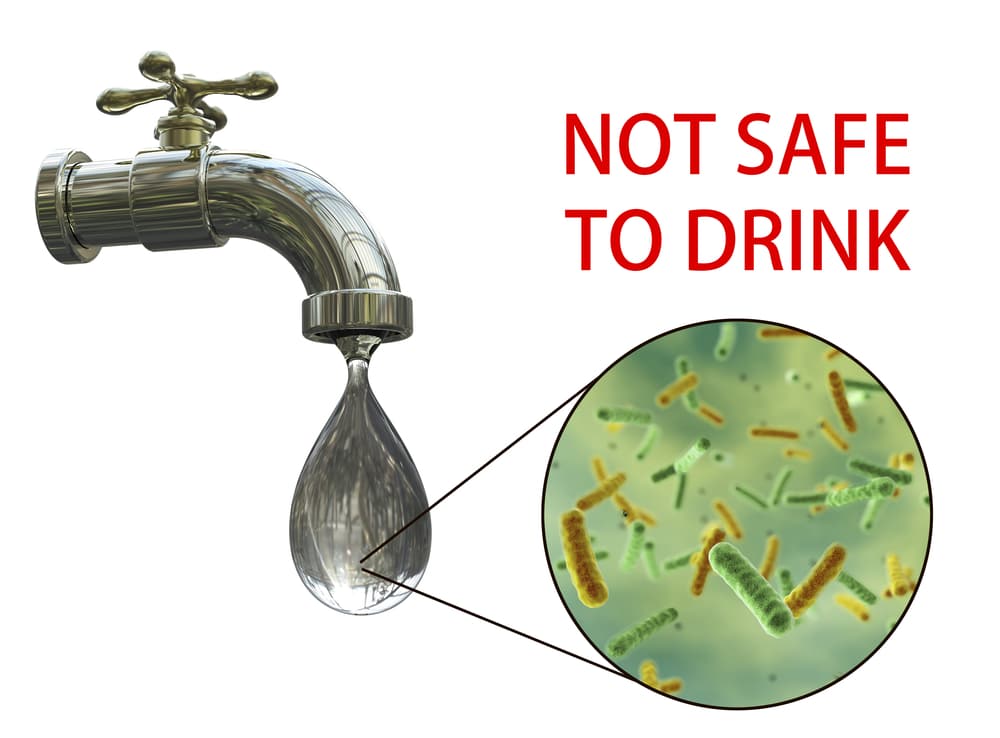
Μη πόσιμο νερό στην πολιτισμένη Ιρλανδία


Οι κάτοικοι του Λίμερικ πρέπει να… βράζουν το νερό!

Στο σημερινό μου σημείωμα θα ήθελα να αναφερθώ στο πρόβλημα που αντιμετωπίζουν 7.000 άνθρωποι στην πόλη του Λίμερικ, στη Δυτική Ιρλανδία.

Το νερό που τρέχει στις βρύσες τους είναι μολυσμένο με ένα μικροργανισμό ονόματι Cryptosporidium  ο οποίος είναι ένα μικροσκοπικό παράσιτο που προκαλεί μια μορφή διάρροιας που ονομάζεται  cryptosporidiosis. Τόσο το παράσιτο όσο και η ασθένεια ονομάζονται «Crypto».

Οι κάτοικοι πρέπει να βράζουν το νερό, το οποίο τους παρέχεται από την υδροδοτούσα εταιρεία του Δημοσίου: Foynes/Shannon Estuary Public Water Supply.…


[η συνέχεια εδώ]

Friday, 11 November 2022

Limerick has evolved into a student city

 LIMERICK has evolved into a student city with latest figures showing the city is now home to just under 30,000 students studying in University of Limerick, Technological University of the Shannon and Mary Immaculate College.

And with a further 15,000 full and part-time students undertaking post-leaving cert or further education courses, it shows the potential that Limerick has to harness the power of students to create a vibrant and busy city from a retail, hospitality and cultural standpoint.


the full story is here.

Thursday, 23 July 2020

Metrics vs Optics (cycle lanes and Education)


 Metrics: this is a car speedometer: it measures the speed.

= = = = = = = 

 In front of us, here, it's Shannon Bridge, Limerick, as we approach the city centre.
There are two cycle lanes, one going towards the city, one outwards. Probably the first cycle lanes in Europe that are designed like that. Contra flow so near each other. My friends in Paris, Milan, Amsterdam...well...they haven't seen anything like that, anything designed in such an inefficient way...
I call this photo : Optics (I)
The photo on the right is Optics (II).
If you cycle outwards the Limerick City Centre, you have crossed the Shannon Bridge and here you are...the cycle lane ends here...look what you have in front of you. Wall of cars! Do you expect a young kid to be able to cope with this?

Can you see now the Optics?
Limerick City Council wants to show us that it cares and it created cycle lanes but what about if these lanes are NOT fit for purpose?

Shut up Yanni! This is OPTICS.

= = = = = = =

Metrics vs Optics
In any job, in any activity, in any procedure, we need to be able to evaluate certain things, productivity, efficiency, customer satisfaction, etc.
In Managerial terms, we call them KPIs (Key Performance Indicators)
Here are the KPIs fundamental concepts: for a KPI to be effective, it needs to have:

  1. a measure
  2. a target (over a time period, i.e. a month? a year? a century?)
  3. a reliable data source (to avoid grey areas on how it's measured and tracked)
  4. a reporting frequency (in relation to point 2 above)
Two case studies:

1. Let's revisit Optics I and Optics II as presented above.
Let's think of KPIs.
For example, how many kilometers of cycle lanes have they been created in a city since March 2020? Barcelona?
Milan?
Athens?
Dublin?
...Limerick???

2. Education 
Which KPIs should be used there?
Student satisfaction?
Student employability?
Number of students per class?
Amount of € invested in an education unit per student per year?
Number of new courses/modules created in a year?
How can we reliably measure innovation?
These should be the metrics (see photo at the top of this blogpost).

And about the optics?
Here they are...Minister of Higher Education,  Simon Harris, announced yesterday a €168 million package of supports for further and higher education, which includes funding for digital devices for students, mental health supports and research.

Here is the breakdown:
  • €14m to institutions to recognise the personal protective equipment they provided
  • €34m online investment
  • €48m  to deal with disruption to research
  • €1.2m for additional research
  • €15m for student access technology such as laptops
  • €3m  for student mental health and well-being
  • The student assistance fund will be doubled from €8m to €16m
  • There will be an additional €2m funding for students with disabilities
The optics.

The metrics...will come later, if ever...

Yannis Zabetakis
Head, Biological Sciences
UL
  

Sunday, 7 October 2018

3 years ago...

it was exactly 3 years ago when I came to UL for the first time.
6th Oct 2015: 08.40 I gave my presentation; 13.00 my interview finished and 14.00 I was offered the job!

Since then, i.e. the last 3 years have been an exciting Journey!

Here are some photos that I took yesterday, on the 3rd anniversary of my (initial) job interview at UL (I had another one, successful as well, last June).

Enjoy these SEVEN (7) photographs.

and ...

#ThinkBigAtUL

Absolute Hotel @ Limerick ; where I spent two nights in October 2015, my first nights in Limerick

Julio, my friend and fishmonger @Milk Market
hmmm, the BEST salmon in the World! (watch this space!)


6th Oct 2018, glorious Sky


getting ready for co-coaching a big match

pumping up caffeine

Coach and Friend, Paul Horkan, empowering our team against Aisling Annacotty, FT Aisling - Corbally United 1-5! A day to remember!


#ThinkBigAtUL


Dr Ioannis Zabetakis
Head of the Department - Lecturer (Food Lipids)
Department of Biological Sciences
University of Limerick

Monday, 20 August 2018

Glyphosate and Cancer (part III)


It looks that it is a matter of political and scientific will!
Dublin and Limerick councils are experimenting with glyphosate replacements.
If people want to replace carcinogenic weedkillers (aka Glyphosate); solutions exist!
The next step would be for the farmers to have a similar to the ones of the local councils reaction. Some immediate guidance from the corresponding ministries is urgently needed so appropriate guidelines are issued for the farmers around the country.

I.Z.


Wednesday, 11 July 2018

Pneumonia and UHL

Two weeks ago (27th June), my younger son (T), was referred to A&E in UHL with suspected pneumonia. The doctors said that X-ray and all tests were clear, T came home.
5 days later, Monday 2nd July, we were contacted by UHL and asked to take T back, the 27th June X-ray was not clear...So, Thiseas had a second X-ray on Monday 2nd July (worse than the 1st one) and he was hospitalised for 5 days till Sat 7th July.
This morning the bill (5days x 80 euros /day =400 euros) arrived home.
These are the facts...


Conclusions:
1. nobody knows why they messed up with the initial reading of the 1st x-ray; nobody explained to us why it took them 5 days (from Wed 27th June to Mon 2nd July) to let us know about their mistake...
2. they are very quick in chasing the money.
3. this is our first experience of Irish HSE...NOT a good one, Mr Harris.
4. Some investigation on point 1 would be useful so future Xray in A&E in UHL (U stands for University, ironically) diagnosis is correct and quick, not like T's...

Dr Ioannis Zabetakis
UL