You don't become a champion when you win.
You become one through the standards you live by long before anyone recognizes you. How you practice. How you prepare. How you respond when things get hard. The championship is the result. The standard comes first.This blog is fanatic about FunFood (i.e. FUNctional Food to make us happier and healthier).
Friday, 30 October 2026
Thursday, 29 October 2026
The myths around cholesterol
Testosterone is made from cholesterol.
Oestrogen is made from cholesterol. Progesterone, the hormone that holds a pregnancy, is made from cholesterol. Cortisol, the hormone that gets you through a crisis, is made from cholesterol. Vitamin D is made from cholesterol, by sunlight, in your skin. The bile that digests your fat is made from cholesterol. Every cell in your body is wrapped in a membrane stiffened with cholesterol. Every nerve is insulated with myelin packed with cholesterol. Your brain is 2% of your body weight and holds about a quarter of your cholesterol. Breast milk is loaded with it, because a baby's brain can't be built without it. Most infant formula has almost none. Pregnancy raises it by up to half, because building a human takes a lot of it. Eat less of it and your liver simply makes more, because the body refuses to run without it. Then, in the late 1970s, we declared war on it. Around 8 million people in England now take a pill to lower it. That pill raises the risk of diabetes by about a tenth. Sperm counts have more than halved. Men's testosterone has been sliding about 1% a year, age for age. Antidepressant prescriptions in England have more than doubled since 2008. And in people over 70, the lowest cholesterol tracks with dying soonest. Reports from the front say the war is going well.books and wine
Think not of the books you’ve bought as a “to be read” pile. Instead, think of your bookcase as a wine cellar. You collect books to be read at the right time, the right place, and the right mood.
— Luc van DonkersgoedWednesday, 28 October 2026
Some happy faces
This is from a friend and colleague in Belgium.
Public health nutrition and dietetics never recovered from this neo-puritan reform project of treating the human body as something that needed to be saved from itself. Harvard’s idea of a “healthy” diet remains, at bottom, little more than contempt for life.
Tuesday, 27 October 2026
Are we like books?
"We are like books. Most people only see our cover, the minority only read the introduction, many people believe the reviews. Few will know the content."
Émile ZolaThursday, 22 October 2026
New publication by our team
Nutraceutical potential of caprine milk products: emerging cardiometabolic health perspectives
Highlights
- •Caprine dairy products are a rich source of bioactive peptides and lipids.
- •Emerging evidence suggests cardiometabolic and anti-inflammatory benefits.
- •Robust, adequately powered trials are needed to establish health associations.
Abstract
Sixty years of fighting hunger yielded results but another food crisis looms
T
he world is facing a food crisis in late 2026 and well into 2027. Three key factors are responsible.
Nearly 300 million people suffer from severe food insecurity as a result of protracted conflicts, with Sudan the most notable example, and climate change.
The Russia-Ukraine and Middle East conflicts are disrupting flows of grain, fertiliser and energy which will impact on the production of crops of wheat, maize and rice in 2027.
The coming El Niño is likely to be the most severe in recorded history. The 2023-24 El Nino led to the worst Southern African drought in more than a century, with more than 60 million people requiring humanitarian assistance.
[to continue reading, here]
Tuesday, 20 October 2026
High-density lipoprotein cholesterol and all-cause mortality by sex and age: a prospective cohort study among 15.8 million adults
Story Imagine tracking almost 15 million adults for nearly nine years and counting every death from heart disease and stroke. That’s exactly what Korean researchers did with 14.9 million people who weren’t even taking cholesterol drugs. What they found doesn’t match the simple message that “the lower your LDL, the safer you are.” Instead, the risk formed a U-shape. People with very low LDL died more often from cardiovascular causes, people with very high LDL also died more often, and the sweet spot sat right in the middle.
For overall cardiovascular death the lowest risk landed between about 90 and 149 mg/dL. Below that range or well above it, deaths went up. The pattern changed depending on the exact problem. For heart attacks and blocked arteries the best zone was lower (around 70–114 mg/dL). For some types of brain bleeds the risk kept falling only when LDL stayed higher. In plain terms, driving LD as low as possible protected against one kind of death while raising the risk of others.
When the scientists looked only at the higher range (100 to 300 mg/dL) they still saw a clear rise in heart-attack deaths as LDL climbed. Each jump of about 40 mg/dL raised the chance of dying from ischemic heart disease by roughly 26 percent. But that rise was weaker in women and in older adults than in younger men. Even people in their late 70s and early 80s still showed some extra risk from higher LDL for heart attacks and ischemic strokes, yet the overall picture never became “lower is always safer.”
The study is huge, it followed real people instead of just guessing from lab tests, and it only looked at folks who were not already on statins. That makes the U-shape harder to wave away. Doctors still treat high LDL when people already have heart disease or several risk factors, because the top end of the curve is real. But the data also show that pushing every healthy adult toward rock-bottom LDL numbers is not free. Too low carried its own price in this massive population.
The takeaway is simple and uncomfortable: LDL cholesterol is not a one-way street. In nearly 15 million Koreans the safest zone for dying of cardiovascular disease was not the lowest number on the lab report. Both extremes cost lives. That single finding from one of the largest studies ever done keeps forcing the same awkward question—how low is actually low enough, and for whom?
= = =
Our comment:
see my latest book:
Preventing Inflammation and Cardiovascular Diseases
Sardinian village where more women reach 100 may be new centenarian ‘blue zone’
The secret to longevity is being a woman – specifically, a woman in one part of Sardinia. At least, that is the conclusion of a study on centenarians in a tiny mountain village on the Italian island.
Sardinia became known as a haven for longevity, especially for long-lived men, in 1999 when a cluster of remote villages nestled in the slopes of its central and eastern provinces were classified among the world’s five “blue zones” – geographic areas with high concentrations of centenarians.
Now Bolotana, located in the Margine area of central Sardinia about 70 miles (110km) from the island’s original blue zone, has emerged as a new potential candidate, researchers say, generating centenarians every year in a trend driven by women.
A study by professors at Sardinia’s University of Sassari and the University of Alabama at Birmingham in the US, published in the scientific journal Frontiers in Aging, found that 13.8% of women in the village who reach the age of 70 will live to 100 – placing it second in the world for female longevity after Hong Kong.
[to continue reading, here]
Thursday, 15 October 2026
Η νόσος λεύκη και ο ρόλος του ελαιολάδου
Ο Κωνσταντίνος είναι ο Δάσκαλός μου που με εισήγαγε στον πανέμορφο κόσμο των λιποειδών και των αιμοπεταλίων. Πολύτιμος φίλος τώρα.
- - -
Μια νέα υπόθεση για την παθογένεια της λεύκης με πιθανή εμπλοκή του PAF. Ο πιθανός ρόλος του ελαιολάδου
Τί είναι η λεύκη
Η νόσος λεύκη είναι χρόνια, επίκτητη δερματοπάθεια που χαρακτηρίζεται από απώλεια μελανοκυττάρων και αποχρωματισμό. Δεν είναι όμως απλώς “απώλεια χρώματος”, αλλά είναι νόσος όπου η γενετική προδιάθεση και το στρες του μελανοκυττάρου οδηγούν σε αυτοάνοση καταστροφή του μελανοκυττάρου. Στην νόσο αυτή, τα κυτταροτοξικά CD8+ Τ-λεμφοκύτταρα επιτίθενται στα μελανοκύτταρα, και η νόσος προκαλείται μέσα από μια συγκεκριμένη βιοχημική πορεία σηματοδότησης της νόσου, ενώ συγχρόνως εντείνονται οξειδωτικοί μηχανισμοί και αυτοανοσίας, χωρίς όμως να είναι γνωστή η ακριβής χρονική αλληλουχία, δηλαδή προηγείται το οξειδωτικό στρες ή αυτοανοσία. Τελικά η νόσος φαίνεται να προκύπτει από συνδυασμό γενετικής ευαλωτότητας, κυτταρικού οξειδωτικού στρες και αυτοανοσίας.
[η συνέχεια εδώ]
The greats embrace the boredom of consistency
Derek Jeter shares a masterclass on preparation and mindset.
"My biggest thing in life that makes me most uncomfortable is being unprepared. And that's in anything." "You hear athletes talk about the game speeds up or slows down. Well, it slows down when you're prepared. Speeds up when you're unprepared." That's the difference. Preparation helps you feel ready for what can and will arise. "Every time you're in a situation, I've already gone through it in my head." "If you have the same approach to a spring training game as you do a World Series game nothing changes." The moment doesn't get bigger - you stay the same. That's the secret. The greats embrace the boredom of consistency. They aren't clutch because they rise to the occasion. They're clutch because they've already been there a thousand times in their mind. (Tuesday, 13 October 2026
New publication by our team
Pasture versus indoor feeding systems differentially affect the composition of polar lipids of Cheddar cheeses and their antiplatelet properties against platelet-activating factor
Highlights
- •UHPLC–HRAM-MS/MS revealed feeding-dependent cheese polar lipid profiles.
- •Pasture feeding increased bioactive polar lipid species in Cheddar cheese.
- •Clover-fed cheese exhibited the greatest antiplatelet activity in vitro.
- •Phosphatidylcholine, phosphatidylethanolamine, and sphingomyelin species may antagonise PAF.
- •Feeding strategy influences the functional properties of dairy products.
Abstract
André Gide has said
“Everything has already been said; but since no one was listening, we must always start again.”
Friday, 9 October 2026
Mood vs Plan
One of the most underrated skills
you can learn is
the ability to ignore your mood
and stick
with the plan
Statins
Statins have been sold for nearly forty years. In that time the proof they save lives has got thinner, and the number of people told to take them has kept climbing.
Thursday, 8 October 2026
University education has become meaningless – and now it doesn’t even promise a job
From Irish Times - 8/10/2026
This opinion article is behind a paywall.
So, here it is:
We have made education transactional and have forgotten that learning is a good in and of itself
Un parfum de guerre civile” – or “whiff of civil war” – is how the centre-right French newspaper Le Figaro described the atmosphere in Britain in August 2024. The streets of the north east of England and beyond had been consumed by angry and destructive rioters in the wake of the Southport killings.
Rich, I thought, coming from the French. Burning upturned bins and firing missiles at law enforcement is just as Gallic as burgundy, rillettes and smoking. A nation built on enlightenment values and the rationality of Montesquieu sometimes succumbs to a destructive and often bloodthirsty id.
I recommend The Rest is History’s recent series on the French Revolution for anyone in search of a refresher.
But even given France’s state of semi-perma rioting, the recent civil disobedience stands out. Partially because – not being a rural French working class business owner – I found it hard to relate to the gilets jaunes, to properly parse their politics. But mainly because the source complaint of the protesters now is something universally understood; something central not just to the social health of the French republic but to the values of the West. That is the state of education.
It started with teenagers angry about the conditions of their schools: buildings that are inadequately designed for the extremes of French weather; decrepit and decaying classrooms; classes that have too many pupils; bathrooms with no soap. Then university students joined in, teachers too.
As is always the case, the root problem has somewhat been lost and what was a narrow complaint has spiralled into an omnivore movement: police brutality, vague and directionless frustration with government.
But never mind that for now. The kids have a point. Even though France spends a comparatively higher amount of GDP on the education system – 0.3 percentage points higher than the European average, and 2.4 percentage points above Ireland (although the usual caveats to any data point as a percentage of Ireland’s GDP apply) – students complain about a lack of resources, shoddy buildings and a shortage of teachers. And so who is surprised? First, they are French: protesting is what they do. But second – everyone has to go to school, everyone has time to develop strong feelings about how it should work and what fairness looks like, how high the ceiling and the floor should be set. Given the decrepitude described, this episode seems inevitable. Or to make a long point short, if I were a French teenager I would be rioting too.
And maybe if I was still an Irish teenager, I would be as well. Because aside from the peculiarities of the French system, the riots speak to a bigger existential moment for education systems everywhere.
[ French prime minister to address nation as school protests escalateOpens in new window ]
I worry that somewhere in recent decades, maybe even years, we have forgotten what school – and university – is for. No matter the quality of the facilities: the small class sizes, the state of the art interactive whiteboards, the AstroTurf hockey pitches in the school colours, the sleek labs and Home Ec kitchens – or any other accoutrement of the Dublin private school in 2026. This is not France. But what is the point of any of that without properly articulating the philosophical goals of an education?
Friends who are teachers report on a cohort of students who can’t or won’t read anything beyond summaries of books. I speak to academics from my alma mater university who regularly tell me – head in hand – about whole classes who refuse to sit handwritten exams, who believe the function of an education is not to acquire knowledge but to learn how to effectively extract information from ChatGPT.
In England, when Rishi Sunak suggested making mathematics compulsory for all students until the age of 18, it was though he had announced conscription. The children can’t possibly handle something so challenging, the detractors responded, blinded by the bigotry of their low expectations.
And so, in place of literature and standards, we have opted for something far more transactional – an “education” in exchange for the promise of a job. We hand out meaningless degrees to students who don’t really want them because – in Ireland especially – we have functionally made third level qualifications a necessary condition for office employment. School and university are spiritually transforming into training grounds for the workplace – just at the same time that AI looks set to eradicate a huge number of entry level corporate jobs.
It is the worst of both worlds – to forget that learning is a good, in and of itself, while not even being able to follow through on the promise that it will at least lead to work. I think about the French classrooms falling apart, a tragedy in a nation that really is the historical epitome of Western civilisation. They are right to protest. And then I look beyond France and wonder, huh – why does no one else seem so angry?
Wednesday, 7 October 2026
Nobel Prize for Chemistry: Henri Kagan and Kenso Soai honoured for their work on asymmetric organic synthesis
The pair have been awarded the 2026 Nobel Prize for discoveries that have enabled chemists to drive chemical reactions that lead to homochirality.
= = =
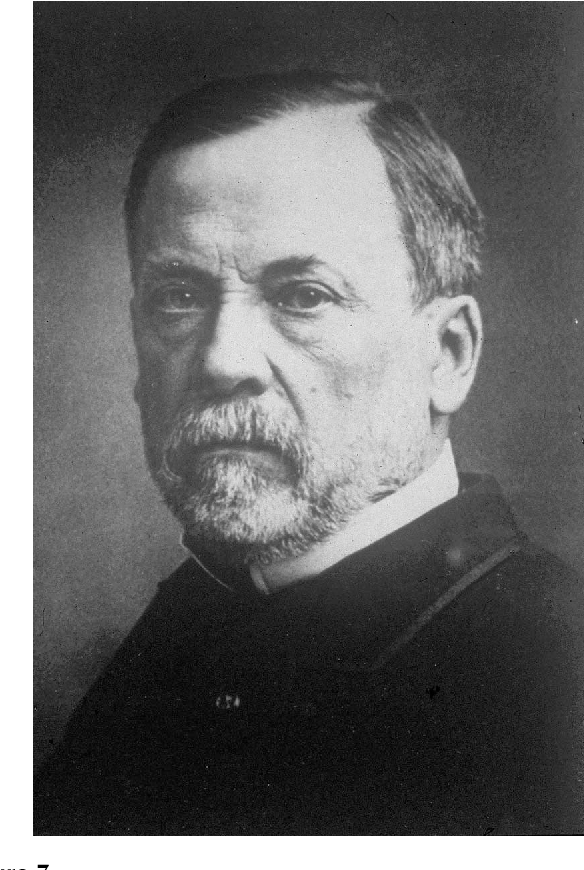
In the lecture theater, we have discussed the chirality : Nature loves L-amino acids and D-sugars! Look also at the work of Pasteur on chirality
Pasteur and chirality: A story of how serendipity favors the prepared minds
= = =
The 2026 Nobel Prize in Chemistry has been awarded to Henri Karan and Kenso Soai for their discoveries of new ways to manipulate chemical reactions. For you chemists out there, the official recognition reads, “for the discovery of non-linear effects and autocatalysis in asymmetric organic synthesis.”
Some molecules, like amino acids, exist as two variants, like your hands, that are each other’s mirror image. These mirror images reflect the fundamental chemistry of life — a state that chemists call homochiral, from the Greek words for “same” and “hand.” However, in living organisms only one of these mirror images is usually found. How this type of chemical asymmetry can occur has been a mystery to chemists for a long time. Henri B. Kagan and Kenso Soai have been awarded the Nobel Prize in Chemistry 2026 for discovering a solution to this puzzle.