Showing posts with label fermented dairy. Show all posts

Tuesday, 21 June 2022

new paper from our group: Fermentation Enhances the Anti-Inflammatory and Anti-Platelet Properties of Both Bovine Dairy and Plant-Derived Dairy Alternatives


Figure 1. The anti-inflammatory and anti-platelet potency of bioactive PL (A), TL (B), and NL (C) from fermented and non-fermented plant-derived dairy alternatives, versus bovine milk and yogurt. The anti-inflammatory and anti-platelet potency of lipid bioactives from all samples were assessed against human platelet aggregation induced by the inflammatory and thrombotic mediator PAF (anti-PAF effects in blue bars) or by a classic platelet agonist, ADP (anti-ADP effects in yellow bars). Results are expressed as means of the IC50 values (half-maximal inhibitory concentrations) in µg of lipid extract in the aggregometer cuvette that causes 50% inhibition of PAF/ADP-induced platelet aggregation (the lower the IC50 value for a lipid extract the higher its inhibitory effect against the specific agonist of platelet aggregation). * Denotes statistically significant difference (p < 0.05) when the strongest anti-PAF potency (IC50 value) of the most bioactive lipid extracts were compared with those of all the other samples. # Denotes statistically significant difference (p < 0.05) when the intermediate anti-PAF effects of the PL bioactives from the samples assessed were compared with those showing the lowest anti-PAF effects. † Denotes statistically significant difference (p < 0.05) when the anti-PAF potency (IC50 values against PAF) of the lipid bioactives from a sample was compared to its anti-ADP potency (IC50 values against ADP) of the same sample. Abbreviations: PL: polar lipids; TL: total lipids; NL: neutral lipids; PAF: platelet-activating factor; ADP: adenosine 5′ diphosphate; CPBM: Commercially Purchased Bovine Milk; HMFBM: Homemade Fermented Bovine Milk (Homemade Yogurt); CPFBM: Commercially Purchased Fermented Bovine Milk (Commercially Purchased Yogurt); HMAD: Homemade Almond Drink; CPAD: Commercially Purchased Almond Drink; HMFAD: Homemade Fermented Almond Drink; CPFAD: Commercially Purchased Fermented Almond Drink; HMCD: Homemade Coconut Drink; CPCD: Commercially Purchased Coconut Drink; HMFCD: Homemade Fermented Coconut Drink; CPFCD: Commercially Purchased Fermented Coconut Drink; HMRD: Homemade Rice Drink; CPRD: Commercially Purchased Rice Drink; HMFRD: Homemade Fermented Rice Drink.


===========================================================================


Glenn-Davi K, Hurley A, Brennan E, Coughlan J, Shiels K, Moran D, Saha SK, Zabetakis I, Tsoupras A

 (2022) Fermentation enhances the anti-inflammatory and anti-platelet properties of both bovine dairy and

 plant-derived dairy alternatives. Fermentation 8 292.


Abs: Within the present study, the effects of fermentation on the anti-inflammatory and anti-platelet properties of both homemade and commercially purchased bovine dairy and almond, coconut, and rice-based dairy alternatives were evaluated. The extracted total lipids (TL) from homemade and commercially- purchased fermented and unfermented bovine, almond, coconut, and rice-based products were further separated into their neutral lipids (NL) and polar lipids (PL) fractions by counter current distribution. The TL, PL, and NL of each sample were assessed in human platelets against the inflammatory and thrombotic mediator, platelet-activating factor (PAF), and the well-established platelet agonist, adenosine 5′ diphosphate (ADP). In all samples, the PL fractions showed significantly stronger inhibitory effects against human platelet aggregation induced by PAF or ADP, in comparison to the TL and NL, with higher specificity against PAF. PL of all fermented products (bovine yogurt and fermented dairy alternatives from almond, rice, and coconut), exhibited the strongest anti-inflammatory and anti-platelet potency, in comparison to PL from their initial pasteurized materials (bovine milk and rice, almond, and coconut-based dairy alternative drinks). PL of the pasteurized rice-based drink and, especially PL from the novel homemade rice-based fermented product (HMFRD), showed the strongest anti-PAF and anti-ADP potency compared to all samples, with anti-PAF activity being most potent overall. The unfermented pasteurized coconut-based drink showed the lowest anti-inflammatory and anti-platelet potency, and the bovine and almond-based fermented products showed an intermediate effect. Further lipidomics with LC-MS analysis of all these PL fractions revealed that fermentation altered their fatty acid content in a way that decreased their degree of saturation and increased the content of unsaturated fatty acids, thus providing a rationale for the stronger anti-inflammatory and anti-platelet potency of the more unsaturated PL fractions of the fermented products. This study has shown that fermentation alters the fatty acid content and the bio-functionality of the PL bioactives in both fermented bovine dairy and plant-based dairy alternatives, and subsequently improved their anti-inflammatory and anti-platelet functional properties.


the full paper is here

Monday, 27 September 2021

Dairy fat: to eat or not to eat?


= = = = = = = = = = = = = = = 

According to the Guardian,

A higher consumption of dairy fat may be linked to a lower risk of cardiovascular disease, according to new research that suggests choosing full-fat dairy options is no worse for heart health.

The study, from an international team of experts, challenges the view that full-fat dairy products, such as cheese, yoghurt and milk, should be avoided because of their high saturated fat content.

However, these news are not news in our ears!

Since 2015 (when I moved to UL); with my team, we have been working on dairy fats and the anti-thrombotic properties of these molecules, as published here and here.

Where we mention that " recent research and meta-analyses have demonstrated the benefits of full-fat dairy consumption, based on higher bioavailability of high-value nutrients and anti-inflammatory properties. In this review, the relationship between dairy consumption, cardiometabolic risk factors and the incidence of cardiovascular diseases are discussed. Functional dairy foods and the health implications of dairy alternatives are also considered. In general, evidence suggests that milk has a neutral effect on cardiovascular outcomes but fermented dairy products, such as yoghurt, kefir and cheese may have a positive or neutral effect. Particular focus is placed on the effects of the lipid content on cardiovascular health".

Our work has focused on sheep milk (ovine) yoghurts and goat milk (caprine) cheeses, with the collaboration of Industry and the support of Enterprise Ireland-  Rockfield (producers of Velvet Cloud yoghurt and cheese) and St Tola (producers of St Tola goat cheeses).

Related references

The effect of ovine milk fermentation on the antithrombotic properties of polar lipids

Caprine milk fermentation enhances the antithrombotic properties of cheese polar lipids


Thursday, 4 March 2021

Fermented dairy foods intake and risk of cardiovascular diseases: A meta-analysis of cohort studies


Abstract

Since the associations of fermented dairy foods intake with risk of cardiovascular diseases (CVD) remained inconsistent, we carried out this meta-analysis on all published cohort studies to estimate the overall effect. We searched the PubMed and CNKI (China National Knowledge Infrastructure) databases for all articles within a range of published years from 1980 to 2018 on the association between fermented dairy foods intake and CVD risk. Finally, 10 studies met the inclusion criteria for this study, with 385,122 participants, 1,392 Myocardial infarction, 4,490 coronary heart disease (CHD), 7,078 stroke, and 51,707 uncategorized CVD cases. Overall, statistical evidence of significantly decreased CVD risk was found to be associated with fermented dairy foods intake (OR = 0.83, 95% CI = 0.76-0.91). In subgroup analysis, cheese and yogurt consumptions were associated with decreased CVD risk (OR = 0.87, 95% CI = 0.80-0.94 for cheese and OR = 0. 78, 95% CI = 0.67-0.89 for yogurt). Our meta-analysis indicated that fermented dairy foods intake was associated with decreased CVD risk.

Keywords: Fermented dairy foods; cardiovascular diseases; meta-analysis; probiotics. 


Source

Wednesday, 24 June 2020

New paper from our group

Let me share some thoughts before introducing this new paper.
Over the past 15 years, we have been working on the anti-thrombotic properties of polar lipids in foods (marine, fermented dairy, plant-origin).
We have detected in vitro (published) , in vivo (published) and ex vivo (patent pending) strong activities of polar lipids against platelet aggregation and thrombosis, which are the first steps of the formation of atheromatic plaque.
Over the last few years, we have shifted this work towards the structure-function relationship of these lipids: i.e. why neutral omega-3 do not work but polar lipids work? Structural work has helped us understanding the functional properties of these polar lipids and how they are linked to specific molecular moieties.

= = =

Yesterday, our latest paper was published; it's our second paper on ovine (sheep) yoghurt and our first joint paper (many more to come) with the group of Dr Raymond Thomas in Memorial Uni, Newfoundland, Canada.


Yoghurt fermentation alters the composition and antiplatelet properties of milk polar lipids

Abstract

Dairy polar lipids (PL) seem to exhibit antiplatelet effects. However, it is not known what molecular species may be responsible. In this study, we confirmed using C30 reversed-phase (C30RP) ultra-high-performance liquid chromatography (UHPLC) coupled to high resolution accurate mass tandem mass spectrometry (HRAM-MS/MS) that fermentation of yoghurts from ovine milk using specific starter cultures altered the PL composition. These lipid alterations occurred concomitant with increased antithrombotic properties of the yoghurts PL fractions against platelet-activating factor (PAF) and thrombin-induced platelet aggregation. Specifically, elevation in phosphatidylethanolamine (PE), sphingomyelin (SM), phosphatidylcholine (PC) and their molecular species were observed following yoghurt fermentation. Furthermore, PC(18:0/18:1), PE(18:1/18:2), SM(d18:0/22:0) and several other molecular species were significantly inversely correlated with the inhibition of PAF and thrombin. These molecular species were abundant in the most bioactive yoghurts fermented by S. thermophilus and L. acidophilus, which suggest that fermentation by these microorganisms increases the antithrombotic properties of ovine milk PL.

Keywords

phospholipids
sphingolipids
milk
yoghurt
cardiovascular disease
functional foods
antithrombotic

Saturday, 10 November 2018

Fermented dairy products could protect against heart attacks


Men who eat plenty of fermented dairy products have a smaller risk of incident coronary heart disease than men who eat less of these products, according to a new study from the University of Eastern Finland. A very high consumption of non-fermented dairy products, on the other hand, was associated with an increased risk of incident coronary heart disease.

Earlier studies have shown that... (the full story is here).

= = = = = = =

our view: We fully agree that fermented dairy are rich in anti-inflammatory compounds. It is not surprising that in the Med diet pyramid, cheese and yogurt occupy a lower shelf, i.e. they need to be consumed on a daily basis.
 

Thursday, 8 November 2018

"Low Fat" V "Full Fat"

Things in Food Science, as things in Life, are generally not black and white, we have some shades of grey areas, not sure if they are 50 or more, but they are definitely some grey areas.


In this article, a head-to-head approach has been used.
The title is

Low fat dairy versus Full fat dairy

It's a very interesting read!

Delighted that our recent dairy paper (9.7k downloads this morning) made it into the conclusions section (copied below).

"Bodies of evidence are suggesting dairy foods, irrespective of fat content, have minimal risk of the potential harmful effects of bad cholesterol, high blood pressure, insulin resistance, and risk of cancer death. Fermented dairy such as yogurt, kefir, and cheese may be beneficial for heart health. The choice of full fat or reduced fat should be made based on your whole diet pattern, rather than an historical aversion to full fat dairy"

Fermented dairy all the way :)

Ioannis


Sunday, 5 August 2018

Can yogurts and cheese reduce risk of heart disease?

Enjoy your full-fat fermented dairy


[our latest article on RTE Brainstorm]

Can yogurts and cheese reduce risk of heart disease?

Analysis: new research shows that increased consumption of fermented dairy foods is associated with reduced risk of cardiovascular diseases
By Ronan Lordan and Ioannis Zabetakis, University of Limerick

Cardiovascular diseases (CVDs) are a leading cause of mortality worldwide and 10,000 people die of CVDs in Ireland alone every year. There is a clear scientific and societal need to improve people’s health with specific focus on CVDs and offer healthy foods to the wider public. Hence, our research group’s interest on the cardioprotective properties of fermented dairy products. We want to understand what happens during milk fermentation and why and how fermented dairy is good for our hearts.

[full article is here]

Monday, 2 July 2018

Fermented dairy products, diet quality and cardio-metabolic profile in a Mediterranean cohort at high cardiovascular risk


In this new research paper, 

Fermented dairy products, diet quality and cardio-metabolic profile in a Mediterranean cohort at high cardiovascular risk

the authors address how fermented dairy products reduce cardiovascular risk.


Highlights

•
The consumption of total fermented dairy products is related with a better quality diet and a higher adherence to the Mediterranean diet pattern.
•
Cheese consumption was inversely related with lower risk of low HDL-cholesterol plasma levels and hypertriglyceridemia, components of the metabolic syndrome.

Abstract

Background

Fermented dairy products have been associated with a better diet quality and cardio-metabolic profile. However, in Mediterranean populations, these associations have not been well characterized.

Aims

To assess the diet quality and the associations between the consumption of total fermented dairy products and their subtypes and Metabolic Syndrome (MetS) components prevalence in a Mediterranean population at high cardiovascular risk.

Methods

Baseline cross-sectional analyses were conducted on 6,572 men and woman (mean age 65y) with overweight or obesity and MetS recruited into the PREDIMED-Plus cohort. A 143-item FFQ was used and anthropometrical, biochemical and blood pressure measurements were recorded. Multivariable-adjusted Cox regressions were fitted to analyze the association between quartiles of consumption of fermented dairy products and their subtypes and MetS components to estimate the relative risk (RR) and 95% confidence intervals (95% CIs).

Results

High consumers of fermented dairy products reported a higher consumption of fruit, vegetables, fish, nuts and whole bread, and a lower consumption of white bread, alcohol and cookies. Compared with participants in the lowest quartile of cheese consumption, those in the higher quartile showed a lower prevalence of the low HDL-cholesterol component of the MetS (RR=0.88;95%CI:0.78-0.98). Cheese consumption was inversely associated with the prevalence of the hypertriglyceridemia. Total fermented dairy products, yogurt and its types were not associated with any of the MetS components.

Conclusions

Compared to non-consumers, participants consuming fermented dairy products reported a better diet quality and, particularly, cheese consumers presented a lower prevalence of hypertriglyceridemia and low HDL-cholesterol MetS components.


the full paper is here.

Wednesday, 16 May 2018

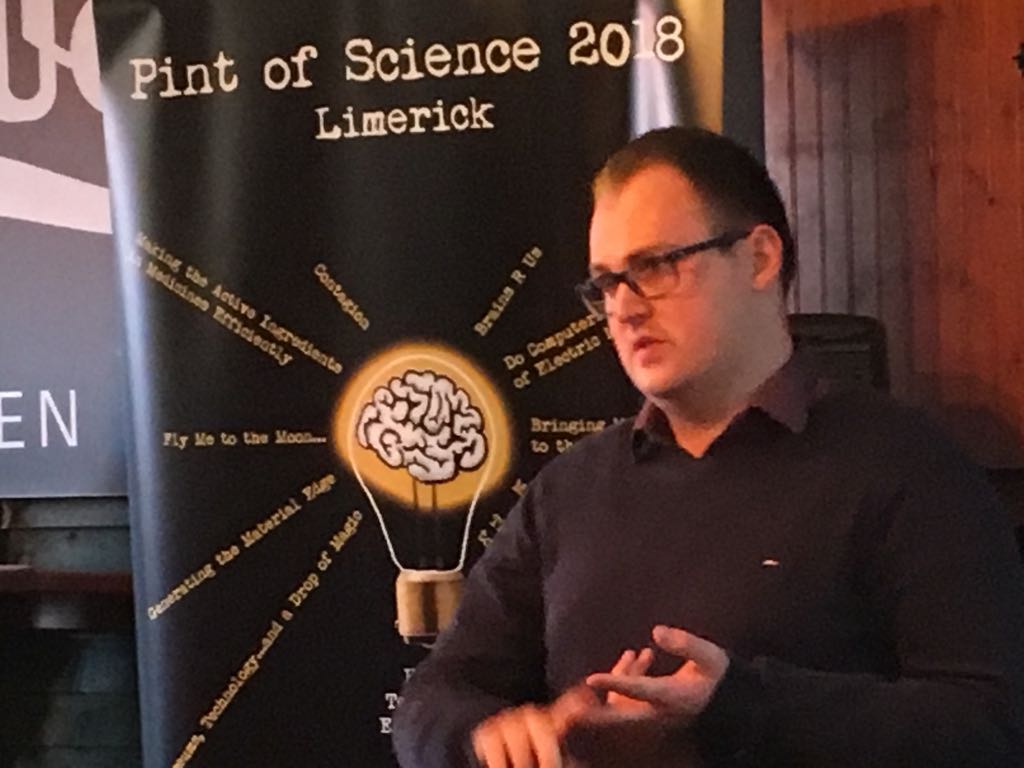
Pint of Science @ JJ Bowles Pub

Last night, it was great fun; Pint of Science 2018 in JJ Bowles Pub in Thomondgate.

Five interesting presentations and some great presenting skills in play.

Ronan Lordan gave a solid presentation on his PhD research on fermented dairy and Cardiovascular diseases.
He talked about Med diet, where we can source information on diet, which sites to avoid and also he gave some good hints on the power of media and sponsorship. 👍


You can read more on our work

here 

 and

here

And as we write in our latest Nutrients paper...

Nature has provided us with a wide range of dietary weapons, which, if appropriately combined in dietary patterns such as the Med-diet, can beneficially contribute to improving our quality of life, health, and life expectancy by equilibrating the inflammatory milieu to normal levels and thus preventively reducing the risk of inflammation-related chronic disorders. Let us not forget the words of Hippocrates of Kos (460-377 BC), who is universally recognised as the father of modern medicine: “Let food be thy medicine and medicine be thy food”.


Monday, 16 April 2018

Enjoy your Microbes

http://www.mdpi.com/2304-8158/7/3


Five EU member states (Estonia, Germany, Italy, Poland, Spain) have national nutrition guidelines or recommendations that include either probiotics or fermented milks containing live bacteria.

Other countries include yogurt (as part of dairy products) in their food-based dietary guidelines. It is the case in Switzerland, USA, Canada, UK, Australia, Japan, Sweden, Russia, Argentina, India and Portugal. In this case, yogurt is recommended, not for the live microbes it contains, but for its nutritional value.

So...enjoy your microbes!

In Etihad Stadium, Pep has brought his team of chefs who prepare food for all the people who work at the Stadium. All personnel in Etihad have free and quality meals with quite a few microbes
[ 1 Cup of Yogurt = 10 8-10 bacteria ]

😄