Tuesday, 10 December 2024
Wednesday, 25 January 2023
Scientists suggest eating oily fish linked to lower risk of kidney disease
from the Guardian.
“Among the richest dietary sources of these fatty acids are fatty cold-water fish – for example, salmon, sardines, mackerel, and herrings – and to a less extent shellfish, like oysters, mussels, and crab.”
The findings support guidelines recommending consumption of oily fish and other seafood as part of a healthy diet.
“Current dietary recommendations in most countries suggest at least two servings of fish per week, preferably oily fish, which will provide about 250mg/day of long-chain omega 3s,” said Marklund.
Friday, 29 July 2022
Μετατρέποντας τα μέρη ψαριών σε πολύτιμα προϊόντα και συστατικά
Πολλά μέρη ενός ψαριού πηγαίνουν χαμένα, χωρίς ποτέ να φτάσουν στα πιάτα μας. Η νέα τεχνολογία διαλογής θα βοηθήσει τη βιομηχανία ψαριών να εκμεταλλευτεί τις πρώτες ύλες πολύ καλύτερα και με πιο βιώσιμο τρόπο.
το πλήρες άρθρο είναι εδώ.
Wednesday, 26 February 2020
Why don't Irish people eat more fish?
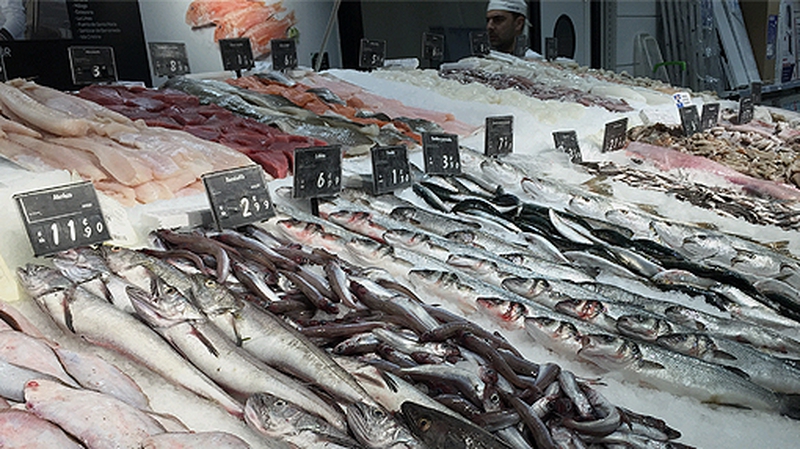 | ||
| "Fish is usually caught locally and the distance from the catching point to the retailer is usually not long" |
the full article with video extracts is here
Opinion: we need to develop ways to spread the message that fish is healthy, tasty and green
One of my hobbies is soccer training. After each session, I try to remind my young players the importance of exercise and a balanced diet. One day, I asked them "how many times per week do you eat fish?". One lad replied "do fish fingers count?". "Of course not" I wanted to tell him, but I said yes to him, as eating even that over-processed type of fish is better than nothing.
Let's have a look at the wider picture now. Ireland is an island, there are plenty of beautiful shores and beaches where people can walk by the sea, swim and …fish. Alas, the consumption of fish in Ireland is still low. Why is this?
Before moving to Ireland, my family and I lived in Greece, where we fished and snorkelled every summer. When the boys grew a bit older and could handle a fishing gun, a period of spear fishing started. Hunting for fish is an amazing experience. It makes you part of the sea, it encourages you to observe the sea creatures and view the world from a different angle. One of the messages I have tried to pass to the boys is that we have to eat what we catch so they started eating fish at a young age and developed a taste for it. Living now in Limerick, we are quite lucky and can find sea bream and sea bass from the Med, fish with pure sea flavour.
From RTÉ Radio 1's Mooney Goes Wild, why some fish are picky eaters
But the question remains: what is Ireland's problem with fish? In a comparison of fish consumption per capita in 158 countries in 2013, the Maldives ranked the highest with 166 kg followed by Iceland (90.1 kg) and Hong Kong (71 kg). Irish people consumed just 22.3 kg per capita. Fish consumption per capita in Ireland reached an all time high of 24.6 kg in 2001 and an all time low of 7.10 kg in 1961. When compared to Ireland's main peers, fish consumption per capita in Canada amounted to 22.4 kg, 34.7 kg in France, 90.1 kg in Iceland and 19.1 kg in United Kingdom in 2013. Ireland has been ranked 48th within the group of 160 countries in terms of fish consumption per capita, 4 places behind the position seen 10 years ago.
The comparison between Iceland and Ireland is striking because fish consumption is four times higher in Iceland. One may argue about the meat availability in Ireland at low prices, which is valid to some extent, but the reasons for the low fish consumption in Ireland are much deeper.
Part of the problem is the food pyramid which is taught to all secondary students in Ireland. In this pyramid, meat, poultry, fish, eggs, beans and nuts are grouped together. This grouping conveys the message that these foods have equivalent nutritional value. As we have explained before, this message is simply wrong.
From RTÉ 1's Prime Time, Richard Downes on how the Irish fishing industry is likely to be
affected by Brexit
Last year, the author and others published a scientific paper titled "Changing the Irish dietary guidelines to incorporate the principles of the Mediterranean diet: proposing the MedÉire diet". We did so with the hope to challenge the current wrong dietary guidelines. Alas, nothing happened. The pyramid remained the same and it is still wrong.
The message conveyed is that eating fish is like eating meat and poultry. Despite all the scientific evidence that suggests that fish is an excellent source of anti-inflammatory and cardioprotective compounds and therefore fish is more nutritious than any type of meat, all meat and fish are grouped together. With poultry and fish on the same shelf in the pyramid, one may wonder "why would I spend at least €10/kg to buy fish when I can buy a 1.5kg chicken for €4-5?". Therefore, the dietary message turns to cost argument and then the fish case is lost.
So what can we do?
Modify the Irish food pyramid
It is of paramount importance to correct the Irish food pyramid and give fish its correct place in the pyramid; highlighting the high nutritional value of fish and seafood is a matter of urgency. It is also important to differentiate fresh fish from processed fish products like breaded fish or fish fingers.From RTÉ Learn, exploring Irish fish stocks
Educate young people
The younger we start to educate children and young students the better. Today in Ireland, one in four boys and one in five girls are obese and it is crucial to address this problem. It is not easy, but it is doable. Everybody likes to have processed convenience food. Our taste buds have become used to these tastes and so real fish tastes exotic. We need to start exposing primary school students to healthy tastes. By "training" their taste buds, there is hope that they can develop healthy eating habits. The best way to educate young kids is through experiment and play - teaching them and cooking with them the food we eat can make a big difference.Promote fish for all
A variety of initiatives to promote could be organised in schools, universities, supermarkets and workplaces. Companies have a key role to play here as the health of employees and their families should be a top priority. You could have fish BBQs in the summer or food quizzes in rainy days. Ensuring that fresh fish is available as a choice would be a positive start.Fish is a green food
We need to promote the fact that fish is a green food and much greener than meat. People are more aware about the food they eat, where it's sourced and how it's grown. Everybody wants to learn more about the origin of our food.Fish is usually caught locally and the distance from the catching point to the retailer is usually not long. Of course, there is fish and seafood that are sold in EU and China, but we support can our economy and environment by choosing fresh Irish fish with very few food miles.
We need to encourage young people to develop the healthy habit of eating fresh (not processed) fish.The feed conversion ratio (FCR) is an indicator that is commonly used in all types of farming which can provide a good indication of how efficient a feed or a feeding strategy can be. It's the mathematical relationship between the input of the feed that has been fed and the weight gain of a population. The lower the FCR, the higher the weight gain obtained from the feed. If FCR = 1, this means that we produce 1kg of a species with 1kg of feed.
When applied to aquatic animals, FCR is generally lower than that of land animals so we need less feed to produce the same amount of food. Fish do not require drinking water. Therefore, both the carbon and the water footprints of fish is superior to those of animals.
Average FCR
Omnivorous fish - 1.6
Farmed carnivorous marine - 1.45
Salmonids - 1.1
Pig - 2.75
Broiler (chicken) - 2.0
Beef cattle - 6.0
Dairy cattle - 8.0
Fish is healthy, tasty and green and we need to develop ways to spread across this message and encourage young people to develop the healthy habit of eating fresh (not processed) fish.
The views expressed here are those of the author and do not represent or reflect the views of RTÉ
Wednesday, 15 August 2018
Eat Fish and Ignore Statins
 |
| International Aquafeed: my August column (page 8) |
Friday, 18 May 2018
Is Lipid Level or Inflammation the Critical Factor for Cardiovascular Disease Risk?

re-posting from here
No orthodoxy lacks accompanying heretics; it often seems that science is a business of proceeding abruptly and messily from one steady state consensus to another via the mechanism of heresy. It is of course worth bearing in mind that most heretics do turn out to be wrong, and are consequently forgotten by all but the most painstaking of scientific historians. In the paper I'll point out today, the orthodoxy of blood lipid levels as a cause of cardiovascular disease is challenged. The heresy is to suggest that it isn't the lipids at all, but all down to a matter of chronic inflammation.
This is a tough topic to arbitrate, because raised lipids, such as cholesterol, and raised inflammation go hand in hand. Dietary approaches to tackling cholesterol levels are minimally effective in the grand scheme of things, as dietary content is only a small factor in the lipid content of blood, but they also, inconveniently, tend to move the needle on inflammation as well. The calorie content of the diet, considered over the long-term, is linked to lipids and inflammation in equal measures via the amount of visceral fat tissue an individual carries. Therapies that are available and widely used to reduce blood cholesterol, such as statins, are shown to have anti-inflammatory effects. Therapies under development, such as delivery of the APOA1 protein that makes up the HDL particles responsible for dragging cholesterol out of vulnerable cells and transporting it to the liver, also have significant anti-inflammatory effects. You can probably see the challenge.
On the one hand, it doesn't seem completely unreasonable to mount the argument that lipid levels are a smokescreen, and we should be caring about chronic inflammation. We know that chronic inflammation is very damaging, and contributes to the progression of all of the common age-related diseases. When it comes to cardiovascular disease, and particularly atherosclerosis, it seems hard to write off a role for lipid levels in blood, however. Atherosclerosis is caused by oxidized lipids that overwhelm the cells sent to clean them up when they irritate blood vessel walls; the fatty deposits that narrow blood vessels are made up of lipids and dead cells. More lipids means more overwhelmed cells. Lower lipid levels means fewer oxidized lipids. But does that simple calculus hold up when looked at in detail? To answer that question, we need more data on highly effective therapies that are either anti-lipid or anti-inflammatory, but not both.
Inflammation, not Cholesterol, Is a Cause of Chronic Disease
= = =
our answer:
In our work
| Time (days) | A (n = 6) | B (n = 6) | |
|---|---|---|---|
| TC (mg/dl) | 0 | 62 ± 20 | 66 ± 18 |
| 45 | 1906 ± 821a | 1555 ± 122a | |
| LDL-C (mg/dl) | 0 | 19 ± 16 | 7 ± 5 |
| 45 | 1707 ± 742a | 1300 ± 126a | |
| HDL-C (mg/dl) | 0 | 29 ± 4 | 30 ± 7 |
| 45 | 82 ± 26a,b | 138 ± 30a,b | |
| TAG (mg/dl) | 0 | 141 ± 49 | 146 ± 66 |
| 45 | 652 ± 316a | 588 ± 141a |
A: atherogenic diet; B: atherogenic diet enriched with GSBPL.
- a
- Denotes statistical significance within same group (day 45 vs. 0; p < 0.05), according to the Wilcoxon test.
- b
- Denotes statistical significance between groups A and B (day 45; p < 0.05), according to the Mann–Whitney U-test.
 |
| Fig. 1. Representative optic micrographs × 100 of aortic wall sections stained with haematoxylin and eosin from the two experimental groups, where atherosclerotic lesions appear as foam cells (↑). (A) Group A (atherogenic diet); (B) Group B (atherogenic diet enriched with GSBPL). |
Thursday, 5 April 2018
Fish and Inflammation
We are what we eat. Our food is also what it eats.

Working towards the improvement of the nutritional value of aquafeeds and fish, we would need to focus on the bioactivities of fish components against inflammation.
Fish have a great positive impact on all chronic diseases, including cardiovascular diseases (CVDs). Linking fish consumption to CVDs was first established through the seven-country study and today we know that fish components have strong cardioprotective and anti-inflammatory properties.
The Journal Fishes published by MDPI is going to publish a special issue titled“Fish and Inflammation”.
In this Special Issue, we would like to present the latest research on fish consumption and its impact on inflammation-related chronic diseases in humans, e.g., CVDs. In vitro and ex vivo studies are equally welcome.
We would be pleased to solicit manuscripts pertaining to original research, mini and full reviews, short communications, as well as perspectives, which address any aspect of fish, CVDs and inflammation.
Submissions are invited that include, but are not limited to: Fish diet and its impact on the nutritional value of fish; Fish intake and development of CVDs; Specific fish components (e.g., polar lipids, omega-3 fatty acids) and their anti-inflammatory properties; Bioactive compounds from the seafood chain.
Read the full article, HERE.
Friday, 23 February 2018
Polar (Lipid) Express

Friday, 17 November 2017
Obesity kills and fish can combat that !
On October 11, 2017, the World Health Organisation (WHO) released some rather worrying data: we are getting fatter and fatter at alarming rates

In detail, the number of obese children and adolescents (aged five to 19 years) worldwide has risen tenfold in the past four decades.
If current trends continue, more children and adolescents will be obese than moderately or severely underweight by 2022.
The study was published in The Lancet ahead of World Obesity Day (October 11) (Abarca-Gómez et al.).
It analysed weight and height measurements from nearly 130 million people aged over five years (31.5 million people aged five to 19, and 97.4 million aged 20 and older), making it the largest ever number of participants involved in an epidemiological study.
More than 1000 contributors participated in the study, which looked at body mass index (BMI) and how obesity has changed worldwide from 1975 to 2016.
Obesity rates in the world’s children and adolescents increased from less than one percent (equivalent to 5 million girls and 6 million boys) in 1975 to nearly six percent in girls (50 million) and nearly eight percent in boys (74 million) in 2016.
Combined, the number of obese five to 19 year olds rose more than tenfold globally, from 11 million in 1975 to 124 million in 2016.
An additional 213 million were overweight in 2016 but fell below the threshold for obesity.
So, adding obese and overweight people aged five-19 years old, we have a sum of 337 millions.
You can stop reading this article now.
And just think how many obese/overweight people under 19 years old you know. Do these people have a sports hobby? Do they exercise at all? What do they eat? How often do they eat fish?
In our January 2017 article, we mentioned that Irish Food Pyramid is full ofscientific mistakes; mistakes that could promote obesity by passing the wrong message to the public.
Meat and fish are not equal in terms of nutritional value and this fact has been overlooked in Ireland.
What about the health authorities in other countries? Do they convey accurate diet guidelines?
To see references and read the full article click, HERE.
Thursday, 9 November 2017
fish is much more than omega 3s !!!
 |
| some fish that we have fished with spear guns and enjoyed with ouzo :) |
on today's Guardian, there is this article
Struggling to eat two portions of oily fish a week? Time for a rethink
what we need to remember is this:
1. fish is a very nutritious food in relation to inflammation (i.e. CVDs, cancer, stroke, diabetes etc)
2.there is much much more in fish than omega 3s.
for some fish specific bioactivities against chronic diseases, you can have a look here
Friday, 3 November 2017
the Inuit diet
a lot of fish in the diet --> a lot of polar lipids in the bloodstream --> no cardiovascular diseases!
but... there is another risk when they fish...
Enjoy the video 👦
Monday, 25 September 2017
fat vs lean fish

Tuesday, 19 September 2017
Caveat Emptor!

A very interesting and rather intriguing paper on omega-3 fatty acids and fish was published last May in Clinical Nutrition: the authors have reviewed literature with regard to the supplementation of omega-3 LC-PUFAs
Previous evidence stated that high doses omega-3 LC-PUFAs produce a small but significant decrease in blood pressure in older and hypertensive subjects.
Due to the increasing interest in the benefits of LC-PUFAs, the authors aimed to evaluate the scientific evidence provided in the past five years (2012–2016) on the effects of the intake of omega-3 LC-PUFAs on cardiovascular risk factors such as inflammation and oxidative stress, through a systematic review in PubMed database.
28 articles were related to cardiovascular disease (CVD) and are included in this systematic review. The studies included healthy subjects and CVD patients; we included the number of subjects, type of study, type and doses of omega-3 LC-PUFAs, primary outcomes, and results.
The use of omega-3 LC-PUFAs for ameliorating CVD risk factors can be recommended. However, the administration of omega-3 does not seem to show any benefit for the management of CVD or associated complications (Rangel-Huerta and Gil).
However, the devil is always hidden in the tiny details. Having a closer look at this paper and especially table 3, it can be seen that the authors compare head-to-head studies where pure omega-3 fatty acids were supplemented to humans to studies where fish was consumed.
Despite the fact, that this comparison is not unusual in literature; we have some scientific concerns whether this is the right way of evaluating the cardioprotective properties of fish.
Read the full article, HERE.
Thursday, 6 July 2017
Omega 3 fatty acids in cardiovascular disease risk factors

this is an interesting paper on CVDs and omega-3 fa.
the Summary of the paper follows (highlights are mine)
Several studies and reviews regarding the supplementation of omega-3 LC-PUFAs have been developed during the last years. Indeed, the evidence states that high doses omega-3 LC-PUFAs produce a small but significant decrease in blood pressure in older and hypertensive subjects. Due to the increasing interest in the benefits of LC-PUFAs, we aimed to evaluate the scientific evidence provided in the past five years (2012–2016) on the effects of the intake of omega-3 LC-PUFAs on cardiovascular risk factors such as inflammation and oxidative stress, through a systematic review in PubMed database. Twenty-eight articles were related to cardiovascular disease (CVD) and are included in this systematic review. The studies included healthy subjects and CVD patients; we included the number of subjects, type of study, type and doses of omega-3 LC-PUFAs, primary outcomes, and results. The use of omega-3 LC-PUFAs for ameliorating CVD risk factors can be recommended. However, the administration of omega-3 does not seem to show any benefit for the management of CVD or associated complications.
------------
Table 3 is very interesting! Comparing fish to EPA+DHA!
Wednesday, 28 June 2017
The relationship between fish consumption and disease activity in rheumatoid arthritis

Novel research
Original Article
The relationship between fish consumption and disease activity in rheumatoid arthritis
Objective: To assess whether more frequent fish consumption is associated with lower RA disease activity scores among participants in an RA cohort.
Methods: We conducted a cross-sectional analysis using baseline data from participants in the Evaluation of Subclinical Cardiovascular Disease and Predictors of Events in RA (ESCAPE-RA) cohort study. Frequency of fish consumption was assessed by a baseline food frequency questionnaire assessing usual diet in the past year. Multivariable, total energy-adjusted linear regression models provided effect estimates and 95% confidence intervals (CI) for frequency of fish consumption (never to <1/month, 1/month to <1/week, 1/week, and ≥2/week) on baseline DAS28-CRP. We also estimated the difference in DAS28-CRP associated with increasing fish consumption by one serving per week.
Results: Among 176 participants, median DAS28-CRP was 3.5 (interquartile range 2.9-4.3). In an adjusted linear regression model, subjects consuming fish ≥2 times/week had a significantly lower DAS28-CRP compared with subjects who ate fish never to <1/month (difference -0.49 [95% CI -0.97, -0.02]). For each additional serving of fish per week, DAS28-CRP was significantly reduced by 0.18 (95% CI -0.35, -0.004).
Conclusions: Our findings suggest that higher intake of fish may be associated with lower disease activity in RA patients.
Wednesday, 31 May 2017
Fish and Dementia

in this blog, we love fish!
so, any news on the nutritional value of fish (like this one) is simply very welcome!

Friday, 19 May 2017
statins: and the debate goes on

the followers / readers of this blog have been across some info on the "dark" side of statins, i.e. the numerous and severe side-effects that statins have.
Here is another report on this topic.
Remember: the best medicine is your diet! Enjoy fish on the b-b-q!
Monday, 24 April 2017
how to reduce the risk of developing CVDs?
the answer is rather straightforward!
Please consider your consumption of 10 foods/nutrients associated with cardiometabolic diseases: fruits, vegetables, nuts/seeds, whole grains, unprocessed red meats, processed meats, sugar-sweetened beverages (SSBs), polyunsaturated fats, seafood omega-3 fats, and sodium.
New research suggests that
The largest numbers of estimated diet-related cardiometabolic deaths were related to
high sodium (66 508 deaths in 2012; 9.5% of all cardiometabolic deaths),
low nuts/seeds (59 374; 8.5%),
high processed meats (57 766; 8.2%),
low seafood omega-3 fats (54 626; 7.8%),
low vegetables (53 410; 7.6%),
low fruits (52 547; 7.5%), and
high SSBs (51 694; 7.4%).
Between 2002 and 2012, population-adjusted US cardiometabolic deaths per year decreased by 26.5%.
The greatest decline was associated with insufficient polyunsaturated fats (−20.8% relative change [95% UI, −18.5% to −22.8%]), nuts/seeds (−18.0% [95% UI, −14.6% to −21.0%]), and excess SSBs (−14.5% [95% UI, −12.0% to −16.9%]).
The greatest increase was associated with unprocessed red meats (+14.4% [95% UI, 9.1%-19.5%]).

Wednesday, 12 April 2017

Tuesday, 12 April 2016
Why whole fish is better than oil extracts?

= = =
and here