 |
|
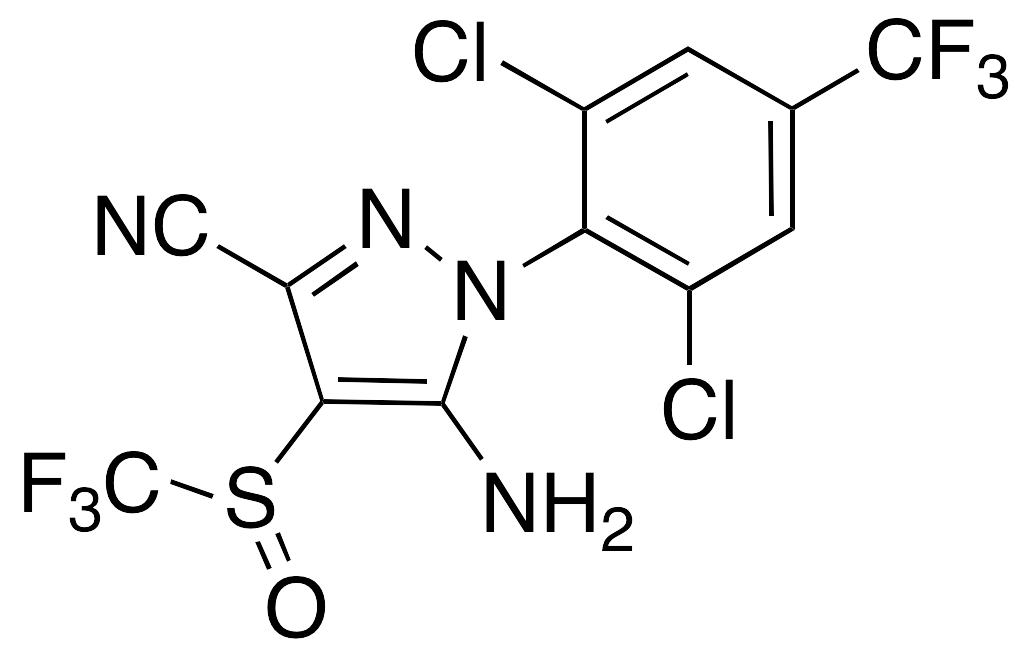
Fipronil |
| Synonyms: |
5-Amino-1-[2,6-dichloro-4-(trifluoromethyl)phenyl]-4-[(trifluoromethyl)sulfinyl]-1H-pyrazole-3-carbonitrile;
(+/-)-Fipronil;
1-(2,6-Dichloro-4-trifluoromethylphenyl)-3-cyano-5-amino-4-(trifluoromethylsulfinyl)pyrazole;
Fluocyanobenpyrazole; Frontline Spot-on; Frontline Spray; Frontline Top
Spot; Goliath gel; Granedo MC; Grenade MC; Maxforce FC; Maxforce FC
Select Roach Killer Bait Gel; Over’n Out; Regent; Regent TS; Termidor;
Termidor 80WG; TopChoice; |
|
Around 700,000 potentially contaminated eggs have been imported into Britain from Dutch farms, according to the
Food Standards Agency.
The affected eggs have been
contaminated with an insecticide called Fipronil.
Where did the eggs come from and how did they become contaminated?
A
The affected eggs originate from around 180 farms in the Netherlands
that bought poultry from a supplier which used an illegal insecticide to
treat red mite in chickens. The chemical, called fipronil, is not
authorised for use as a veterinary medicine or pesticide around food
producing animals as it can make its way into birds and eggs.
The egg in these foods may have been supplied from affected farms in
the Netherlands before the blocks on these farms were imposed. It was
incorporated into processed foods; fresh eggs on sale in the UK remain
unaffected. Most of the additional egg products that have been
identified were imported into the UK in liquid form so it is no longer
practicable to provide a figure in terms of whole eggs, however, it
remains the case that the egg we have identified represents only a
fraction of a single percentage of the eggs we consume in the UK every
year.
85% of the eggs we eat in the UK are laid here. As a precaution, UK
eggs are being tested for the presence of Fipronil, and all initial
results have been clear.
Fipronil
is a popular pesticide, often used to de-flea household pets such as
dogs and cats. It is also effective at treating red lice, which are
commonly found in poultry.
The World Health Organization (WHO)
says fipronil is "moderately toxic" to people if it is eaten in large
quantities, and can have dangerous effects on the kidneys, liver and
thyroid glands.
It can also cause "nausea, vomiting, abdominal
pain, dizziness, and epileptic seizures," says the Dutch food standards
agency NVWA, although its effects are reversible.
Exposure to Fipronil can cause nausea, vomiting, headaches and
dizziness. Long-term exposure to great quantities can cause thyroid,
liver and kidney damage, and even lead to seizures.
= = =
Questions risen:
1. what penalties have been imposed to the Dutch (?) (only Dutch?) companies that started the scare?
2. What has happened to the birds that had produced these eggs?
3. How much fipronil has been actually applied to the birds?
Ioannis Zabetakis


