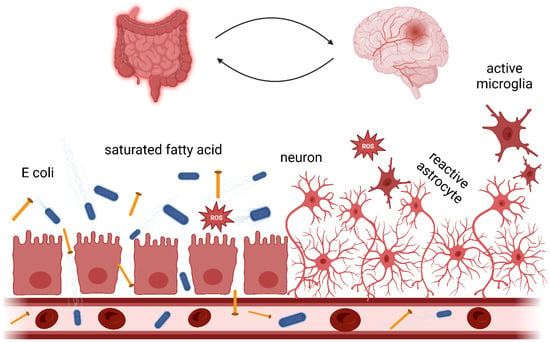
Figure 1. Dietary lipids in the gut-brain axis. Dietary lipids intake can alter gut microbiome balance by increasing the Gram-negative bacteria population [58]. Saturated fatty acid consumption and metabolism affect gut health through reactive oxygen species generation [59]. Chronic gut inflammation can disrupt the intestinal tight junction and consequently lead to a “leaky gut”. Neurotoxins can penetrate the intestinal epithelium and, through the bloodstream, reach the BBB. A compromised BBB facilitates neurotoxins entering the brain and inducing inflammation [53,54]. Active microglia cells and reactive astrocytes can harm neuron cells.
Neurodegenerative diseases are a group of disorders characterised by progressive loss of brain function. The most common of these is Alzheimer’s disease, a form of dementia. Intake of macro- and micro-nutrients impacts brain function, including memory, learning, mood, and behaviour. Lipids, particularly phospholipids and sphingolipids, are crucial structural components of neural tissues and significantly affect cognitive function. Lipids, therefore, may be able to modify the onset and progression of neurodegeneration.
