Showing posts with label air pollution. Show all posts

Wednesday, 1 November 2023

Air pollution raises risk of type 2 diabetes, says landmark Indian study


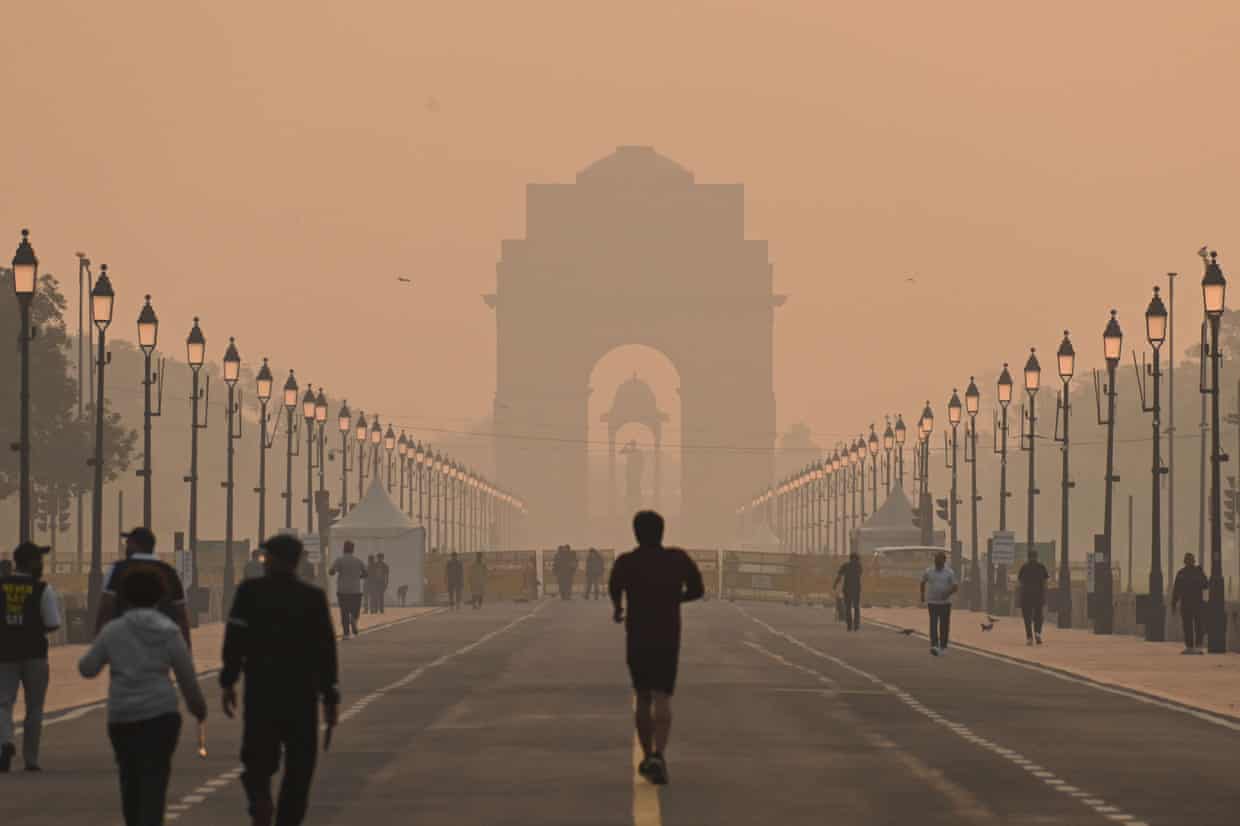
People walk on a road towards the India Gate amid smog in New Delhi. India is one of the world’s worst countries for air pollution. Photograph: Kabir Jhangiani/Zuma Press Wire/Rex/Shutterstock

the photo is from here

https://www.theguardian.com/global-development/2023/nov/01/air-pollution-raises-risk-of-type-2-diabetes-says-landmark-indian-study-acc

= = = = = = = = = = = = = = = = = = = = = = = = 

Inhaling polluted air increases the risk of type 2 diabetes, the first study of its kind in India has found. Research conducted in Delhi and the southern city of Chennai found that inhaling air with high amounts of PM2.5 particles led to high blood sugar levels and increased type 2 diabetes incidence.

When inhaled, PM2.5 particles – which are 30 times thinner than a strand of hair – can enter the bloodstream and cause several respiratory and cardiovascular diseases.

The study is part of ongoing research into chronic diseases in India that began in 2010. It is the first to focus on the link between exposure to ambient PM2.5 and type 2 diabetes in India, one of the worst countries in the world for air pollution.

The average annual PM2.5 levels in Delhi was 82-100μg/m3 and in Chennai was 30-40μg/m3, according to the study, many times the WHO limits of 5μg/m3. India’s national air quality standards are 40μg/m3.

There is also a high burden of non-communicable diseases, including diabetes, hypertension and heart disease in India; 11.4% of the population – 101 million people – are living with diabetes, and about 136 million are pre-diabetic, according to a paper published in the Lancet in June. The average diabetes prevalence in the European Union was 6.2% in 2019, and 8.6% in the UK in 2016.

In the BMJ study, the researchers followed a cohort of 12,000 men and women in Delhi and Chennai from 2010 to 2017 and measured their blood sugar levels periodically. Using satellite data and air pollution exposure models, they determined the air pollution in the locality of each participant in that timeframe.

[...]

The researchers are now working to understand the impact of pollution on cholesterol and vitamin D levels in the body, and its impact on the life cycle of individuals, including birth weight, pregnant women’s health, insulin resistance in adolescents, and the risk for Parkinson’s and Alzheimer’s disease, among others.


[you can read the rest of the article here]


Monday, 25 September 2023

What is PM2.5? Only the biggest air pollution threat to human health in Ireland


Smog caused by burning smoky coal and peat fires pollutes the air over a housing estate in Dublin in 1988. File photograph: Tom Stoddart/Getty


 Irish Times


As we face into winter, the latest findings on Irish air quality by the Environmental Protection Agency (EPA) could not be more timely. Ireland has a standout problem arising from the burning of solid fuels in domestic settings that poses a substantial risk to public health.

In 2022, air monitoring results from EPA stations across Ireland show fine particulate matter (PM2.5), arising mainly from burning solid fuel in our homes, and nitrogen dioxide (NO²) mainly from road traffic, remain the main threats to good air quality. High levels of these pollutants exceeded World Health Organisation (WHO) guidelines in most large urban areas at some point last year.

These pollutants are often associated with cold, still weather from late autumn through to early spring, when periods of poor air quality occur, though, fortunately, they are usually short-term.

The fact that most householders continue to wrestle with an energy crisis is likely to be compounding the threat. Leading Irish air pollution experts in September 2022 warned that burning highly polluting solid fuels – such as coal, peat/turf and wet wood – was likely to increase as people avoid expensive gas and electricity, while also in some instances defying a nationwide smoky coal ban introduced last year.

READ MORE

The most worrying finding is that “most of Ireland did not meet the WHO guideline for PM2.5 of 5 μg/m3″. Most of the country did meet the WHO guideline for nitrogen dioxide (NO2) of 10 μg/m3, though the EPA found elevated concentrations along the major urban road network in our larger cities.

The report confirms PM2.5 is the biggest air pollution threat to human health in the Irish context, giving rise to some 1,300 premature deaths annually.


= = =


related link


Wednesday, 23 June 2021

Burning Tyres and Cancer

 The news are coming from Canada :

A potent human carcinogen found in Lafarge Brookfield’s cement kiln dust is making its way onto Nova Scotia’s farm fields 

The Halifax Examiner raised the issue about N-Nitrosodimethylamine (NDMA) with the two federal departments with mandates to protect the environment and ensure food safety. Here are their responses.


(...)


There is a real and substantial risk that groundwater may become a contaminated source of drinking water if the ash residuals contain [N-nitrosodimethylamine] NDMA and products of incomplete combustion of tires,” writes Hallett, who points to the spectacular way in which this occurred in areas of Ontario from both the manufacturing of chemicals and synthetic rubber for tires, as well as from the Hagersville tire fire, when 10 million tires burned for 17 days.  

Little did Hallett know, NDMA was already present in the CKD — even before scrap tires were included in the fuel mix.   

When the Examiner sent Hallett a copy of the analysis for NDMA, his response was simply, “All of the samples are positive for NDMA well above the detection limit … This means that NDMA is definitely there … and what you’ve got is one of the most powerful carcinogens ever found.” 


Monday, 22 March 2021

Air pollution: Particulates are more dangerous than previously thought

 Researchers at the Paul Scherrer Institute PSI have for the first time observed photochemical processes inside the smallest particles in the air. In doing so, they discovered that additional oxygen radicals that can be harmful to human health are formed in these aerosols under everyday conditions. They report on their results today in the journal Nature Communications.


Source

Monday, 13 April 2020

air pollution, covid-19 and their management


26.3.2020: The US Environmental Protection Agency (EPA) has suspended its enforcement of environmental laws during the ongoing coronavirus outbreak, signaling to companies they will not face any sanction for polluting the air or water of Americans.In an extraordinary move that has stunned former EPA officials, the Trump administration said it will not expect compliance with the routine monitoring and reporting of pollution and won’t pursue penalties for breaking these rules [1].

27.3.2020: The European carmakers’ association, ACEA, and other groups representing the supply chain called on the EU to delay implementing regulations because the pandemic had affected its “plans to comply”. Laws due to come into effect include tougher targets on vehicle CO2 emissions. In a letter to the EU commission president, Ursula von der Leyen, the groups said production and sales of cars had stalled in many countries and companies were facing a cash crisis. European laws on CO2 emissions of new vehicles have applied since 2015 and a further tightening of the rules is due in January 2021 [2].

Covid-19: mechanism of action
Covid-19 causes in the human body a phenomenon called acute inflammation; this is coined as a “cytokine storm”: the virus attacks the immune system and a flood of immune-related chemicals are formed causing acute inflammation.
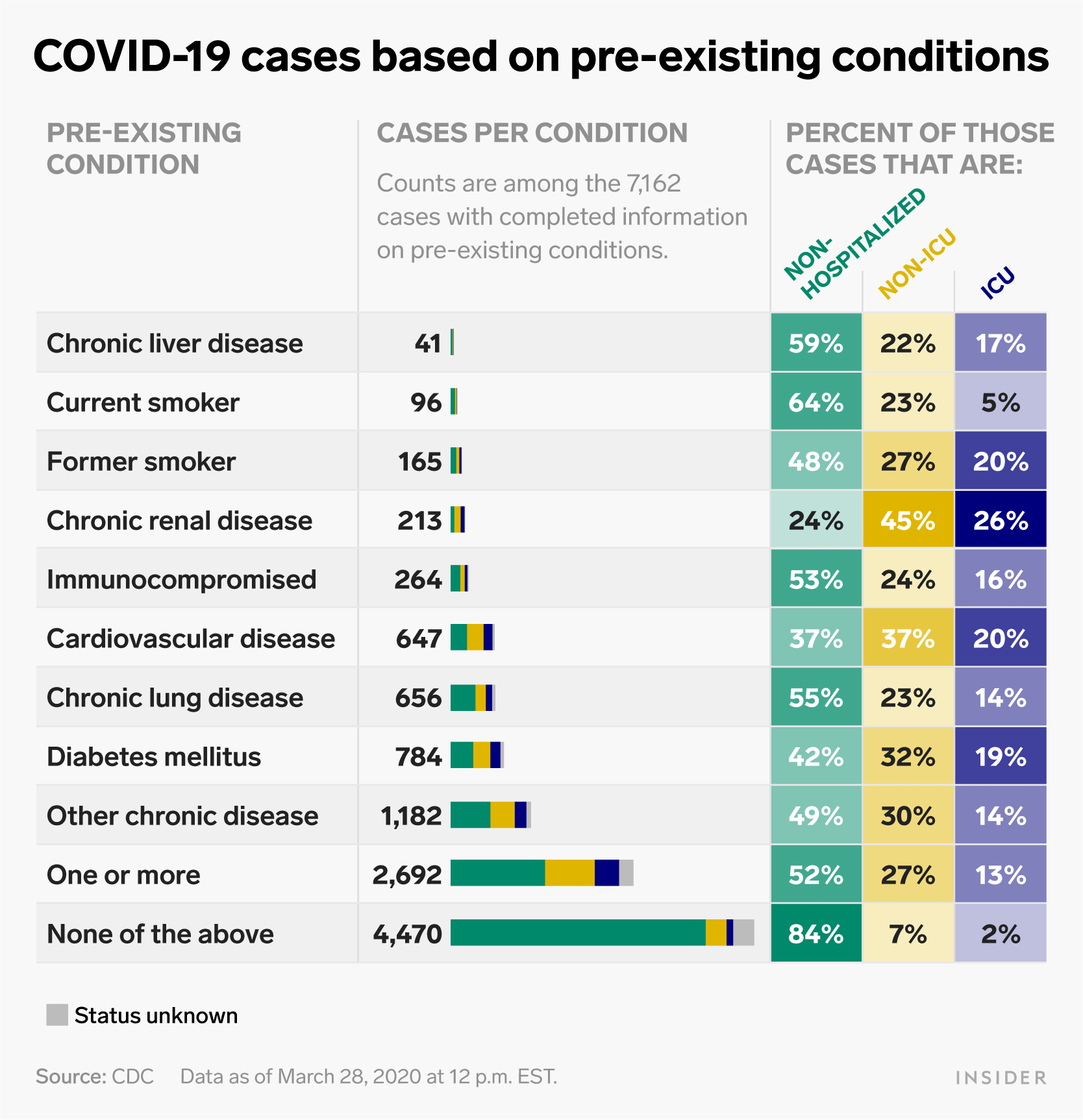
This happens because the hyperactive white cells are not attacking only the virus but also healthy tissues, in this case the lungs. Because of this mode of action that covid-19 has, a number of drugs fighting inflammation are now under trial in few countries around the world in an attempt to mitigate the deadly impact of the virus. As of March 28, US states and territories had reported 122,653 coronavirus cases, the report said [3]: for the 7,162 cases in which patients' underlying health data were available, the CDC said 71 percent of patients hospitalized with COVID-19 and 78 percent of those admitted to intensive care units had preexisting conditions or risk factors.

us coronavirus pre existing conditions
source: https://www.sciencealert.com/more-than-70-of-americans-hospitalised-with-covid-19-had-at-least-1-underlying-health-condition-the-cdc-says
Covid-19 and air pollution 
Researchers from Harvard’s T.H. Chan School of Public Health noticed that many conditions known to contribute to more severe COVID-19 outcomes are also known to be caused by long-term PM2.5 exposure.They analyzed data from 3,080 counties in the United States; adjusted for variables including population size, number of people tested, weather, obesity, and smoking; averaged PM2.5 exposure over 2000–2016; and looked at COVID-19 deaths as the outcome. An increase of only 1 microgram (μg) per cubic meter (m3) of PM2.5 is associated with a 15% increase in the COVID-19 death rate [4].


Concluding...
Pollution can have a great impact to human health; we know that from Minamata and Hinkley. Now, we have requests from polluters to pollute more and also official monitoring agencies to allow it...resulting to more deadly pollution. Is this wise management?


References

[1]
https://www.theguardian.com/environment/2020/mar/27/trump-pollution-laws-epa-allows-companies-pollute-without-penalty-during-coronavirus


[2]
https://www.theguardian.com/business/2020/mar/27/carmakers-accused-of-using-covid-19-weaken-environmental-laws


[3]
https://www.sciencealert.com/more-than-70-of-americans-hospitalised-with-covid-19-had-at-least-1-underlying-health-condition-the-cdc-says


[4] https://eos.org/articles/air-pollution-can-worsen-the-death-rate-from-covid-19