Showing posts with label greece. Show all posts

Tuesday, 21 July 2026

Odysseus is all around us, not just in Christopher Nolan’s blockbuster


He is everywhere in our cities, anywhere we see shipwrecked people adrift and wandering 

Fintan O'Toole   21/7/26


Now that it has returned as a $375 million cinematic blockbuster, it is worth remembering that The Odyssey is the story of a rich man who is forced to behave like a poor man. The great epic works by winnowing its hero down until he is the lowest of the low.

Odysseus starts out on his journey home from the Trojan wars as the admiral of a small fleet. Then he is captain of an isolated ship. Then a shipwrecked sailor clinging to a piece of wreckage. Then a homeless stranger. And near the end, before he resumes his place as king of Ithaca, he disguises himself as a dirty old beggar.

In the Iliad, the Homeric epic that precedes the Odyssey, Odysseus is already cunning, ingenious, sneaky, crafty. Achilles contemptuously describes him as a man “who says one thing but hides another in his heart”. But there’s a big difference between having your wits about you and living on your wits. In the first condition you use your brains to exert your will. In the second you use them to survive. That’s what poor people have to do.

Odysseus is famously called in the Greek polytropos. Emily Wilson’s recent translation renders this as “complicated” which is rather flat and unspecific – which of us isn’t complicated? Scholars tell us that polytropos has an apt double meaning, carrying notions both of personal evasiveness and of a meandering journey which of course is what the story goes on to narrate.

I much prefer the opening of Robert Fagles’s translation: “Sing to me of the man, Muse, the man of twists and turns/ driven time and again off course”.

I like this perhaps because it brings to mind a Dublin word that seems to have gone out of use: a twister. If it rings any bells now it is probably as the American term for a tornado. But a twister in Dublin was a chancer, a con man, an artful dodger.

Odysseus the twister is all of these. Like poor people throughout the history of humanity, he does what he must do in order to endure. He lies and cheats, ducks and dives, charms and seduces. He sings for his supper, telling enthralling stories to strangers who feed him.

He is supremely shifty: a king who can appear as a miserable slave. In the backstory recalled in The Odyssey, Odysseus infiltrated Troy as a spy: “Scarring his own body with mortifying strokes,/ throwing filthy rags on his back like any slave,/ he slipped into the enemy’s city, roamed its streets – / all disguised, a totally different man, a beggar, / ... and no one knew him at all”.

He becomes a literal nobody – one of those people we step over on the street. To be a nobody is to be beneath our notice. Part of what makes Odysseus so good at survival is that, for all his privilege as a king, he knows this: even in the small, intimate cities of his world there are invisible people – and invisibility is the superpower of the weak.

This nobody is who he becomes again as the poem reaches its climax. Because his court is infested with suitors who will kill him, he has to slip back into his own home as a repulsive old vagrant.

Odysseus is the refugee, the migrant, the foreigner, the evacuee, the stateless, the undocumented, the outsider, the alien. He is also the tramp, the beggar, the slave, the street dweller, the drifter, the transient

The goddess Athena transforms him: “She shrivelled the supple skin on his lithe limbs,/ stripped the russet curls from his head, covered his body/ top to toe with the wrinkled hide of an old man/ and dimmed the fire in his eyes, so shining once./ She turned his shirt and cloak into squalid rags, /ripped and filthy, smeared with grime and soot.”

Squalid, filthy, smeared – we are invited by these terms to feel about Odysseus the worst thing we can feel for any human being: disgust. If we met him on the way to Ithaca we would literally turn up our noses at him.

But one of the most extraordinary things about this poem is that it gives a slave a name and a voice. The person who first shelters Odysseus when he gets back to his island is the swineherd Eumaeus. He is a vividly realised character with many lines of dialogue and a meaningful part in the unfolding of the story. He surely smells of pig and muck but he speaks to us across the millenniums as a decent and dignified human being.

His decency is rooted in a set of values that is the beating pulse of the whole epic: the moral obligation to accept and protect the stranger. As he informs Odysseus (who he takes to be a miserable tramp): “It’s wrong, my friend, to send any stranger packing –/ even one who arrives in worse shape than you.”

[ What is The Odyssey? The 3,000-year-old questionOpens in new window ]

This is the duty imposed on civilised humans by the supreme god Zeus in his aspect as Zeus Xeinios, protector of strangers. “Zeus of the Strangers,” says Odysseus to the one-eyed Cyclops, “guards all guests and suppliants.” This quality, xenia, is the precise opposite of xenophobia.

Odysseus is the archetypal stranger, thrown again and again on the mercy of those who don’t know him. Eumaeus imagines that if he is still alive Odysseus must now be a man who “starving for food, I wager, wanders the earth,/ a beggar adrift in strangers’ cities, foreign-speaking lands”.

Odysseus is the refugee, the migrant, the foreigner, the evacuee, the stateless, the undocumented, the outsider, the alien. He is also the tramp, the beggar, the slave, the street dweller, the drifter, the transient. He is an everyman who is also often a nobody, the man who has fabulous stories to tell but who is at key moments in his own story not worth seeing or listening to.

He’s all around us, of course – not just in the giant posters advertising Christopher Nolan’s blockbuster but down at street level in the corner of our eyes where we see shipwrecked people adrift and wandering, dreaming of the place that is the ultimate goal of all journeys: home.

Friday, 29 August 2025

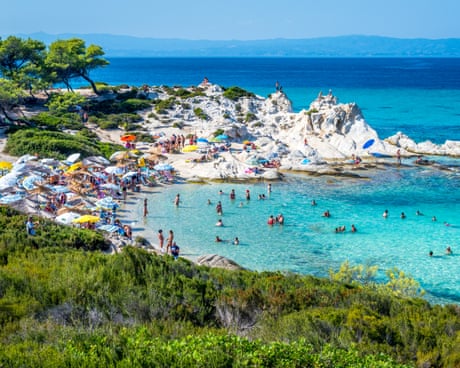
‘The Thailand of Europe’: foreigners live holiday dreams in Greece but locals priced out

 Studies show one in two Greeks will not go on holiday this year as average salary remains low


the full article is here


From a booth facing the ferries moored at Piraeus, Tassos Papadopoulos cuts tickets for passengers heading to the isles of the Saronic Gulf.

It’s 5pm on a hot summer’s day and through the sun-streaked haze he takes in the cars and trucks lining up to cross the steel ramp into the hold of the Aegina-bound vessel. Last year the queues were much longer. “People aren’t travelling it seems,” he says with a shrug. “The weekend traffic is heavier but ticket sales are down by, I’d say, 50%.”

Shimmering within view of the hills beneath the Acropolis, the Argo-Saronic isles are popular precisely because of their proximity to Athens. In 2024 Aegina attracted more than 2 million visitors, many budget-conscious Greeks drawn by the island’s affordable ferry fares.


[the full article here]

Monday, 7 October 2024

An open letter to a Greek minister from tourist-unfriendly Ireland

 from the Irish Times


Greece should not be overwhelmed by the scale of the challenge. It is possible to drive away tourists, as we have shown: start by making it hard for them to get there


An imaginary letter from Minister for Tourism Catherine Martin to her Greek counterpart Olga Kefalogianni:

Dear Olga,

I hope you are well. I read with interest a piece in the Financial Times the other day about your problems with over-tourism and the measures you are contemplating to tackle it. I hope you don’t think it presumptuous, but I thought I would share with you a few of the policies we have successfully implemented in Ireland over the years that have helped us avoid the scourge of over-tourism.

The first thing you need to do is make it hard for tourists to get to Greece. I would suggest you take a look at the model we have adopted around the regulation of Dublin Airport. What you do is make the number of passengers who can transit the airport a matter for the local planning authority to decide based on local concerns. Then you make the number of planes that can land at the airport something the aviation regulator decides on a national basis. In the middle, you put in a company to run the airport with a brief to maximise revenues. It has worked very well for us and this year we hope to turn back several million potential tourists because the airport is not allowed breach the cap set by the local authority.

The next thing you want to do is make it hard for tourists to find somewhere to stay once they get here. We have something of a multipronged strategy in this regard.

We started by manufacturing a housing crisis. It’s easily done and I can fill you in on how to do this separately if you are interested.

A housing crisis has several benefits when it comes to preventing over-tourism — primarily a lack of affordable accommodation in the private rental sector near big tourist centres.

This helps in several ways. First, it makes it very hard for tourist businesses to find staff, particularly the low-wage casual staff on which they depend. Any staff who can find accommodation will have to pay handsomely for it. They will need higher wages and this puts pressure on hospitality prices, which helps drive away the tourists.

But what about Airbnbs and other short-term tourist lets, I hear you say? Well, you can clamp down on that via registration and taxation. Again the old housing crisis gives you some cover here. There is an opportunity for a double whammy if you are smart because if you frame the regulation correctly, you can take out most of the bed-and-breakfasts in your prime tourist areas, as we have done along the Wild Atlantic Way.

Access and accommodation are the sweet spots in the battle against over-tourism but there are plenty of other smaller initiatives that can help. One thing we have trialled with some success is to create a climate of fear in your inner cities. This is best done by getting your parliamentary backbenchers to make statements about violent incidents in the centre of your capital city rather than focusing on the actual crime figures which show it to be safe. The media is usually happy to help in the national struggle to discourage tourists from visiting.

There is also taxation. Having first engineered a situation in which many hospitality businesses are struggling to stay afloat, it’s very important that you don’t throw any of them a lifeline by reducing VAT or something equally daft.

Finally, there is the business of how you maximise revenue from your assets. We are charging €125 a pop for getting on to Skellig Michael (which you probably know as the Star Wars Island) by boat. If I can get that out of a rock in the Atlantic with some stone huts surely you can do better than €15 a head for that large rock in the middle of Athens with the ruined temples? Nothing like ridiculous prices to drive away tourists.

Anyway, I hope you found this helpful. Don’t be overwhelmed by the scale of the challenge. It is possible to drive away tourists. Only today I heard the encouraging news from Fáilte Ireland, our tourist board, that there were declines in all parts of the market. Great job.

Believe me when I say that if you follow these simple steps you will soon have a tourist product that only rich Americans can afford. The good news for you is that there are only three million of them who claim Greek heritage. We have to deal with 36 million who say they are Irish. It’s a bit of a headache, to be honest, but we working hard on driving them away too.

Yours,

Catherine Martin


Thursday, 11 July 2024

Sports break : NBA star to become first black Greek Olympic flagbearer


                                            Giannis Antetokounmpo is a two-time NBA MVP 

                                           (Getty Images)


Greek basketball star Giannis Antetokounmpo is to become the first black athlete to bear the flag for Greece at the Olympics.

The two-time NBA MVP will carry the flag alongside race walker Antigoni Ntrismpioti in Paris on 26 July.

The Greek men’s basketball team qualified for its first Olympic Games since 2008, after beating Croatia in front of a home crowd in Piraeus on Sunday.

The 29-year-old, who was drafted by Milwaukee Bucks in 2013 and led them to the 2021 NBA title, was in tears after the game.

"It's an incredible feeling," he said after qualification. "Since I was a kid I always wanted to play in the Olympic Games."

His journey to become Greece's Olympic flagbearer hasn't been an easy one.

Antetokounmpo's parents emigrated to Greece from Nigeria. For the first 18 years of his life, Antetokounmpo could not travel outside Greece and was effectively stateless, having no papers either from Greece or Nigeria. He was eventually issued Greek citizenship in May 2013, less than two months before the NBA draft.

Antetokounmpo spoke about his childhood in a recent interview with ESPN.

"I used to sell things since I can remember myself, since I was six or seven years old.

“I was always out of home trying as much as I could to help my mom and dad by selling watches, glasses, CDs, DVDs, and everything I could find. I was doing that until I turned 17 because I had to. I had no other choice. When I was selling all those things, I was the best seller."

But even after becoming a star in the US, Antetokounmpo encountered racism at home.

In a TNT documentary in 2020, he said: "Greece is a country of white people, life can be difficult for someone with the colour of my skin. Or of another nationality. You go to a lot of neighbourhoods, and you face a lot of racism."

There was a backlash to his comments from some in Greece, including Konstantinos Kalemis, then-coordinator for refugee education in the Malakasa camp north of Athens, who used a range of racial slurs against Antetokounmpo and was fired as a result.

He has also faced discrimination from government officials.

In 2018, Adonis Georgiadis, the current health minister, repeatedly mispronounced his name and falsely claimed he had been born in Africa instead of Greece.

Antetokounmpo will be one of the first athletes to open the Games, as Greece - the birthplace of the Olympics - traditionally leads the parade.

Spyros Kapralos, president of the Greek Olympic Committee, said there was "unanimity" in the decision for Antetokounmpo to carry the flag in Paris. He added that both flagbearers will "lift our country high".

Antetokounmpo hasn't publicly commented yet, but simply posted a video to X showing highlights from the qualifying campaign with the word "Greece".


Wednesday, 14 February 2024

Four thousand days and counting: ‘If you drink, your life expectancy is between one day and six months’


 Richard Pine: 'I’m fortunate in living in Greece, where we have a cafe culture rather than a pub culture'

= = = = = = = = = = = = = = = = = = = 

Letter from Greece by Richard Pine.


Eleven years of alcohol-free life. Free of alcohol in the sense that, for 4,000 days, not a drop of alcohol has been taken, but unfree in the sense that the desire for a glass of wine or a pint of Uncle Arthur persists. The desire, but not the need.


the rest of the article is here. 

 = = = = = = = = = = = = = = = = = =

Richard Pine lives in Corfu, Greece, where he is director of the Durrell Library and writes Letter from Greece for The Irish Times

Saturday, 7 October 2023

Γιατί πουλάμε τα τυριά μας τόσο φθηνά;

 Η “σαμπάνια” των τυριών και τα δικά μας μαστέλο, γραβιέρα, κατίκι….

Από τότε που θυμάμαι τον εαυτό μου να αναρωτιέται γιατί πουλάμε τόσο φτηνά τα Ελληνικά τυριά (γύρω στο 2004… την χρονιά που έγινα Πατέρας, όταν νικήσαμε το EURO και διοργανώσαμε τους Ολυμπιακούς Αγώνες με τα στέγαστρα «κακοτράβα»), είχα και έχω την απορία…γιατί πουλάμε τα τυριά μας τόσο φτηνά; Εξευτελιστικά φτηνά!

Στο μυαλό μου έχω μια οικογένεια στην Χίο, την οικογένεια Τουμάζου, που φτιάχνει το μαστέλο Χίου.

Όταν πρωτοπήγα στην τυροκομική τους μονάδα, πήγα στα πλαίσια μιας πιστοποίησης για HACCP, και πάντα θα θυμάμαι εκείνη την μέρα. Την ευγένεια, το χαμόγελο, τη χαρά στα πρόσωπά τους, όχι μόνο του Κώστα, αλλά όλης της οικογένειας! Μέχρι και τον σκύλο τους θυμάμαι…

Οι τυροκόμοι είναι, χωρίς υπερβολή, οι πιο σκληρά εργαζόμενοι στην αλυσίδα των τροφίμων. Ατέλειωτες ώρες δουλειάς αλλά και αμέτρητη χαρά όταν βλέπουν το χαμόγελο στα πρόσωπα των φίλων τους όταν γεύονται το καρπό των κόπων τους.

Και φυσικά ας μην ξεχνάμε ότι για να έχουμε καλό τυρί, πρέπει να έχουν δουλέψει σκληρά ΚΑΙ οι κτηνοτρόφοι που κάνουν ΤΗΝ ΠΙΟ ΣΗΜΑΝΤΙΚΗ δουλειά, μιας και χωρίς γάλα…δεν μπορεί να γίνει τυρί.

Αυτοί οι άνθρωποι, λοιπόν, οι κτηνοτρόφοι και οι τυροκόμοι δεν πληρώνονται όσο τους αξίζει.

Γιατί;

Διότι, πουλάνε πολύ φτηνά τα εξαίσια τυριά τους!

Δείτε ένα παράδειγμα που βρήκα πριν από λίγες μέρες εδώ στο Λίμερικ, στην υπεραγορά (super market Ελληνιστί) Dunnes.

Κυρίες και κύριοι, ιδού η σαμπάνια των τυριών: Comte

Τιμή: 36,00 ευρώ παρακαλώ το κιλό, στα Dunnes, online είναι πιο ακριβό!!!

Το Μαστέλο, αυτό το μοναδικό τυρί, αλλά και τις εξαίσιες γραβιέρες μας και κεφαλογραβιέρες μας αλλά και το κατίκι Δομοκού κλπ κλπ (η λίστα με τα Ελληνικά καλά τυριά είναι πολύ μακριά!) πόσο τα πουλάμε; Μήπως τα ξε-πουλάμε όπως έγραφα στο cibum ;;;

*O Γιάννης Ζαμπετάκης είναι Αναπληρωτής Καθηγητής Χημείας Τροφίμων, στο Τμήμα των  Βιολογικών Επιστημών του Πανεπιστημίου Λίμερικ (UL) στην Ιρλανδία και “παίζει” πάντα Αριστερό Εξτρέμ.


Friday, 4 March 2022

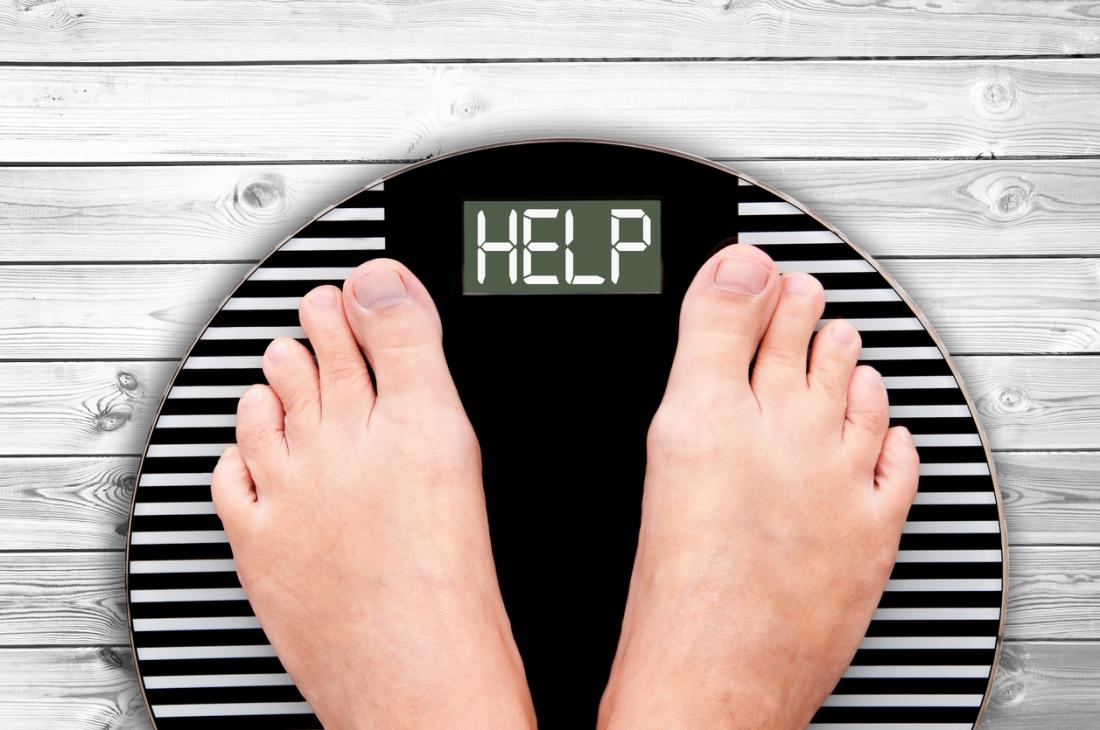
Obesity rates - world atlas - the predictions for Ireland and Greece


More than a billion people around the world will be obese by 2030 – double the number there was in 2010, according to new global estimates.

No country is on track to meet the World Health Organization’s (WHO) target to halt obesity by 2025, with one in five women and one in seven men predicted to have the condition by 2030.

Obesity has been rising fastest in low- and middle-income countries. Over the next eight years, the number of people with obesity is predicted to triple in low-income countries, compared with 2010.

The new figures come from the fourth World Obesity Atlas, produced by the World Obesity Federation. Its chief executive, Johanna Ralston, said political and health leaders needed to recognise the gravity of the situation and act.

See pages 33-35 for Europe, at the World Obesity Atlas.

Across the European region, almost 1 in 3 men (29.42%) and women (29.97%) are predicted to have a BMI of ≥30kg/m2 by 2030. This equates to approximately 102 million men and 113 million women in the region at risk of the complications of obesity by 2030. Of these, over 26 million men are predicted to have a BMI of ≥35kg/m2 and almost 6 million are predicted to have a BMI of ≥40kg/m2 , while 44 million women are predicted to have a BMI of ≥35kg/m2 and 14 million a BMI of ≥40. 63 million men and 83.5 million women in the European region had a BMI of ≥30kg/m2 in 2010. 


Countries in the European region with the highest estimated prevalence of obesity amongst women by 2030

Country                     Prevalence 2030 

Turkey                                       50% 

United Kingdom                     37% 

Ireland                                  35% 

Malta                                         33% 

Azerbaijan                                32% 

Georgia                                     32% 

Lithuania                                 31% 

Belarus                                     31% 

Greece                                  31% 

Croatia                                     31% 

-----------------------------------------------------------------------------------------------

Countries in the European region with the highest estimated prevalence of obesity amongst men by 2030

Country                         Prevalence 2030 

Malta                                     37% 

Hungary                                37% 

United Kingdom                  37% 

Ireland                               34% 

Turkey                                   34% 

Bulgaria                                 34% 

Czech Republic                    33% 

Luxembourg                         33% 

Israel                                     33% 

Croatia                                  32%