I accidentally broke my brain reading about Nobel Prize winners last month.
There's this thing called "Janusian thinking". It's exactly why some people's minds work like magic while the rest of us think in straight lines. Named after Janus, the Roman god with two faces pointing opposite directions. The psychologist who discovered it, Albert Rothenberg, was trying to figure out what made breakthrough thinkers different. He interviewed dozens of Nobel laureates, major artists, revolutionary scientists. What he found sounds impossible. These people can hold two different ideas in their mind at the same time. They can explore both without switching back and forth or forcing a quick comparison. They can consider “yes” and “no” to the same question simultaneously and stay clear-headed. Einstein too talked about this when he described his relativity breakthrough. He was imagining riding alongside a beam of light while also standing perfectly still. Both perspectives at once. Mozart said he could hear an entire symphony "all at once," every note, every contradiction, every resolution happening in a single moment of awareness. Your average person's mind works like a courtroom. Evidence comes in, you weigh it, you reach a verdict. Case closed. But Janusian minds work more like... I don't know, like a quantum computer that can process multiple realities simultaneously until something new emerges from the overlap. I've started noticing it in conversations. When someone can genuinely see both sides of something without needing to pick one, it drives people nuts. They want you to land somewhere definite. The ability to live in that tension space reads as wishy-washy or indecisive. Most creative advice tells you to "think outside the box." But Janusian thinking is weirder than that. It's being inside and outside the box at the same time. It's thinking the box exists and doesn't exist simultaneously. Which explains why truly creative people seem slightly unhinged. They think they're choosing between realities. But, they're inhabiting multiple realities at once, mining the contradictions for insights the rest of us never see. Sadly, most of us have trained ourselves out of this ability. We've learned that holding contradictions feels unstable, so we rush toward resolution. We've been taught that changing your mind means you were wrong before, so we defend positions instead of exploring them. But the people changing the world have kept that childlike ability to hold impossible thoughts without needing them to make sense immediately. We just need to live in the questions everyone else is too scared to ask.This blog is fanatic about FunFood (i.e. FUNctional Food to make us happier and healthier).
Tuesday, 11 August 2026
Janusian thinking
Wednesday, 13 October 2021
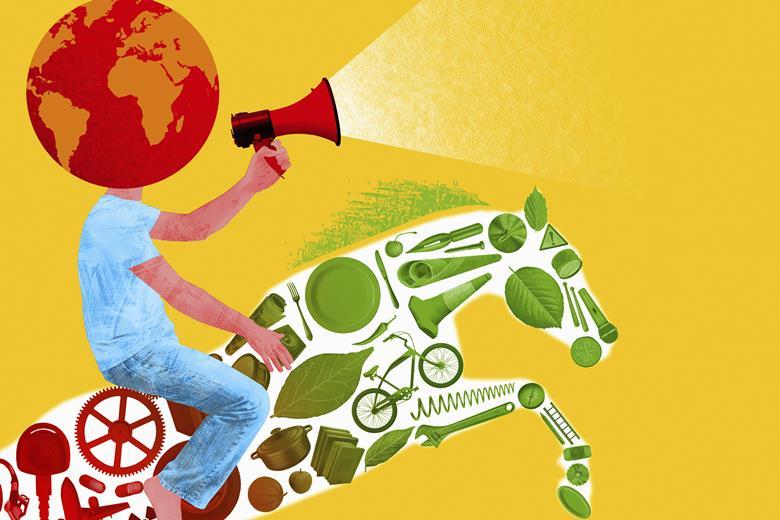
It’s time to rethink science education
By Justin Dillon, Lucy Avraamidou20 May 2021
Source: © Boris Séméniako/Ikon Images
It’s time to put science and environment literacy at the forefront of science education
---------------------------------
Unless we reconsider what it means to be scientifically and environmentally literate, science education will continue to fail our current students and future governments
=========================================
Science education has failed. This might seem an extreme argument at a time when scientists have developed vaccines for Covid-19 remarkably quickly. However, the vast majority of the public have not had an education in science that has adequately prepared them for the pandemic or to engage with the far more threatening issue of climate change.
Substantial numbers of people around the world refuse to be vaccinated and we have even witnessed governments paying for advertisements telling us how to wash our hands correctly. Many politicians cannot follow the science on Covid-19 and some do not understand basic scientific concepts or how science works. Climate change denial is also common, and scientists are openly distrusted, abused and undermined by those who should know better.
70% of teachers think the UK curriculum needs radical change to make the education system fit for purpose
Frustration with the current education provision has grown quickly. In the UK, youth-led organisation Teach the Future has called for the government to commission a review into how the formal education system is preparing students for the climate emergency and ecological crisis. Teachers, too, are hugely supportive of change: 70% of primary and secondary teachers surveyed by YouGov agreed that the current UK curriculum needs radical change to make the education system fit for purpose. Worryingly, only 18% said that they had received adequate training to educate students on climate change.
Environmental education
When the national curriculum underwent a major review in 2014, the group director of assessment and research at Cambridge Assessment, Tim Oates, who was leading the effort, argued explicitly against including climate change. His argument was that the curriculum should only involve the ‘core stuff’ and that teachers could teach climate change if they so wanted. However, teachers have unsurprisingly been reluctant to teach anything beyond what is examined. Renewed calls to include climate change education and, more broadly, education about sustainability in the curriculum, are likely to increase, particularly as we approach the COP26 climate change conference in November.
Education needs to be urgently re-envisioned to address contemporary societal challenges
One dimension of the argument for a different education about the environment is the call for a GCSE in natural history or a compulsory course in sustainability. However, we do not believe that tinkering with the curriculum is enough. Instead, we argue that radical, systemic reform is needed. Young people do not just need more or different knowledge, they need a fundamentally different educational experience. The nature and purpose of education needs to be re-envisioned to address contemporary societal challenges, and it needs to be done urgently.
Education has become a preparation for examinations rather than a preparation for life. It is difficult to see who the current examination system fully benefits. Both employers and universities are, at best, lukewarm in their enthusiasm for the specialisation that characterises education in the UK. Many students leave school with the same misconceptions they had when they started, while their interest in STEM subjects has been declining over the past five years. Those who succeed academically under the current system seem happy not to see a change in the status quo despite its obvious failings.
Science in society
The gap between school science and laboratory science continues to grow. While attempts to involve students in authentic science have had some success, we need a better approach to helping students to understand the real value of science to society. One way would be through adopting an issues-based, cross-curricular approach to teaching at secondary level. Our obsession with separate subjects at the expense of interdisciplinarity has stifled education innovation for far too long.
Another part of the answer lies in interactions between students and scientists, particularly those working in the areas of health and the environment. Few young people have any sustained interactions with scientists, whereas they might study an author’s work for a term or more in English literature lessons. Pupils need to know who the scientists are in their immediate locality, their community, their region, their nation and beyond. This engagement would have to involve a certain amount of virtual activity, but it is the only way that we can expect trust in science and scientists to develop. Ideally, students and teachers would engage in long-term health and environment projects that address local issues. These engagements would be supported by local industry, science centres and universities: civic science for sustainability.
Unless we rethink what it means to be scientifically and environmentally literate within the broader social, political and economic context, then science education will continue to fail. If students emerge from 11 or more years of schooling without understanding how science works, then any claim that we are providing an effective science education is nonsense.
Tuesday, 9 June 2020
not vitamins again!
Being an Asscociate Editor for a special issue can be a joy, well, most of the times.
Being able to read first novel work on covid and inflammation, it's a joy!
Sometimes, though, the MS is a repetition of the literature with no novelty, no rigor, no new information. Lots of groups out there talk about vitamins and covid.
Ok, guys, we got the message.
Writing about which vitamins and nutraceuticals will stop covid without addressing the underlying mechanisms is not good Science. Is it?
Wednesday, 23 May 2018
season review
The month of May is traditionally the month of the Finals, the Cups and the revisions for school exams...
Summarising the season, there are two truly memorable days...
1. Thursday 26th April 2018 when 3 St Munchins Year 1 Boys won a SciFest prize
| Darragh, Rory and Nathaniel (Right to Left) - smiley "Scientists to be" |
and
2. Sunday 20th May 2018 when Corbally United's U12a squad won the Div 1 cup.
| U12a Corbally United the Cup winners as picured in UL Sunday 20th May (the Mentors, the Boys, the smiles) |
I am not not sure if one photo equals to 1000 words but these two photos are millions of words for me :)
Well done, Boys and do not forget... to ...Carpe Diem !
Yannis
p.s.
Carpe Diem, Boys; make your Life extraordinary!
Wednesday, 29 March 2017
The Three Little Corals
![]() |
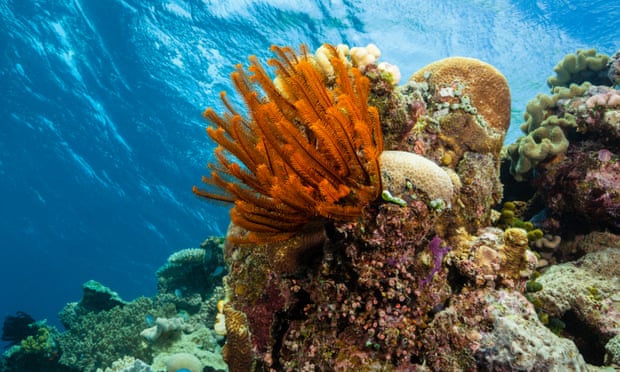
| Reef Top, Great Barrier Reef, Australia Photograph: Daniela Dirscherl/Getty Images/WaterFrame RM |
Once upon a time, possibly in the Precambrian there was an ancestral hexacorallian mother who had three little orders** of corals and not enough food to feed them. So when they evolved into distinct orders, she sent them out into the world to seek their fortunes.
to continue reading ...click here