Showing posts with label irish cement. Show all posts

Thursday, 5 October 2023

An (unpublished in the paper - hence published here) to the Editor of the Irish Times

 Smog city from PM 2.5 dust. Cityscape with bad air pollution. PM 2.5 concept

 = = = = = = = = = = = = = = = = = = = = = = = = = = = = = = = = = = = = = = = = = = =

PM2.5 and the Irish Cement Factory


sent: Tue 26/09/2023 11:51


Dear Sir,


We read with interest the article by Kevin O’Sullivan (Irish Times, 25th September 2023) on the risk that PM2.5 pose in relation to public health.

We would like to highlight that in December 2020, the EPA had a public oral hearing on whether or not to grant a licence to CRH (Irish Cement Factory in Mungret, Co. Limerick) to burn 90,000 tonnes of waste annually at its facility in Limerick. Included on that list are end of use tyres, animal waste, plastic, solvents etc.

Both of us are members of Limerick Against Pollution (LAP) and we presented at that EPA hearing along with a number of experts our grave concerns should a licence would be granted to CRH, but unfortunately we failed in our endeavours. Prior to the hearing LAP had organised a number of events and written a number of publications to raise public awareness should this licence be granted and the threats it would pose to public health.

Sadly, the EPA did not take into consideration our scientifically valid objections. Burning waste in Mungret will create a number of hazardous compounds that will pollute the air and with rain, they will pollute the Shannon estuary and hence the food chain.

Sadly, only time will tell how the decision to grant this licence will unfold for the thousands of people living in and around the cement plant. 


Yours sincerely,

Ms Claire Keating, Former GE Candidate for Green Party in Limerick West

Dr Ioannis Zabetakis, Associate Professor in Food Chemistry, University of Limerick


= = =

My comment  (5.10.23) : It seems that the esteemed Editor of the Irish Times did not find our letter to her/his liking. Probably, our referral to CRH (is it a state within a state?) and to EPA did not go down well.


Monday, 25 September 2023

What is PM2.5? Only the biggest air pollution threat to human health in Ireland


Smog caused by burning smoky coal and peat fires pollutes the air over a housing estate in Dublin in 1988. File photograph: Tom Stoddart/Getty


 Irish Times


As we face into winter, the latest findings on Irish air quality by the Environmental Protection Agency (EPA) could not be more timely. Ireland has a standout problem arising from the burning of solid fuels in domestic settings that poses a substantial risk to public health.

In 2022, air monitoring results from EPA stations across Ireland show fine particulate matter (PM2.5), arising mainly from burning solid fuel in our homes, and nitrogen dioxide (NO²) mainly from road traffic, remain the main threats to good air quality. High levels of these pollutants exceeded World Health Organisation (WHO) guidelines in most large urban areas at some point last year.

These pollutants are often associated with cold, still weather from late autumn through to early spring, when periods of poor air quality occur, though, fortunately, they are usually short-term.

The fact that most householders continue to wrestle with an energy crisis is likely to be compounding the threat. Leading Irish air pollution experts in September 2022 warned that burning highly polluting solid fuels – such as coal, peat/turf and wet wood – was likely to increase as people avoid expensive gas and electricity, while also in some instances defying a nationwide smoky coal ban introduced last year.

READ MORE

The most worrying finding is that “most of Ireland did not meet the WHO guideline for PM2.5 of 5 μg/m3″. Most of the country did meet the WHO guideline for nitrogen dioxide (NO2) of 10 μg/m3, though the EPA found elevated concentrations along the major urban road network in our larger cities.

The report confirms PM2.5 is the biggest air pollution threat to human health in the Irish context, giving rise to some 1,300 premature deaths annually.


= = =


related link


Wednesday, 3 November 2021

TRASH AND BURN: BIG BRANDS STOKE CEMENT KILNS WITH PLASTIC WASTE AS RECYCLING FALTERS

 An excellent Reuters report on Cement Kilns.


Trash and Burn

By Joe Brock in Singapore, Yuddy Cahya Budiman in Jakarta, John Geddie in Cauldon and Valerie Volcovici in Washington; additional reporting by Willy Kurniawan in Jakarta, Siddharth Cavale in Bangalore, David Stanway in Shanghai and Kate Abnett in Brussels

Graphics: Aditi Bhandari

Photo editing: Simon Newman

Video: Yuddy Cahya Budiman and Libby Hogan

Art direction: John Emerson

Edited by Marla Dickerson

Wednesday, 23 June 2021

Burning Tyres and Cancer

 The news are coming from Canada :

A potent human carcinogen found in Lafarge Brookfield’s cement kiln dust is making its way onto Nova Scotia’s farm fields 

The Halifax Examiner raised the issue about N-Nitrosodimethylamine (NDMA) with the two federal departments with mandates to protect the environment and ensure food safety. Here are their responses.


(...)


There is a real and substantial risk that groundwater may become a contaminated source of drinking water if the ash residuals contain [N-nitrosodimethylamine] NDMA and products of incomplete combustion of tires,” writes Hallett, who points to the spectacular way in which this occurred in areas of Ontario from both the manufacturing of chemicals and synthetic rubber for tires, as well as from the Hagersville tire fire, when 10 million tires burned for 17 days.  

Little did Hallett know, NDMA was already present in the CKD — even before scrap tires were included in the fuel mix.   

When the Examiner sent Hallett a copy of the analysis for NDMA, his response was simply, “All of the samples are positive for NDMA well above the detection limit … This means that NDMA is definitely there … and what you’ve got is one of the most powerful carcinogens ever found.” 


Monday, 12 April 2021

Burning hazardous and-or toxic waste in the Irish Cement Factory


EPA has informed us today, that their decision on Irish Cement Factory will be reached by end of June 2021.

Let's remember the case.

Irish Cement Factory

The Irish Cement Factory has been built to produce cement. It has not built to burn waste, any type of waste. When the discussion comes to toxic and hazardous waste, I have some questions in relation to the toxicity of these waste and hence the toxicity of the emitted chemicals.

We need to remember that burning organic waste (i.e. waste rich in polymers, possibly tainted with heavy metals etc) is a process that can emit heavy metals entrapped in PM2.5 (particulate matter with diameter 2.5μm) and the toxicity of these PM2.5 can be extremely high as shown here.


Heavy metals and dioxins

However, it isn’t only the PM2.5 that must make us worry about the toxicity of the emissions from the chimney of any cement factory that are not built for purpose (the purpose here is the incineration of hazardous waste). Apart from PM2.5 that have entrapped heavy metals, it is the question of the carcinogenic dioxins that will be emitted to the atmosphere by burning hazardous and/or toxic waste. Dioxins are lethal. Here is what WHO have reported on the toxicity of dioxins.


Cement factories and the food chain

In the University of Limerick (UL), in the module FT4428 “Advanced Food Chemistry”, we have carried an extensive study on this problem.

Final year students of the program “Food Science and Health” at UL have worked from 4 different points of view. Some groups worked for a dairy industry in the vicinity of Irish Cement, Mungret, Ireland.

5 groups worked on assessing the production of safe foods by the dairy industry

5 groups worked as if they were working for EPA, assessing the license application (and the objections!) and operations of Irish Cement

5 groups worked for FSAI

and

3 groups worked for NGOs like Greenpeace and WWF or representing the citizens.

Each group produced a written report assessing the hazards and ways to manage them.
The results of this amazing amount of the students scholar work can be found here.


The oral hearing

The EPA has announced it will hold a virtual hearing on 2 December 2020, dealing with objections to the project from 16 individuals and groups, including the Limerick Against Pollution LAP group, the Limerick Metropolitan council, Limerick city and county council, a number of local TDs and the University of Limerick.

We are going to take part at that hearing and present our case on the:


  • Hazardous waste and the Food Chain


  • Toxicity of Emissions and the Public Health


  • Monitoring mechanisms – are they adequate?


What I am going to bring to the hearing is my more than 10 years experience working with heavy metals and the food chain as shown here and here.

Ioannis Zabetakis

Head, Biological Sciences,

UL

Monday, 22 March 2021

Air pollution: Particulates are more dangerous than previously thought

 Researchers at the Paul Scherrer Institute PSI have for the first time observed photochemical processes inside the smallest particles in the air. In doing so, they discovered that additional oxygen radicals that can be harmful to human health are formed in these aerosols under everyday conditions. They report on their results today in the journal Nature Communications.


Source

Monday, 11 January 2021

Limerick TD seeks to make EPA more accountable with new laws

 Source : Limerick Leader


WILLIE O’Dea is to bid to bring legislation holding the Environmental Protection Agency to more account, back to the table.

In the last Dail, the Fianna Fail TD bid to have a section of the act which gave life to the environmental regulator, removed, because, as it stands, it is not liable for civil actions.

The move came following calls from Limerick Against Pollution (LAP), which was set up in opposition to Irish Cement’s €10m plan for Mungret – something which was last month subject to a five-day EPA inquiry.

A ruling from the body is expected by Easter.

“No-one can ever take a civil action against the EPA for a decision they ever made. That's quite unique in Ireland. You don't have this with the Road Safety Authority or various other organisations, or public State bodies. It gives them too much licence, in my view,” Mr O’Dea said.


Thursday, 10 December 2020

Irish Cement hearing: Oral hearing into controversial Limerick project concludes

 source : Limerick Leader

 (...)

In her closing submission, solicitor Michelle Hayes stated there are several reasons the EPA is “precluded” from granting the firm an operational licence, pointing out she brought fresh evidence to proceedings.

She said at the moment, the existing background levels of hexavalent chromium and sulphur dioxide in the air exceed European environmental guidelines.

On sulphur dioxide emissions, Ms Hayes said: “Irish Cement is seeking a derogation to 400mg which is eight times the permitted value of 50mg. When I questioned Mr Breen, the environmental manager on this, he said the current values emitted were somewhere between 100 to 200mg. So Irish Cement is currently not able to comply with the EU directive without the derogation. The EPA is being asked, yet again, to reward Irish Cement for its own wrongdoing and it’s effectively asking the EPA to clap it on the back.”


(...)


Mary Hammill, a member of Limerick Against Pollution, says she has found the oral hearing – held completely virtually – to be “grueling” and has been left “exhausted and stressed by it”.

“There are too many unknowns and uncertainties with this proposal. Not only should a new licence not be granted, but the existing licence requires in depth investigation by a third party independent of the EPA,” she added.

A decision on the licence is not expected until mid-way through 2021.


Tuesday, 8 December 2020

Irish Cement hearing: Firm landfilled asbestos at Limerick site based on ‘informal agreement’

IRISH Cement landfilled over 3,000 tonnes of asbestos just metres away from a protected lake for over a decade, it has emerged.

On the fourth day of an Environmental Protection Agency (EPA) hearing into the firm’s proposals to switch away from fossil fuels in favour of alternative methods in Mungret, it emerged the toxic material was stored underground from between 2000 and 2002 up to 2013.

Irish Cement’s head of quality and sustainability Seamus Breen said it was based on an “informal agreement” with the EPA – and added that he was not aware of any “formal procedure” which would have allowed the public to be aware of its deposition or removal.


The full article is here.


Friday, 4 December 2020

Irish Cement Limerick hearing: Shannon Estuary 'could become cesspool for dirty industry'


THERE is a danger the Shannon Estuary could become a “cesspool for dirty industry”, campaigners have warned.

Speaking at the second day of a five-day hearing into Irish Cement’s proposals for Mungret, Limerick Against Pollution’s Claire Keating showed a diagram of the various industries planned or currently on the banks of the Shannon and its entry into the Atlantic Ocean.

She highlighted the oil-fired generator located in Tarbert, the coal-fired generator at Moneypoint, Rusal Alumina located At Aughinish and the controversial Shannon LNG project proposed in Ballylongford.


(...)


Dr Angus Mitchell said: “Why should we consider there is an environmental health risk when Irish Cement tells us there isn’t? The answer is simple. Because the EPA tells us so.”

He pointed to a 2007 report which related to an assessment of a National Waste Management Plan.

“On page 72, the EPA says cement kilns can emit large volumes of dust which in addition to being a respiratory hazard, can act as a medium for the transport of other air pollutants,” Dr Mitchell told the hearing.

“Despite the evidence, they [Irish Cement] keep telling us there are no risks. There are risks Mr Gilmore. There are risks. You need to face up to them. You cannot keep denying them. We feel very threatened by this, and you don’t seem to understand that. this is on the record now as to how threatened we feel," he added.

Dr Ioannis Zabetakis of the University of Limerick’s health research institute feels Irish Cement has not properly evaluated the hazards and calculated the risk.

He said: “These are questions not just to Irish Cement, but also the EPA. How will you monitor these hazards in an independent way and create data which speaks for itself. We don’t need to look at literature to find out if incineration or co-incineration is safe or not. We need to do a trial run in the kiln at Irish Cement itself. We need to put proper monitors at the top of each chimney.

Also speaking for Limerick Against Pollution, environmental health expert Jack O’Sullivan said if the environmental regulator does not refuse Irish Cement a licence to operate – the last hurdle the firm has to clear  – it should issue permission for just five years, and which would not permit the use of any materials which could be recycled instead.


Source: Limerick Leader


Wednesday, 2 December 2020

Environment and Hazards

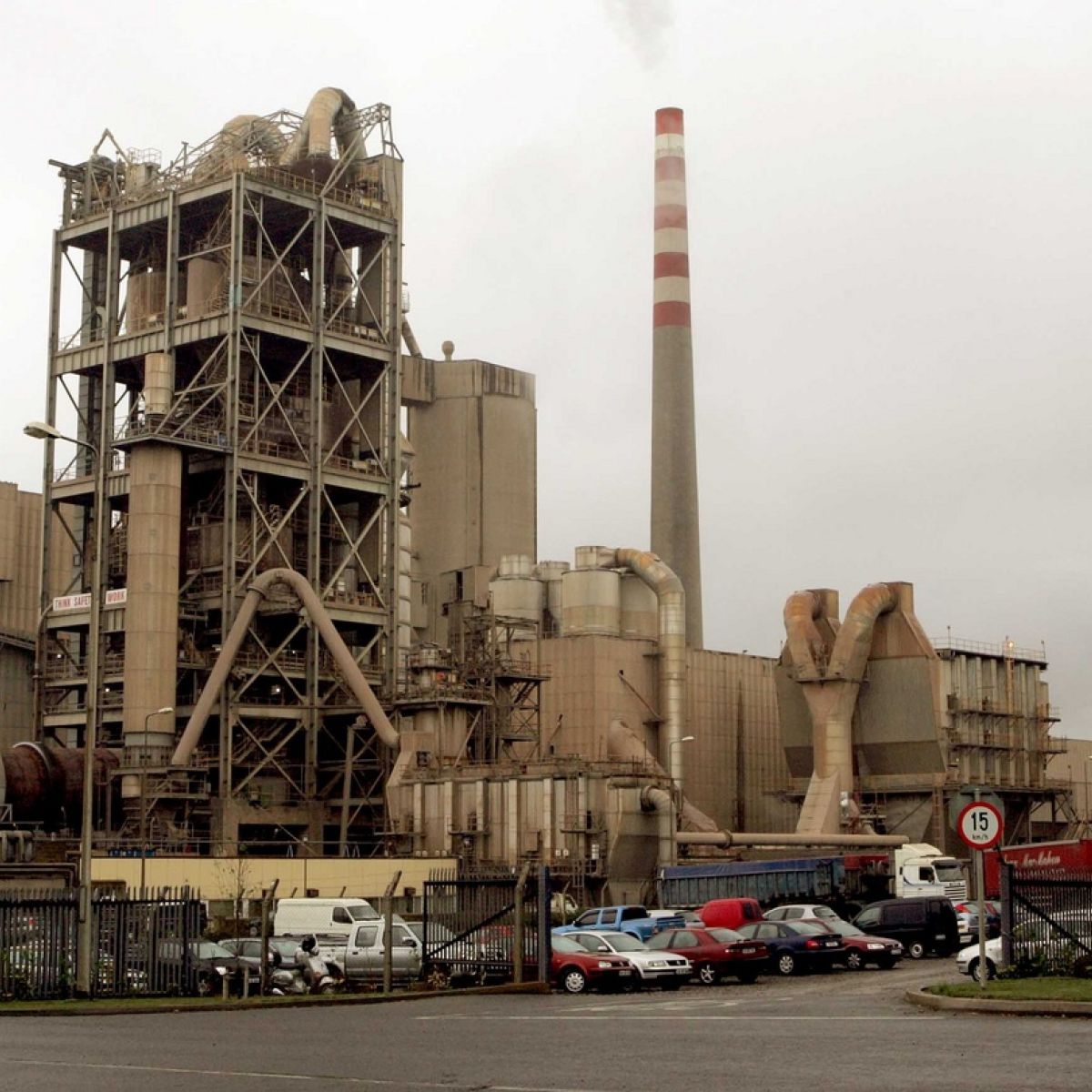
                                            The Irish Cement Factory in Mungret, co. Limerick
 

I have been watching the EPA's oral hearing on the license to pollute the environment by emitting hazardous and toxic substances, i.e. by burning toxic and hazardous material.

Our views are here and here.

What is environment though?

According to the Oxford dictionary,

environment is 

the surroundings or conditions in which a person, animal, or plant lives or operates.
"survival in an often hostile environment"
 
and
the natural world, as a whole or in a particular geographical area, especially as affected by human activity.
"the impact of pesticides on the environment".
 
Environment is air, water, soil, Humans, animals and plants, marine waters, marine animals.
 
In order to identify the hazards of an operation (in this case burning hazardous and toxic material at the Irish Cement Factory), we would need to consider Environment as all its components and the interrelations of its components.
If we think environment is only the air, then we will NEVER be able to assess the impact of a polluted environment to the living organisms, to Humans and to Public Health.
This morning's presentations lacked this approach, the complexity of Environmental, of the Chemosphere are we call it in Science.
 
There is a scientific journal called Chemosphere.
What does it offer?
 
Chemosphere is an international journal designed for the publication of original communications as well as review articles on chemicals in the environment. Chemosphere, as a multidisciplinary journal, offers maximum dissemination of investigations related to all aspects of the identification, quantification, behavior, fate, toxicology, treatment, and remediation of chemicals in the bio-, hydro-, litho- and atmosphere.  
 
= = =
I will stop here now and hopefully I am going to see you tomorrow morning at the hearing where I will present the potential impact of burning toxic material to Humans, the food chain and the Public Health.