he world is facing a food crisis in late 2026 and well into 2027. Three key factors are responsible.
Nearly 300 million people suffer from severe food insecurity as a result of protracted conflicts, with Sudan the most notable example, and climate change.
The Russia-Ukraine and Middle East conflicts are disrupting flows of grain, fertiliser and energy which will impact on the production of crops of wheat, maize and rice in 2027.
The coming El Niño is likely to be the most severe in recorded history. The 2023-24 El Nino led to the worst Southern African drought in more than a century, with more than 60 million people requiring humanitarian assistance.
What
did the patron saints of Ireland eat? From what we can tell, Patrick,
Columba, Brigid and their peers could have chowed down on a variety of
locally-grown foods, including rye, peas, barley, oats and different
wheat varieties.
And
while it’s fun to imagine it, there’s a pressing reason to know the
details. Researchers believe that getting a better understanding of
ancient foods could help protect our food security into the future
OPINION: OUR INTENSE FOCUS ON BEEF AND DAIRY HAS GIVEN US ADVANTAGE IN GLOBAL MARKETS, BUT WAR IN UKRAINE HAS EXPOSED OUR VULNERABILITY IN FRUIT, VEGETABLE AND CEREAL PRODUCTION
Russia’s invasion of Ukraine, known as the “bread basket of Europe”, has far-reaching implications for food. The most direct and urgent implication is Ukrainians in besieged areas being cut off from food supplies, and the millions of people trying to flee Ukraine not being able to access food and water. This is where the immediate humanitarian focus needs to be. Beyond these immediate needs, there is great concern about the catastrophic impacts on Ukraine’s agricultural production and the spill-over effects globally.
RUTH HEGARTY, DIRECTOR OF EGG&CHICKEN CONSULTING, ADVOCATES FOR A MORE DIVERSE AGRICULTURAL ECONOMY.
Ukraine is one of the world’s major grain exporters. Seeds that were destined for Ukrainian fields sit in warehouses unable to reach farmers and the window to sow them is shortening by the day. Crops already in fields will not be harvested as long as Ukraine is under attack, and some crops may already have been destroyed.
The loss of Ukraine’s exports of major agricultural commodities such as wheat, maize, and sunflower oil, along with the loss of fertiliser supplies from Russia, has serious repercussions for global agriculture and food supplies. In addition, there is growing concern for food security of North African and Middle Eastern countries that will feel the impacts most acutely, due to reliance on Ukraine and Russia for over half of their cereal imports and on wheat as their main staple.
But, as a country that produces and exports many times the food required to feed our population, do we need to worry about Ireland’s food security? Why did the Minister for Agriculture ask this week that all Irish farmers grow crops this year? What does this say about Ireland’s current food system and our food policies?
While Ireland is very successful at producing food and at finding exports markets for it, our agriculture has become highly specialised. We have focused primarily on beef and dairy production due to the suitability of our climate and our competitive advantage in grass-based production. Ireland is not unusual in this level of specialisation.
IRELAND HAS SPECIALISED IN BEEF AND DAIRY BECAUSE OF OUR STRONG COMPETITIVE ADVANTAGE IN GRASS-BASED PRODUCTION. PHOTOGRAPH: ALAN BETSON
This has come about through increasingly globalised markets and policies that have encouraged countries to specialise in areas of production that they can do best and most efficiently; the very same reason why Ukraine is focused on production of wheat, other cereals, and oil seed crops, due to its rich, fertile plains. But, in order to produce the quantities of meat and dairy that we do, even in grass-based systems, we rely heavily on imported inputs of fertiliser and feed.
Because we have been so focused on beef and dairy, and because we have been able to source animal feed cheaply from abroad, we have not worried so much about growing other things.
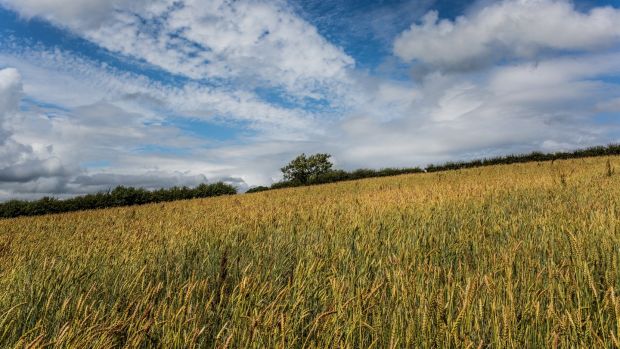
A FIELD OF WHEAT IN CO. MONAGHAN. PHOTOGRAPH: JAMES FORDE
“Ireland is well placed to be food secure,” says Fintan Keenan, a tillage farmer originally from Co Monaghan who has been farming wheat and beans organically in Denmark for the past 10 years. “But as cheap wheat became abundant on global markets, Irish farmers were encouraged to stop growing it.” The same can be said for other crops and cereals, with the tillage sector seeing steady decline in recent decades due to challenges of viability.
'They will look at how many acres they can sacrifice to grow their own fodder... input prices will force them to think differently'
Now, having largely moved away from mixed farming systems and with many having left tillage, farmers are suddenly being asked to plant crops again. Will Irish farmers answer this call? Keenan believes they will, if they can. “Farmers are rolling up their sleeves, they are responding because they are looking at the rising price of animal feed. They will look at how many acres they can sacrifice to grow their own fodder. These are farmers who would not dream of growing anything tillage-wise, but input prices will force them to think differently.” But that does not mean it will be straightforward.
“The infrastructure simply isn’t there. In Denmark, tillage is very much part of a mixed farming set-up and the facilities for drying, storage and milling are there in every community. Irish farmers aren’t set up for this. Even if the equipment was there, the knowledge and skills have been lost.”
Keenan says Ireland is in a “double jeopardy” situation when it comes to staple crops such as wheat. We rely both on imported or homegrown wheat for animal feed and on wheat from international markets, mainly coming through the UK and France for milling, for flour.
'My sense is that any additional crops that will be grown this year by Irish farmers will be destined for animal feed, not for human consumption'
“My sense is that any additional crops that will be grown this year by Irish farmers will be destined for animal feed, not for human consumption,” says Keenan. That the main concern around shortages, and the call to grow crops, is focused on animal feed and not food for people seems clear. In a statement this week, the IFA suggested that potato farmers might be well placed to switch to tillage crops, indicating that human food production might be sacrificed for animal feed. Of course, in the short-term, the animals we have will need to be fed, but this exposes real weakness in Ireland’s narrow approach to food policy.
“How can we be called food secure?” asks Fergal Anderson, a Galway-based farmer who produces vegetables and fruit for the local market with his partner Emanuela Russo. “We export huge quantities of beef and dairy that are dependent on inputs. But humans don’t live on steaks and milk. It is a huge simplification to say we are food secure; we don’t produce the whole picture, right now we can’t supply our own population with a nutritious diet.”
Indeed, specialisation also has consequences for what we produce. With policy support focused elsewhere, sectors such as horticulture have been left to languish. There has been a continual reduction in the number of fresh produce growers in Ireland over the past two decades and this exodus continues.
According to the IFA, the number of field growers of vegetables has fallen from an estimated 400 down to 100 in the past 20 years, and they attribute this exodus primarily to the ever-lower prices offered by retailers. Appeals to retail multiples to end the notorious 49c fruit and vegetable deals have so far fallen on deaf ears. Supermarkets serve their customers, and they want to offer them low prices.
Domestic horticulture is not given adequate support and no concerted policy effort has been made to prevent below-cost selling of fruit and vegetables
Ireland now finds itself importing the majority of our fruit and vegetables. While we will probably always want to import bananas and oranges, we also import vast quantities of crops that can be grown in Ireland, including tens of thousands of tonnes of apples, potatoes, onions, cabbages and carrots. Our reliance on imports of fruit and vegetables is something we have walked into with our eyes wide open in policy terms. Domestic horticulture is not given adequate support and no concerted policy effort has been made to prevent below-cost selling of fruit and vegetables.
“Our focus on commodity production and exports has left local markets behind, particularly for fruit, vegetables and grains,” says Anderson, “We have been supplying local markets from our farm for 10 years, farming agro-ecologically, and we have never received government supports”.
The war in Ukraine, and its impacts on the global food system, are shining a light on problems that were already there. Anderson along with other small and medium-scale farmers, established Talamh Beo in 2019 to advocate for a new approach to farm policy in Ireland.
“We are extremely exposed. The future we want is many eggs in many baskets. Currently Ireland has all its eggs in the dairy and beef baskets; and this makes things fragile because of all the inputs required and the fact that those inputs are mostly imported. There doesn’t seem to be much interest in moving away from this currently,” says Anderson.
But we know that we need to move away from it. We are in the midst of dual biodiversity and climate crises and the way we farm and produce food are key to solving them. The need to shift away from chemical inputs of fertilisers and pesticides, to reduce animal agriculture with its high reliance on imported feeds, and to close the loop through regenerative agricultural practices has been clearly recognised at an international level and has been incorporated into EU policy through the Green Deal and the Farm2Fork strategy, but Irish policy has been slow to move in that direction.
The price of fuel, fertiliser and animal feed was already on the rise before Russia’s invasion of Ukraine, and now with prices soaring and real concerns about supplies, there are serious implications for farm profitability. If the growing evidence of the huge environmental impact of our current farm practices has not been enough of a wake-up call, perhaps this will motivate the move to a new direction.
But farming organisations and agri-business representatives are already lobbying for relaxation of environmental measures in light of the Ukraine war and food security concerns. There is a real and palpable fear now among environmental groups and farmers who have advocated for a more regenerative, agro-ecological approach, that hard won-policy progress will be rowed back on.
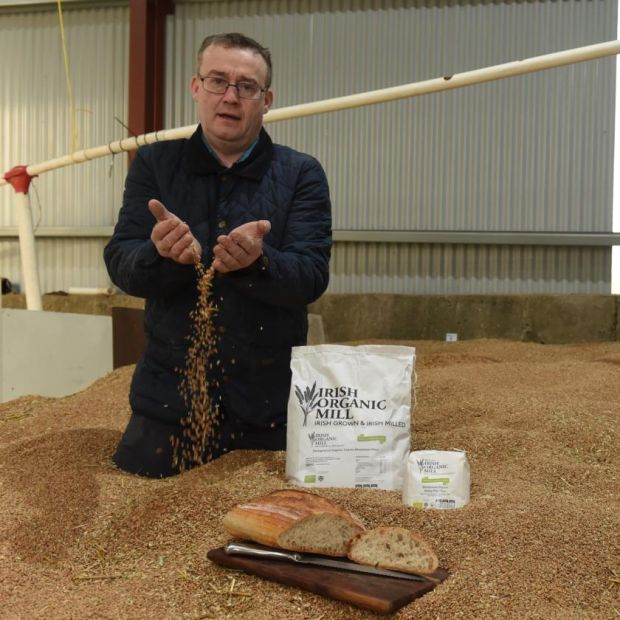
WHEAT FARMER MARK GILLANDERS FROM MONAGHAN MILLS HIS PRODUCE FOR THE IRISH MARKET. THERE AREN’T MANY FARMERS LIKE HIM. PHOTOGRAPH: PHILIP FITZPATRICK
Fergal Anderson, represented the European Co-ordination Via Campesina, a farmer-led international organisation advocating for food sovereignty, at this week’s European Commission meeting on Food Security and Contingency planning. He says that while there are genuine concerns about food security, the current crisis further highlights the fragility of current agricultural models.
He says the Irish Government and the EU must avoid knee-jerk reactions and remain focused on long-term goals to move away from dependence on synthetic fossil fuel-based fertilisers and towards agro-ecology.
The vision of Talamh Beo, and Via Campesina, of which it is a part, is one of food sovereignty and agro-ecology, and this is what Anderson wants to see Irish policy move towards.
“The key difference between food security and food sovereignty is that food sovereignty includes agency of people and farmers in the process. It is about democratisation of the food system, one that doesn’t centre on agribusiness and industry but on citizens and communities, that puts people and the environment first. It is inseparable from agro-ecology, which is an entirely different way of farming that doesn’t depend on synthetic inputs, but on complementary livestock and crop production, closed nutrient cycles and biodiverse landscapes.”
'If we want real sustainability, we should be building regional food economies, not motorways'
Fintan Keenan believes in moving Ireland in a similar direction. “We are not talking about going back to horses and carts,” he says, “If we want real sustainability, we should be building regional food economies, not motorways. That means providing the supports and the environment for every region to produce grains, vegetables, meat and dairy.”
Both Keenan and Anderson point to further key challenges in both food and farming beyond our reliance on imports and our lack of diversity in production, not least declining farm incomes and the ageing farming population. Both believe things can be turned around, and farmers can deliver on the vision for a better food system, if the incentives are right.
“We are really challenged by the culture from the top. We need policy shifts, but we also need a cheque through the door. A lot of farmers are doing what they are doing because that is what they have been taught by the State and industry for a long time. It is not easy to jump out of that loop. But I think, given the issues we are facing with input costs, more farmers will start to consider organics and alternative approaches now,” says Keenan.
Anderson also believes the time is ripe for change. “We need to create an enabling environment. If it costs money to produce fruit and vegetables here, we need to pay it; but we also need to put policies in place that ensure access to healthy and affordable food for all, not just those for who can pay more.”
“It can be done. There are examples all over the world, including in Ireland, of regenerative systems that produce nutritious food for local communities. This is what needs support, not agrochemicals and fertiliser,” says Anderson.
“There is a shocking lack of vision in Ireland. But we have to ask ourselves what kind of agricultural sector do we want to have in five to 10 years’ time? What does the Irish citizen want to see? More environmental damage, more concentration, more specialisation? Or vibrant local economies, that provide decent livelihoods to farmers and nutritious food to citizens.”
Ruth Hegarty is the director of Egg&Chicken Consulting, an agency dedicated to food policy, advocacy and education, and to developing diverse sustainable food businesses.
The news that are coming from Lebanon are alarming, to say the least:
"Flour mills in Lebanon delivered supplies only to Arabic bread bakeries on Monday and Tuesday, forcing bakers who make pastries and thyme pizzas to close as a means of rationing wheat imported from Ukraine, which supplies 60 per cent of the country’s wheat needs. Lebanon could face wheat shortages from July, forcing the government to reduce subsidised flat rounds of Arabic bread, which sustain the 80 per cent of Lebanon’s population who live in poverty.
The Ukraine crisis has engendered fears of food insecurity and driven up the costs of animal feed, boosting meat, dairy and poultry prices. Lebanon’s poultry feed stocks will last only for two months.
Beirut has kept tight rein on imports because of financial meltdown and reduction of storage capacity caused by the 2020 explosion in Beirut port, which destroyed Lebanon’s main grain silos.
Lebanon has approached the US, India and Canada to access new grain sources as Ukrainian farmers have abandoned their fields to flee their country or take up arms against invading Russians. Ukraine’s ports have shut and there is also concern that Russia’s grain exports will be blocked by western sanctions".
---
Therefore, we would need to re-examine our sources of raw materials for bread and bakery products.
Wheat shortages will impact all countries importing wheat from Russia and Ukraine.
In Ireland, the Minister for Agriculture has confirmed he will ask farmers to grow more grain due to potential supply shortages that could happen later this year due to the war in Ukraine.
Η Ρωσική εισβολή στην Ουκρανία εκτός από το ηθικό θέμα, προκαλεί και μεγάλη ανησυχία για έξαρση της επισιτιστικής ανασφάλειαςσε πολλές κυρίως ευάλωτες χώρες και όχι μόνο, που θα πληγούν περισσότερο από τη διακοπή των εξαγωγών τροφίμων της Ουκρανίας.
Πολλές χώρες βασίζονται στις εξαγωγές τροφίμων τόσο από τη Ρωσία όσο και από την Ουκρανία. Αυτή η εξάρτηση καλύπτει δεκάδες χιλιάδες καλλιέργειες, σιταριού, καλαμποκιού και ηλιέλαιου που οι δύο χώρες έχουν τη μεγαλύτερη παγκόσμια εμβέλεια.
Ireland’s proposed 2030 agri-food strategy is out of
line with the Government’s economy-wide emissions reduction targets for
the next decade, according to a report by 70 environmental and climate
groups.
They warn that, if adopted, the strategy would force impossible cuts on other sectors.
Having
left the “industry-dominated” group drawing up the strategy – published
in draft form by the Minister for Agriculture last week – the Environmental Pillar
(EP), Stop Climate Chaos (SCC) and Sustainable Water Network (Swan)
have published an alternative report which sets out how to “drive down
agriculture emissions while simultaneously restoring our depleted
biodiversity and water bodies”.
Their
report puts the Green Party in a difficult position, given its support
base, as the party has backed the strategy, which is open for public
consultation.
The
agri-food strategy, which was criticised by the groups as “entirely
inadequate from a climate and environmental perspective”, is broadly
aligned with the Climate Bill.
Deadline for manuscript submissions: 15 March 2021.
= = = = = = = = = = = = =
Dear Colleagues,
The current and future sustainability of humanity is intrinsically
linked to the environmental and biophysical conditions on our planet.
There is a widespread belief that these conditions are greatly
compromised by anthropogenic activity and that, unless action is taken,
irreversible change will be unavoidable. Alongside these challenges is a
growing human population and the need for sufficient and nutritional
food. Although recent international initiatives such as the 2030 Agenda
for Sustainable Development and associated 17 Sustainable Development
Goals recognize these challenges significant information gaps remain. In
particular, there is an ever-growing need to balance the
interdependencies and conflicts between economic, social and
environmental systems so that sustainability across local and global
scales and overall food security can be realized.
This special issue will address these issues and seeks contributions
from colleagues interested in sustainable food production from economic,
social and environmental perspectives as well as health promotion.
Contributions which address synergies and conflicts between these issues
are especially welcome. This special issue aims to publish high quality
research papers and reviews that will be of interest to scientists,
policy makers, educators and stakeholders across the full spectrum of
farm to fork for sustainable food production and health promotion.
Department of Biological Sciences, University of Limerick, Limerick V94 T9PX, Ireland
Interests: the impact of land use; land use change on soil carbon
stocks and greenhouse gas emissions; carbon storage in harvested wood
products; forest ecosystem services; nutrient stores in forest biomass
Today many are aware of the need to reduce food losses and waste.
With a specific goal on halving food waste while reducing losses, the 2030
Agenda is also quite vocal about the issue. But beside being a goal in its own
right, reducing food loss and waste could help achieve a number of Sustainable
Development Goals relating to food security and environmental sustainability.
How to translate this into effective action? The State of Food and Agriculture 2019 responds
to this question, providing key guidance for an effective and sustainable
solution of the problem. The report provides new estimates of the world’s
food that is lost from post-harvest up to, but excluding, the retail level. It
also offers a comprehensive analysis of the critical loss points in specific
supply chains, providing examples on appropriate measures for an effective
reduction.
Where in the world is the most expensive plate of food? This publication
exposes the relative price of a nutritious meal in countries around the
globe when compared to the average daily income.
The pdf file has some strong data on food insecurity and poverty! While someone living in New York might spend just 0.6% of their daily income
on the ingredients to make a simple bean stew, someone in South Sudan would need to
Workers on tractors harvest soybeans in the deforested land of Campo Novo do Parecis, in the Brazilian state of Mato Grosso.
Photograph: Maurilio Cheli/AP
Today, more and more people are eating animal products such as
meat & dairy.
Our new report, ‘Appetite for Destruction’, highlights
the impact that animal feed production is having on species, habitats
and our health.
The huge amount of land needed to produce protein-rich feeds such as
soy is having devastating effects on species & their habitats,
especially in vulnerable areas such as the Amazon, the Congo Basin &
the Himalayas. In fact, our UK food supply alone is directly linked to
33 species extinctions at home and abroad.
On average, we consume between 64 and 88g of protein per day, which
is well above the 45-55g recommended by nutritional guidelines. This
means that in 2010, we needed an area the size of Yorkshire to produce
enough soy to feed our livestock. If global demand grows as anticipated,
we’d need to step up our feed production by 80%, which just isn’t
sustainable.
With over 23 billion chickens, turkeys, geese, ducks and guinea fowl
on the planet (more than three per person!), it’s not surprising that
intensive farming has led to lower quality food. For example, you’d have
to consume a whopping six chickens today to get the same amount of
healthy omega-3 fatty acid found in just one chicken in the 1970s.
So how can we feed the world and have enough space for wildlife at
the same time? Simply put, we need to consume and produce food
differently. If everyone ate the nutritionally recommended amount of
animal products, we’d need 13% less land to grow feed. This means we’d
save an area the size of the European Union from agricultural
production.
The Livewell principles below give guidance on how to make small changes to our diets to benefit people and planet.
My July column at International Aquafeed is here.
Enjoy!
Food
Security and Climate Change
Over the past weeks, there were some rather disappointing developments
on climate change and related politics and politicians. US has now opted out of
the Paris Agreement. The UK’s PM has failed to react strongly to that decision
of the Trump’s administration making a lot of people wondering where UK’s
government stands today.
Let’s have a
look though why we need to bother about these developments.
One of the most urgent problems that we need to face is the one of food
security; i.e. Food Security (FS) stands for the production of nutritious food
that is enough to feed all people on Earth.
FS has two
dimensions:
1. nutritional value of the produced food and
2. sustainable production of food.
Climate Change (CC) is a huge problem that we face as food Scientists. CC makes
the food production more difficult and more expensive. Therefore, CC is a huge
obstacle in our attempts to increase FS. Denial of CC is a major political and
scientific non-sense! Denial of CC jeopardises FS, in other words it may put
human lives at risk. This risk is related to famine, malnutrition or even death.
Therefore, in our opinion, denying CC and Paris agreement is simply wrong and
unhuman!
On top of these
developments, the recent elections in UK have brought some further developments
that are related to CC and FS. At the moment (as these lines are being written),
it looks like that UK will have a Tories-DUP government with Michael Gove as
Environment Minister. Theresa May’s choice of Mr Gove is rather surprising because
she sacked him as Education Secretary last year. Past record of Mr Gove is not
promising: his voting record reveals he has generally opted
against eco-friendly measures, such as reduction in carbon
emissions and financial incentives for low carbon emission electricity
generation.
On the other
hand, DUP’s political views on CC are rather alarming. While climate change
scepticism is not official party “policy”, the DUP has previously appointed a
denier as environment minister in Northern Ireland, and it counts a number of
creationists (i.e. deniers of the evolution theory) among its senior members. Friends of the Earthhas expressed concern that the Democratic
Unionists will exercise major national influence over the government even though
some of the party’s MPs are climate change sceptics. The most vociferous
doubter of climate change is the DUP’s East Antrim MP, Sammy Wilson. He has
described the theory of manmade climate change as a “con”.
James Orr, Friends
of the Earth’s Northern Ireland director, said: “Their manifesto had hardly a
positive word on the environment and nothing at all on climate change. Theresa
May must not allow the DUP to further weaken her already inadequate manifesto
commitments to maintain environmental protections and preserve nature”.
Both US and UK
have a strong role as leading countries in promoting Science that serves the
people and respect the environment. Will the current administrations in these
countries show such commitment?