Showing posts with label beer. Show all posts

Wednesday, 28 September 2022

Extraction of valuable compounds from brewing residues: Malt rootlets, spent hops, and spent yeast


the full article is here.

Abstract

Background

Brewing generates large amounts of residues including barley malt rootlets, spent hops, and spent yeast. These residues are sustainable and rich sources of compounds with valuable nutritional and functional properties such as proteins, polyphenols, and polysaccharides. The growing scarcity of natural resources and the increasing unsustainability of waste management, in the context of a rising global population, stress the need for reusing these wastes. This requires the development of suitable methodologies to recover interesting compounds.

Scope and approach

This work reviews the characteristics of brewery residues, the methodologies employed for the recovery of their valuable compounds, their functionalities, and their potential applications. A special consideration was focused to those methods employing innovative and sustainable approaches such as the use of deep eutectic solvents, microwave-assisted extraction, pulsed electric fields, high intensity focused ultrasounds, pressurized liquids, and supercritical fluids.

Key findings and conclusions: Despite the general use of conventional solid-liquid extraction, works using emerging techniques are becoming more usual. While the benefits of these techniques in relation to sustainability are clear, yields are not always as high as expected. Polyphenols and proteins were mostly extracted from barley malt rootlets, while spent hops are more appreciated for their polyphenols, especially xantohumol and essential oils, and spent yeast is rich in polysaccharides, especially β-glucan, proteins, fatty acids, and flavour enhancers nucleotides. Some of these compounds exert significant antioxidant, antiproliferative, and immunoactivity and are potentially interesting for the food, cosmetic or pharmaceutical industries.

Wednesday, 31 August 2022

Eurostat: Αύξηση ρεκόρ στην παραγωγή μπύρας χωρίς αλκοόλ στην ΕΕ

 πηγή: cibum.gr


Το 2021, τα κράτη μέλη της ΕΕ παρήγαγαν 33,1 δισεκατομμύρια λίτρα μπύρας που περιείχε αλκοόλ και σχεδόν 1,7 δισεκατομμύρια λίτρα μπύρας, η οποία περιείχε λιγότερο από 0,5% αλκοόλ ή δεν είχε καθόλου αλκοόλη.

Σε σύγκριση με το 2020, σημειώθηκε ώθηση στην παραγωγή μπύρας στην ΕΕ με και χωρίς αλκοόλ. Η παραγωγή μη αλκοολούχου μπύρας αυξήθηκε περισσότερο, από 20%, ενώ η μπύρα που περιέχει αλκοόλ αυξήθηκε σχεδόν κατά 3%. Το 2021, η συνολική παραγωγή μπύρας της ΕΕ ισοδυναμούσε με σχεδόν 78 λίτρα ανά κάτοικο.


Friday, 8 October 2021

The effect of moderate wine consumption on cytokine secretion by peripheral blood mononuclear cells: A randomized clinical study in coronary heart disease patients


Cytokine

Volume 146

October 2021 

Article number 155629

  • aSend mail to Fragopoulou E.,
  • a,
  • a,
  • a,
  • a,
  • a,
  • a,
  • b,
  • c


Highlights

•

Moderate wine consumption doesn't have adverse effects on basic metabolic markers.

•

Moderate wine consumption has not effect on soluble protein inflammatory mediators.

•

Moderate daily tsipouro consumption (ethanol) induces TNFα secretion by PBMCs.

•

Wine micro-constituents attenuate ethanol effect on cytokine secretion by PBMCs.

-----------------------------------------

This paper shows that the consumption of a fermented drink has a positive impact in relation to cytokine secretion and hence inflammation.

-----------------------------------------------------------------------

Further reading:

Ethanol effect

Tumor Necrosis Factor

Peripheral blood mononuclear cells (PBMC)

In vitro results on the anti-inflammatory effects of beer and tea.


Wednesday, 18 December 2019

my favourite paper of our group of 2019


I asked the gang over coffee which one of our 2019 papers you like most...
We can not agree! Variety of opinions is the spice in any group/team etc :)

I chose this one.


A paper that shows moderate drinking is good for you. A paper about Ireland, a paper about brewing.

Enjoy your Guinness/ale/lager over Christmas !
Any fermented food and drink is nutritious!

But! Remember!


Monday, 20 May 2019

new paper from our group

Total, Neutral, and Polar Lipids of Brewing Ingredients, By-Products and Beer: Evaluation of Antithrombotic Activities 

Department of Biological Sciences, University of Limerick, Limerick V94 T9PX, Ireland
*
Author to whom correspondence should be addressed.
Foods 2019, 8(5), 171; https://doi.org/10.3390/foods8050171 (registering DOI)
Received: 24 April 2019 / Revised: 14 May 2019 / Accepted: 19 May 2019 / Published: 20 May 2019 
 
the full text is here.

Tuesday, 29 January 2019

new paper from our team: to Beer or not to Beer?

The in vitro antithrombotic properties of ale, lager, and stout beers


Abstract

The in vitro antithrombotic properties of polar lipid microconstituents of three Irish beers (ale, larger, and stout) have been assessed against platelet-activating factor-induced platelet aggregation. Total lipid (TL) extracts were obtained using the Bligh and Dyer method and each beer was separated into the organic phase and hydromethanolic phase. The total polar lipid (TPL) and total neutral lipid (TNL) fractions of the organic phase and hydromethanolic phase of each beer were obtained using a counter-current distribution. The TL, TNL, and TPL extracts of each phase of each beer were measured for their capacity to inhibit platelet-activating factor-induced platelet aggregation. The low IC50 values obtained suggest that all three beers contain potent polar lipids that can inhibit platelet-activating factor-induced platelet aggregation. The fatty acid composition of the organic phase TPL extracts were measured using gas chromatography-mass spectrometry. The organic phase total polar lipid extracts were further fractionated using thin-layer chromatography (TLC) and the antithrombotic bioactivities of these TLC bands were measured. This data suggested that the TLC bands corresponding to phosphatidylcholine, phosphatidylethanolamine, sphingomyelin, and cardiolipin were the most active phospholipids in the total polar lipids of the organic phase. These promising results indicate that beer consumption may provide antithrombotic effects.

Sunday, 14 October 2018

Friday, 20 April 2018

Beer and Heart

In our ongoing projects at our group FLIPS here in UL, we are looking into the cardioprotective properties of fermented foods and drinks.

 
https://beerandhealth.eu/beer-and-health-moderate-consumption-as-part-of-a-healthy-lifestyle-5th-edition/

 One of them is beer.

We have found some really promising results in terms of inhibition of platelet aggregation.

We have tested a lager, an ale and a stout for their anti-thrombotic capacities and we are now drafting a scientific paper to publish the data and expand this work on the brewing arena.

If you work in the beer industry, these data may be of some interest for you. Feel free to contact us

ioannis.zabetakis@ul.ie

Tuesday, 13 March 2018

Beer Ethics

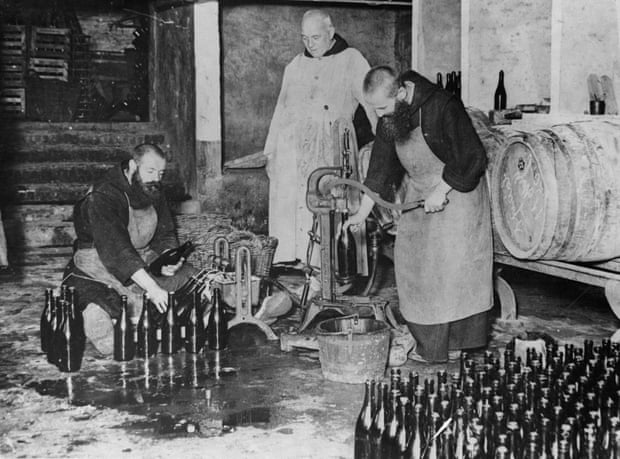
Monks in the bottling room of the brewery in Westvleteren in the early 1900s. Photograph: Hulton Deutsch/Corbis via Getty Images


this is a fascinating story!

A spokesman for the abbey said: “A price of nearly €10 per bottle goes against the ethical standards and values that the monks face. Every beer lover knows that the Trappists of Westvleteren do not pursue profit maximisation, they only produce as much beer as is necessary to provide for their livelihood. All the profits made go to the abbey charity.”

Sunday, 18 February 2018

Believe grape expectations

(letter to the Editor - Sunday Times Ireland - 18th February 2018)


With reference to your article 

 I must point out that according to the Mediterranean diet pyramid, the moderate consumption of red wine (1-2 glasses per day) is recommended. Blue-zone people - those in longevity hotspots, where people reach the age of 100, actually do consume wine and beer.

.       From a food chemistry and nutritional point of view, all fermented alcoholic drinks have positive health impact when consumed in moderation. The French Paradox (where people in France, despite the high dietary intake of fats, have low incidence of heart diseases) explains this phenomenon due to nutritional value of red wine. On the other hand, distilled alcoholic drinks have no nutritional value whatsoever. This is a crucial point that needs to be highlighted: fermentation has a positive nutritional impact whereas distillation has only negative ones. 
   So,on what basis, does the Health Minister ignore all this strong scientific evidence and propose a cancer-related labelling on wines?

   Dr Ioannis Zabetakis

Further reading sources