Thursday, 29 February 2024

Whispers of wellbeing from antiquity

 While many technological interventions of today and the future will help usher in a new era of medicine, health and wellbeing, it is all too tempting to paint a picture of something of a panacea; a cure for all. Perhaps, rather than focusing on technologies, some of the truths about living a long and healthy life can be learned in wisdom from the past.


the full article is here.

‘A perfect storm’: Why more students are dropping out of college

 an excellent analysis on what Colleges need to do in relation to increased dropout rates.

the full article is here.

Tuesday, 27 February 2024

Family-run Yeeros Wins Independent Restaurant of the Year in Deliveroo Restaurant Awards 2024


The roo-sults are in! Deliveroo announces the winners of its the Deliveroo Restaurant Awards 2024, which celebrate the best and most loved independent restaurants in Ireland and across the UK. 

The most coveted award – Independent Restaurant of the Year 2024 – has been won by family-run Greek restaurant, Yeeros in Dublin, after battling it out against UK Regional Restaurant Award winners White Men Can’t Jerk in Peckham, London, Luxford Burgers in Edinburgh, Scotland, Dhamaka in Bristol, South England and Slap & Pickle in Sheffield, North England. 

The award was judged by renowned food critic and writer Jimi Famurewa, in collaboration with Deliveroo’s CEO and founder, Will Shu. Jimi toured the width and breadth of Ireland and the UK to meet with each shortlisted regional restaurant, scoring them against criteria that included brand personality, food quality, packaging and presentation, customer reviews, and environmental consciousness. 


[the full report is here]

Monday, 26 February 2024

Most things you’ve heard about eating meat are wrong, say Irish scientists

Risks are associated with eating too much meat but some nutritional claims are based on flawed data, say two of Ireland’s leading food and diet specialists

 From the Irish Times

A series of studies on the health impact of eating red and processed meats had a seismic impact on dietary advice across the world over the past seven years. Other studies published since have exposed their flaws, yet they continue to be at the forefront of global nutrition policy.

Reports from EAT-Lancet Commission on Food, Planet, Health, published in 2019, and from the Global Burden of Diseases (GBD) Risk Factors Collaborators in papers dating from 2017 were most influential in prompting the shift.

The message was clear: A 2020 GBD study found nearly 900,000 deaths worldwide in 2019 were caused by consumption of red meat, making it the fifth-largest dietary risk factor. Recommendations called for dramatic reductions or total exclusion of animal-source foods, particularly red meat and dairy from the human diet.

They suggested these dietary shifts would not only benefit human health but also planetary health – it was hailed as shaping “the diet of the future” – as red meat was an inherently harmful food. The only problem is that much of this research has been shown to be flawed, lacking transparency in how conclusions were reached, and yet it continues to be central to dietary advice of policymakers and health organisations.

Two of Ireland’s leading food and diet specialists, Prof Alice Stanton of the Royal College of Surgeons in Ireland and Prof Patrick Wall of University College Dublin have led international efforts to have the studies corrected. Their motivation, they say, is the health consequences of flawed data amid continuing “misinformation” about meat diets.

When they see adverse nutritional claims associated with meat, they regard this as more ammunition for their cause. But many of these nutritional claims are based on flawed science

—  Prof Patrick Wall

In her latest paper published in npj Science of Food this month, Stanton details “unacceptable use of substandard metrics in policy decisions which mandate large reductions in animal-source foods”.

In short, major studies recommending plant-based diets are based on bad data and incorrect assumptions, she says. The 2020 GBD study underestimated the importance of it being easier for bodies to take in proteins and micronutrients from meat than plant-based food. The EAT-Lancet report “would not meet nutritional requirements for adults”, she adds.

Stanton points to influential groups which contend that animal-source foods and particularly red meat cause heart attacks, stroke and cancers, especially those groups advocating for “an almost completely plant-based diet”, when some plant-based diets would cause nutritional deficiencies including anaemia – especially among under-fives, women of childbearing age and older people.

She highlights strong evidence that unprocessed red meat delivers the most vitamin B12 intake in human diets, while delivering key compounds for metabolism. Going vegan means some women need iron supplements, she says, while many older people need the high-quality protein and key minerals that meat provides in protecting against osteoporosis, dementia and fragility.

Stanton, an expert in cardiovascular therapeutics, acknowledges possible risks from excess consumption of meat, ie more than five times a week, “but there are considerably greater risks from dramatic reductions or exclusion of meat, dairy, fish and eggs”. Equally, those risks could be due to an unbalanced diet or high consumption of calories. With evidence around excessive consumption of red meat being “extremely uncertain”, it shouldn’t be used to guide policy decisions, she says.

Wall, a former head of the Food Safety Authority of Ireland (FSAI) and chairman of the European Food Safety Authority, is concerned by the extent to which flawed science is circulated and incorporated into nutrition advice. He accepts many people are against meat for animal welfare reasons or because of the environmental impact of livestock production, “which are valid concerns”.

But he draws the line with dietary advice: “When they see adverse nutritional claims associated with meat, they regard this as more ammunition for their cause. But many of these nutritional claims are based on flawed science.”

Equally, he questions the validity of some contentions when it comes to nature in crisis. “There is a lot of talk about a plant-based diet as healthier for us and for the planet. However, given the biodiversity crisis we are currently experiencing, partly as a result of all the agrochemicals we are currently using, there is no talk of the need for safer plant protection products or GMO [genetically modified organism] disease-resistant crops that will not require sprays,” he notes.

Stanton accepts “there are extremes at either end of the debate”, but is grateful their position is increasingly acknowledged by “really influential scientific groups”, though the reports – principally in the Lancet – remain uncorrected. She and five other leading researchers, including Wall, detailed flaws in a 2021 letter which was published nine months later.

They forced an acknowledgment, she says, on the lack of evidence that consuming unprocessed red meat was causing hundreds of thousands of deaths.

They asked for the evidence that red meat consumption was causing deaths in such high numbers. They were told a future report would acknowledge errors. This was published another nine months later. While the basis for those conclusions was not outlined, there was a comprehensive article with new figures saying a person could eat up to 200g a day – ie, a small steak – with no evidence it would cause harm.

Yet the 2019 figures remain uncorrected, Stanton says, and other researchers are still using that data. It is influencing international guidelines on diet from the World Wildlife Fund and nutritional advice in Nordic countries. “It’s continuing to influence policymakers – and it’s worrying.”

The World Health Organisation has highlighted weaknesses in the research. HSE advice through the FSAI recommends a maximum of 75g of red and processed meat daily. This allows for consumption three to four times a week, which Stanton regards as “reasonable” as part of a balanced diet.

The NHS in the UK advises beef, lamb and pork are good sources of protein and can form part of a balanced diet, but eating more than 90g daily can raise the risk of bowel cancer.

The GBD study did not take into account the contribution of moderate meat consumption towards nutrient adequacy, Stanton says.

In response, the Lancet group said: “The GBD 2019 Article, EAT-Lancet Commission on Food, Planet, Health, and Lancet Countdown on health and climate change reports, were each published following independent, external peer-review.”

“Scientific discussion and debate are an important part of the scientific process, and the Lancet journals welcome responses from readers and the wider scientific community to content published in the journals,” it added.

A vegetarian does not eat animal flesh such as meat, poultry or fish. A vegan diet is a stricter one, avoiding dairy, eggs and ingredients derived from animals. According to US National Institutes of Health, in most cases vegetarian diets are beneficial in prevention and treatment of diseases, such as cardiovascular disease (CVD), hypertension, diabetes, cancer, osteoporosis, renal disease and dementia, as well as diverticular disease, gallstones and rheumatoid arthritis.

The American Health Association advises “diets rich in animal-based and minimally processed plant foods are associated with poor and optimal cardiovascular health, respectively”. This explains why CVD rates are much higher in Western countries, where intake of animal-based foods is 140 per cent more than dietary recommendations, while intake of raw plant foods is relatively low. However, there is a scarcity of studies specifically exploring benefits of plant-based diets.

Stanton acknowledges food production and consumption contribute to the world’s climate and biodiversity crises, being responsible for about a third of greenhouse gas emissions. Conversion of natural ecosystems to agricultural land has been deemed “the largest threat to species extinction”.

So there is a need “to transform our food system so that all have access to healthy diets, while at the same time safeguarding the planet’s health”. How that is achieved induces intense debate – to what extent does food production, processing, distribution, retailing and consumption have to change? Many researchers say dietary shift is critical, “but rather than recommending moderation of consumption patterns, they require considerable reductions, or even total exclusion of animal-source foods”.

Stanton concludes: “It’s really important that health professionals, doctors, nutritionists and policymakers are aware of this discussion.”


Thursday, 22 February 2024

Research Profile

 At this website, you can create your own research cloud based on your publications.


Here is mine based on my papers on Pub Med.


Can Happiness Be Taught?

                     Woman practicing yoga doing warrior pose in front of foggy mountains in morning

                                                            Photo, Credit : Free Pik

= = = = = = = = = = = = = = = = = = = = = = = = = = = = = = = = = = = = = = = =

Bolstered by Oprah, a Harvard Business School professor thinks you should run your inner self like a company.

the full article is here.  

In conclusion, we need to remember that well-being and happiness are multifactorial equations.

Diet, lifestyle and daily routine are important elements.

Extensive research has shown that if we follow the 9 principles of Blue Zones (Power of 9), our longevity can be prolonged.

We need to dedicate more time to our well-being. If we are well, this will show to our family, our friends and our colleagues at work.

It's a win/win.


Majority of food giants’ profit in UK comes from junk food


The news today are coming from the UK.

An article on The Times reports on the Dark PR of the major food producers.

Companies are responsible for 90 per cent of online advertising spending on chocolate, crisps, biscuits and ice cream

This is yet another example on how food giants use advertisement to promote junk food, with zero nutritional value.

These news make the excellent book of Grant Ennis: "Dark PR" a must read!

I am half way through Grant's book and I have learned so much. 

So insightful info on the food chain!

Yannis

P.S. I need to update urgently some of my lecture slides :)


Wednesday, 21 February 2024

Log Post (XXVII)


            Photo credit: Elina Psa


= = = = = = = = = = = = = = = = = = = = = = = = = = = = =  = = = =

Ολυμπιακός,

Η ερυθρόλευκη φανέλα,

δυο ρίγες,

η μια κόκκινη,

η άλλη άσπρη,

ένας φίλος είχε γράψει στο βιβλίο

"Θρησκευόμενοι Κόκκινοι Επιστήμονες" :

το κόκκινο είναι το πάθος

το άσπρο η ηρεμία μετά το πάθος,

όπως το κύμα της θάλασσας,

που μαζεύει ενέργεια - πάθος

και όταν "σκάει" 

από κόκκινο

μεταμορφώνεται σε άσπρο.

Πάθος --> Ηρεμία --> Πάθος...

Κάπως έτσι δεν είναι και η ζωή;

Αρκεί να μην χάνουμε το πάθος μας,

Αρκεί να κρατάμε άσβεστη την φωτιά,

Την φωτιά στο Λιμάνι!


[Log posts on this blog are short texts/poems that I started writing in Oct 2018, I chose this name for these posts as Georgios Seferis has written poems using this title]


[Τα Log Posts σε αυτό το ιστολόγιο είναι σύντομα ποιήματα που ξεκίνησα να γράφω τον Οκτώβρη του 2018, διάλεξα αυτό το όνομα μιας και ο Γιώργος Σεφέρης έχει γράψει ποιητικές συλλογές με τίτλο "Ημερολόγια Καταστρώματος"]


Log Post (XXVI)


 [Limerick, 21.2.2024]

= = = = = = = = = = = = = = = = = = = =

Blue skies,

Blue sea,

Can we have a blue wind?

The wind of optimism?

Red sky,

Red fire,

The fire of the soul,

The red of passion,

The red of adrenaline...

Blaugrana,

Blau - blue in Catalan,

Grana - red,

but Blaugrana is a feeling,

it's an attitude,

it's a concept,

it's a mindset,

it's something more than Barca,

it's the combination of

Optimism and Fire ._


[Log posts on this blog are short texts/poems that I started writing in Oct 2018, I chose this name for these posts as Georgios Seferis has written poems using this title]


[Τα Log Posts σε αυτό το ιστολόγιο είναι σύντομα ποιήματα που ξεκίνησα να γράφω τον Οκτώβρη του 2018, διάλεξα αυτό το όνομα μιας και ο Γιώργος Σεφέρης έχει γράψει ποιητικές συλλογές με τίτλο "Ημερολόγια Καταστρώματος"]

Monday, 19 February 2024

Atherosclerosis and the LDL hypothesis


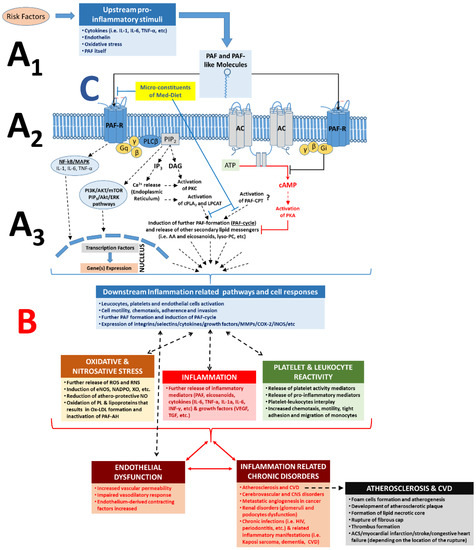
Role of PAF, PAF-R, and its related pathways in the inflammatory cascades and in the pathogenesis of inflammation-related chronic disorders; increased PAF levels by pro-inflammatory stimuli and binding of PAF on its receptor, PAF-R, on the membranes of several cell types can lead to intracellular cascades and a PAF cycle-related amplification of the initial stimuli (A) and in numerous cell responses according to each cell type (B), which can lead to endothelial dysfunction and the onset and progression of inflammation-related chronic diseases. A1. Several risk factors and related upstream pro-inflammatory stimuli trigger formation of PAF and PAF-like molecules (i.e., oxidised phospholipids) and expression of PAF-R. A2. Binding of PAF/PAF-like molecules on PAF-R promote several inflammation-related intracellular pathways; activation of the PAF-R signalling initiates (through a Gq-linked mechanism) PLCβ-mediated hydrolysis of PIP2 to produce IP3 and DAG, leading to transient elevation of cytosolic Ca2+ released from intracellular stores and activation of PKC. The rise in Ca2+ also activates cPLA2α, leading to the release of AA and lysophosphatides, which can serve as substrates for further synthesis of eicosanoids and PAF, respectively. Signalling through Gi-linked PAF-R inhibits the conversion of ATP to cAMP by adenylate cyclase, in this way preventing the activation of PKA and related anti-inflammatory signalling events. A3. Activation of the PAF/PAF-R intracellular pathways leads to the activation of cPLA2 and PAF biosynthetic enzymes (LPCAT) for further formation of PAF and other lipid second messengers, thus creating a PAF cycle and further amplification of the initial inflammatory stimuli, while expression of genes involved in inflammatory manifestations (such as genes of several cytokines, integrins, selectins, metalloproteinase, several enzymes for eicosanoids, and ROS, etc.) is also induced. The pathways inducing the PAF-CPT-related synthesis of PAF are not fully elucidated. B. Increased PAF levels at the site of inflammation and ligand binding (PAF and/or oxidised phospholipids binding) on PAF-R can promote a broad spectrum of PAF effects depending on the cell type and tissue, which is achieved through the production and release of various downstream mediators, such as PAF itself and several other mediators of inflammation such as eicosanoids, cytokines (i.e., TNF-α, IL-1α, IL-6, IL-8, INF-γ, etc.), growth factors (i.e., VEGF, IGF, TGF), ROS, and RNS, but also through the expression of selectins and integrins (i.e., ICAM, VCAM, P-Selectin, E-Selectin) in the membranes of activated cells. Thus, increased downstream mediators, PAF levels, and the subsequent further activation of the PAF/PAF-R pathways promotes the activation and aggregation of platelets and leukocytes, activation of endothelial cells, leukocyte adherence, motility, chemotaxis, invasion, migration, and subsequent endothelial dysfunction, thus stimulating the onset and development of inflammation-related chronic diseases and disorders. C. Microconstituents of several foods of the Mediterranean diet have been found to beneficially inhibit the PAF/PAF-R pathways and PAF synthesis towards homeostatic re-equilibration of PAF levels and activities [57]. PAF: platelet-activating factor; PAF-R: G-protein-coupled PAF-receptor; AC: adenylate cyclase; NF-kB: nuclear factor-kappa light-chain-enhancer of activated B cells; MAPK: mitogen activated protein kinase; ERK: extracellular signal-regulated kinases; Akt: protein kinase B; PI3K: phosphatidylinositol 3-kinase; mTOR: mechanistic target of rapamycin; DAG: diacylglycerol; AA: arachidonic acid; cPLA2: cytosolic phospholipase A2; PKC: protein kinase C; PKA: protein kinase A; LPCAT: acetyl-CoA: lyso-PAF acetyltransferases; PAF-CPT: dithiothreitol l-insensitive CDP-choline: 1-alkyl-2-acetyl-sn-glycerol cholinephosphotransferase; ATP: adenosine triphosphoric acid; cAMP: cyclic adenosine monophosphate; PLC: phospholipase C; MMP: metalloproteinase; COX: cyclooxygenase; iNOS: nitric oxide synthase; eNOS: endothelial nitric oxide synthase; ROS: reactive oxygen species; RNS: reactive nitrogen species; NADPO: nicotinamide-adenine dinucleotide phosphate oxidase; XO: xanthine oxidase; IL-6: interleukin-6; IL-1: interleukin-1; TNFα: tumour necrosis factor-α; ACS: acute coronary syndrome; VEGF: vascular endothelial growth factor; PL: phospholipids; CVD: cardiovascular diseases; CNS: central nervous system. 

[ the figure is from our paper: Inflammation, not Cholesterol, Is a Cause of Chronic Disease ]


= = = = = = = = = = = =

Four years ago, the European Heart Journal published a paper titled "Low-density lipoproteins [LDLs] cause atherosclerotic cardiovascular disease: pathophysiological, genetic, and therapeutic insights: a consensus statement from the European Atherosclerosis Society Consensus Panel."

Unfortunately, some researchers have cited this paper as proof that LDLs cause atherosclerosis, just as the title suggests. But if we analyze the content of the paper, we will find that it implicates modified LDLs.

Thus, the true title should read:

Modified low-density lipoproteins cause atherosclerotic cardiovascular disease.

To illustrate why, let us look at examples.

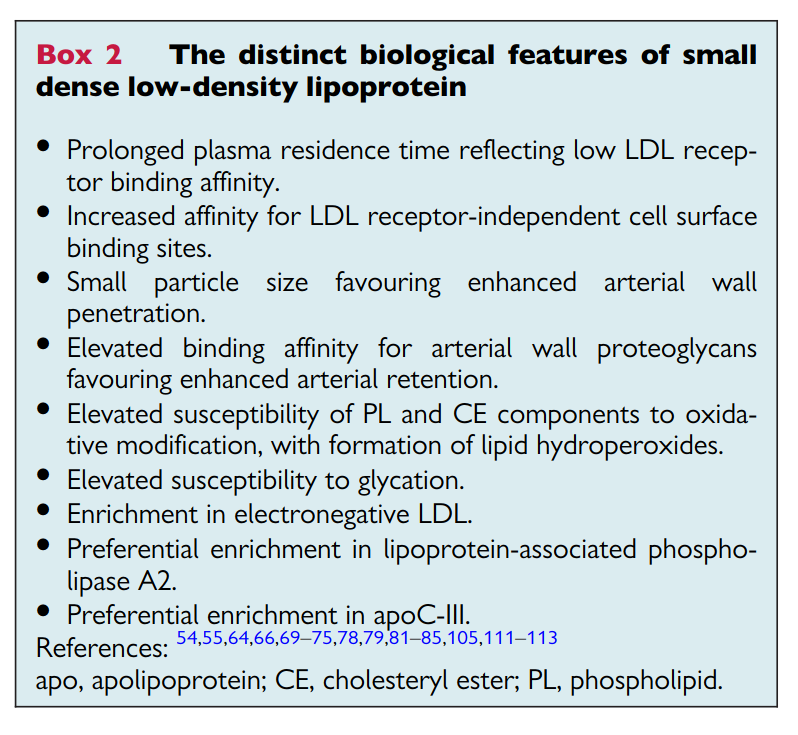
(Image: Taken from the Borén et al.)

And many researchers agree.

Ikezaki and colleagues, for example, have repeatedly stated that small dense LDL is the "most atherogenic lipoprotein parameter" (see here, here, and here).

Deeper in the paper, the European Consensus Panel states:

Several early studies involving quantitative coronary angiography without or with intravascular ultrasound demonstrated modest but significant benefits from statin-mediated LDL lowering on the degree of coronary artery stenosis.

But one of the cited studies showed that changes in LDL size had the strongest association with coronary stenosis, which was considerably stronger than the associations for apoB or LDL cholesterol.

More recently, Jung et al. (2023), McGarrah et al. (2022), Sekimoto et al. (2022), Sæther et al. (2023), Ceponiene et al., (2021), and Aneni et al. (2019) did not find harmful relationships between large LDL particles and atherosclerosis.

Modified and Oxidized LDLs

Besides small dense LDL, the European Consensus Panel mentions the words "modified" and "oxidized" (or related words) throughout the paper.

These modified LDLs, they note, are linked to many aspects of atherosclerosis, including inflammation and thrombosis.

By contrast, the paper mentions "native" or non-modified LDL only a few times. But even in those cases, the data implicated modified LDL.

For example, take the following statement:

Both native and oxidized forms of LDL may prime platelets and increase platelet activation in response to various agonists, thereby contributing to increased risk of atherothrombosis.

But the cited papers (here and here) did not implicate native LDL.

The second paper, for example, explicitly concluded:

L5 but not L1 induced tissue factor and P-selectin expression in human aortic ECs, thereby triggering platelet activation and aggregation with activated ECs. These findings indicate that elevated plasma levels of L5 may promote thrombosis that leads to STEMI [ST-elevation myocardial infarction].

And:

LDL-cholesterol levels were similar between patients with STEMI and control subjects. However, the mean L5% was significantly elevated in STEMI patients compared with that in control subjects.

L5 is a modified LDL called electronegative LDL, which may be a form of oxidized LDL.

Researchers also propose that modified LDLs are more likely to be retained in the arteries. Just last year, for instance, Law and colleagues found that the arteries of animals tend to retain L5 LDL and that L5 LDL (but not L1 LDL) has atherogenic properties.

As they stated:

L1 LDL [the least electronegative LDL] has no negative effects and just provides nutrients; in contrast, L5 [the most electronegative LDL] is highly atherogenic even at low concentrations such as 5 mg/dL.

Vulnerable Plaques

According to the European Consensus Panel:

A pioneering investigation of bilateral, biopsied carotid endarterectomy samples at baseline and after 6 months of pravastatin treatment was seminal in demonstrating statin-induced increases in collagen content and reductions in lipid content, inflammatory cells, metalloprotease activity, and cell death, all of which favour plaque stabilization.

But statin treatment is not the same as LDL treatment.

In two studies the Panel cited, the data showed that statins may have antioxidant and anti-inflammatory effects independent of lipid-lowering effects, and that statins reduce oxidized LDL independent of any effect on LDL-C or total cholesterol.

Why is this important?

Well, unlike normal LDL, oxidized lipoproteins, oxidized lipids, and oxidative stress are associated with plaque vulnerability.

OxLDLs play key roles in the initiation and progression of atherosclerosis and previous studies have shown a strong association between plasma OxLDLs and plaque instability in coronary and carotid artery disease [Kim et al., 2020].

Transcytosis

In the discussion of transcytosis — a process by which LDL is transported across endothelial cells — the European Consensus Panel states:

Many risk factors modulate the propensity of LDL and other atherogenic lipoproteins to traverse the endothelium and enter the arterial intima.

But the cited paper notes:

The first regulator of LDL transendothelial passage is the glycocalyx, a thick and negatively charged matrix layer, that lines the inner wall of healthy blood vessels. . . . It is known that the glycocalyx is severely impaired in diabetes, a disease accompanied by enhanced ROS [reactive oxygen species] production. Furthermore, ox-LDL [but not normal LDL] reduce the effective thickness of the glycocalyx.

Similarly, Lankin, Tikhaze, and Melkumyants (2023) stated:

Numerous studies showed that the leading factor responsible for damage to the glycocalyx and abnormal endothelial performance in atherosclerosis is the oxidative stress.

The European Consensus Panel also ignores the "outside-in" hypothesis, where most lipoproteins enter the coronary intima from the adventitia (the outer layer of the artery) through immature, fragile, and leaky neovessels.

In fact, the Panel cited an autopsy study by Nakashima and colleagues (2007). But according to Subbotin (2016), Haverich and Boyle (2019), and one author of that study, the data were consistent with the outside-in hypothesis:

The fact that the lipid builds up in the outer layer of the intima and not within the intima close to the lumen raises questions as to whether circulating lipid may be coming from the vasa vasorum rather than the luminal side of the vessel [Wight, 2018].

In 2022, Goldberg and Khatib also criticized the transcytosis hypothesis, stating:

By extensively reviewing the existing evidence, we could reasonably conclude that most lipoproteins enter the wall of large arteries not from the lumen by transcytosis but through the vv [vasa vasorum].

Incidentally, oxidized LDL may affect the small blood vessels of the adventitia. Singla et al. (2021), for example, found that oxidized LDL in the adventitia may harm the lymphatic vessels. But they did not observe this harm with native LDL.

Intimal Thickening

Another topic the European Consensus Panel mentioned was intimal thickening:

Autopsy studies in young individuals demonstrated that atherosclerosis-prone arteries develop intimal hyperplasia, a thickening of the intimal layer due to accumulation of smooth muscle cells (SMCs) and proteoglycans. In contrast, atherosclerosis-resistant arteries form minimal to no intimal hyperplasia.

I agree with the Panel that intimal thickening is "critical to the sequence of events leading to plaque formation," and that disturbances in blood flow or hemodynamic stresses cause intimal thickening.

But as with many aspects of atherosclerosis, oxidative stress can contribute. For example, intimal thickening in the prenatal or infancy period is associated with maternal smoking, possibly caused by oxidants in cigarette smoke.

Atherosclerosis Regression

The European Consensus Panel states:

Beyond atherosclerosis progression are questions relating to mechanisms of plaque regression and stabilization induced following marked LDL-cholesterol (LDL-C) reduction by lipid-lowering agents.

The Panel cites five studies here. But two of those studies were about Lp(a), and another study was one I already cited above.

This leaves us with two studies: ASTEROID and SATURN.

In the ASTEROID study, LDL had no association with atherosclerosis regression:

The on-treatment atheroma volume, change in atheroma volume, and high percentage of subjects with atheroma regression did not differ by the achieved LDL cholesterol . . . Atheroma regression occurred in most patients and was not linked to the LDL cholesterol achieved.

The researchers also admitted that statins have pleiotropic effects:

These multiple mechanisms of the beneficial effects of statins could explain why event reduction and lesion modification correlated poorly with LDL cholesterol lowering alone.

Meanwhile, in the SATURN study, there was no convincing evidence of benefit for lower LDL levels:

Despite the lower level of LDL cholesterol and the higher level of HDL cholesterol achieved with rosuvastatin, a similar degree of regression of PAV was observed in the two treatment groups. 

Modified LDL, on the other hand, might be a better marker. Tani and colleagues, for instance, found that the change in modified LDL was associated with atherosclerosis regression, but the change in LDL cholesterol was not.

Calcification

On the topic of coronary calcification, the Panel claimed:

Although the role of LDL in coronary artery calcification remains unclear, it is well-established that an elevated LDL-C level is a strong risk factor for progression of calcification.

But the cited study showed a weak correlation (i.e., a correlation coefficient of only 0.25). As such, many individuals with higher LDL levels had similar or less progression of coronary calcification compared to individuals with lower LDL levels.

Furthermore, the Panel noted in the next sentence that modified LDL is likely the problem:

Modified LDL stimulates vascular calcification by driving osteoblastic differentiation of vascular SMCs, while inhibiting osteoclast differentiation of macrophages. In contrast, HDL appears to exert beneficial effects on vascular calcification . . .

Thus, as Allison and Wright stated two decades ago:

The relationship between LDL cholesterol and atheroma development is dependent on the oxidized form of LDL. Biochemical research has provided evidence that low-density lipoprotein cholesterol can promote atherosclerotic calcification of vascular cells. However, this effect was found to be due to products of lipid oxidation and not a function of native LDL or its concentration in serum.

A Chat with Dr. Borén

Interestingly enough, I had a short email exchange with the lead author of the consensus paper, Jan Borén, six months before the paper was published.

Before the consensus paper, Borén and Williams (2016) published a paper claiming that oxidized LDL was a mere "bystander" in cardiovascular disease. But I was unconvinced.

Therefore, in 2019, I emailed Dr. Borén and challenged his paper with contrary evidence. After a few back-and-forth emails, he agreed that many things about atherosclerosis are still unclear and we should remain open-minded.

What I could not predict, however, was that six months after this email exchange, Borén and colleagues would feature oxidative stress as a major part of their argument!

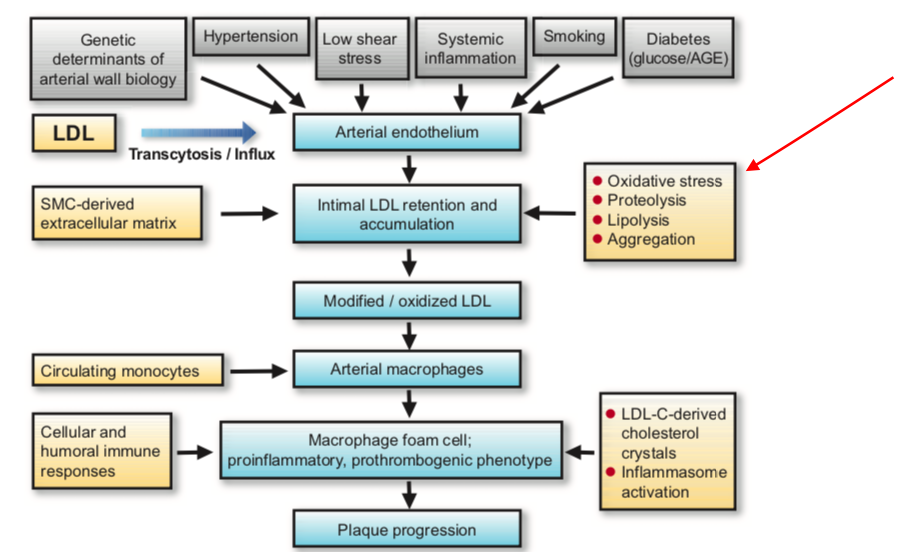
Oxidative stress even appears in their take-home figure:


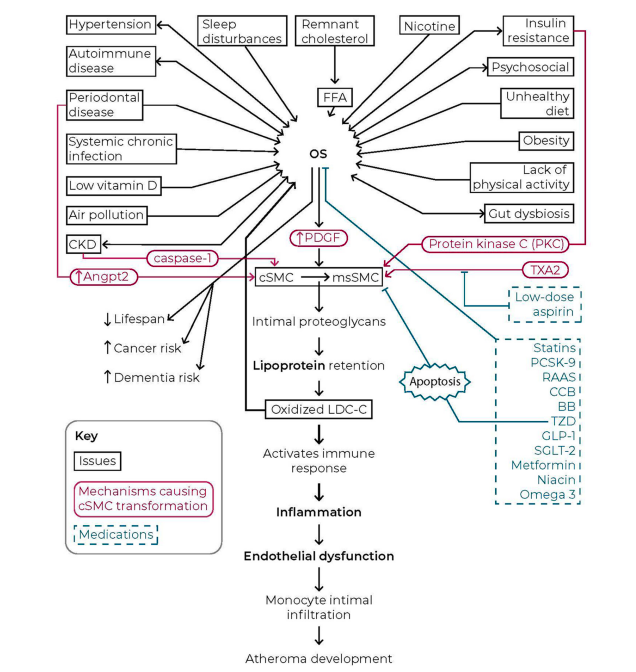
But since oxidative stress (OS) is related to the risk factors in grey (top of the figure), a more accurate diagram would be the one from Bale and colleagues (2022):


This diagram is not perfect as well, but it's a start.

For example, these diagrams assume that LDLs become modified only after getting "stuck" in the artery. But modified LDLs in blood circulation could also be caused by other factors, such as oxidized lipids in the diet (Ahotupa et al., 2009; Addis and Grootveld, 2021; Spiteller, 2007; Gonçalinho et al., 2023).

Conclusions

Contrary to what supporters of the lipid hypothesis claim, the European Consensus Panel did not prove that LDL itself is harmful. Instead, the Panel made the case that modified LDLs drive the disease.

Therefore, as Sánchez-Quesada and colleagues wrote:

Native LDL does not present any of the typical features of an atherogenic lipoprotein. It is not inflammatory, apoptotic or recognized by scavenger receptors. Furthermore, its binding to arterial proteoglycans is low. Therefore, there is a general consensus that LDL must be modified in order to acquire atherogenic characteristics [bold emphasis mine].

= = = = = = = = = = = = = = 


the full paper is here.


Wednesday, 14 February 2024

Four thousand days and counting: ‘If you drink, your life expectancy is between one day and six months’


 Richard Pine: 'I’m fortunate in living in Greece, where we have a cafe culture rather than a pub culture'

= = = = = = = = = = = = = = = = = = = 

Letter from Greece by Richard Pine.


Eleven years of alcohol-free life. Free of alcohol in the sense that, for 4,000 days, not a drop of alcohol has been taken, but unfree in the sense that the desire for a glass of wine or a pint of Uncle Arthur persists. The desire, but not the need.


the rest of the article is here. 

 = = = = = = = = = = = = = = = = = =

Richard Pine lives in Corfu, Greece, where he is director of the Durrell Library and writes Letter from Greece for The Irish Times

Thursday, 8 February 2024

Επιστημονικές έρευνες από τα ΑΕΙ: Ποιος είναι ο στόχος τους;


                                           το πρώτο μου βιβλίο που γράψαμε με τον Νίκο Γδοντέλη


= = = = = = = = = = =  = = = = = =

 Του Γιάννη Ζαμπετάκη*


Ξεκίνησα την Ακαδημαϊκή μου καριέρα το 1998 στο Πανεπιστήμιο του Leeds όπου εργάστηκα ως Λέκτορας για τρία χρόνια πάνω στο άρωμα της φράουλας. Τότε ξεκίνησα και μια ερευνητική συνεργασία με τον Δάσκαλό μου Βιοχημείας (στις προπτυχιακές μου σπουδές στο Τμήμα Χημείας στο ΕΚΠΑ) καθηγητή Κωνσταντίνο Α. Δημόπουλο. Το 2003, ξεκίνησα να υπηρετώ κι εγώ το Τμήμα Χημείας στο ΕΚΠΑ, στο εργαστήριο Χημείας Τροφίμων (μέχρι το 2015 όταν και ξεκίνησα να εργάζομαι στο Πανεπιστήμιο του Λίμερικ στην Ιρλανδία) και μέχρι και σήμερα συνεργαζόμαστε με τον Κωνσταντίνο, πλέον εκτός από καλοί συνεργάτες έχουμε γίνει και πολύ καλοί φίλοι.

Η έρευνά μας ήταν πάντα 100% εφαρμοσμένη και μελετήσαμε και μελετούμε πώς τα πολικά λιποειδή των τροφίμων αναστέλλουν την δημιουργία αθηρωματικής πλάκας στους ανθρώπους. Με άλλα λόγια ο στόχος μας είναι να καταλάβουμε πλήρως την καρδιοπροστατευτική δράση των πολικών λιποειδών που βρίσκονται σε ιχθυηρά, στο ελαιόλαδο, στον κατσίγαρο, στα τυριά και στο γιαούρτι καθώς και σε κρασιά.

Η έρευνά μας ποτέ όμως δεν ήταν σε απόσταση από την κοινωνία. Πάντα φροντίζαμε και προσπαθούμε ακόμα και σήμερα να επικοινωνούμε την έρευνά μας όχι μόνο σε συνέδρια και ημερίδες αλλά και προς την κοινωνία, για να ενημερώσουμε τον κόσμο, τι μπορεί να βελτιώσει στην διατροφή του για να μειώσει τον καρδιαγγειακό κίνδυνο (π.χ. μέσω και των elearning προγραμμάτων του ΕΚΠΑ).

Όλα αυτά τα χρόνια που εργάζομαι στα ΑΕΙ, πάντα προσπαθούσα να βρω ένα τρόπο διάχυσης της γνώσης προς το κοινό, προς τον αναγνώστη ή τηλεθεατή ή ακροατή στο ραδιόφωνο.

Αλλά ακόμα και μετά από 25 χρόνια στα αμφιθέατρα και στα εργαστήρια, η απορία μου είναι τούτη: γιατί οι Πανεπιστημιακοί δάσκαλοι δεν γράφουν βιβλία, δεν προσπαθούν να επικοινωνήσουν την γνώση τους προς την κοινωνία;

Ο λόγος είναι μάλλον απλός: το εύκολο άλλοθί τους είναι ότι όταν κάνουν αίτηση για προαγωγή, τα κριτήρια αξιολόγησης δεν δίνουν ιδιαίτερη βαρύτητα στα βιβλία αλλά στις επιστημονικές δημοσιεύσεις και στις ομιλίες σε διεθνή συνέδρια…

Αλλά τότε πώς θα ενημερωθεί ο απλός πολίτης;

Η δική μου φιλοσοφία είναι αλλιώτικη. Από το 2006 μέχρι σήμερα έχω γράψει 9 βιβλία: 6 στα Ελληνικά και 3 στα Αγγλικά. Τα δυο από τα 6 Ελληνικά βιβλία είναι για το ευρύ κοινό. Αυτόν τον καιρό, τελειώνω ένα ακόμα βιβλίο, την πρώτη μονογραφία μου στα Αγγλικά σχετικά με τις στατίνες και τα καρδιαγγειακά νοσήματα. Το βιβλίο αυτό είναι για όλους τους αναγνώστες που θέλουν να μάθουν πώς η διατροφή και ο τρόπος διαβίωσης μπορούν να μειώσουν τον καρδιαγγειακό κίνδυνο. Ο αναγνώστης δεν χρειάζεται να είναι γιατρός ή επιστήμονας. Ο τρόπος γραφής του βιβλίου αυτού είναι χωρίς να χρησιμοποιώ εξειδικευμένη ορολογία ώστε ο κάθε μη-ειδικός να είναι σε θέση να καταλάβει τα γραφόμενα και να πράξει ανάλογα για να προστατευτεί από την καρδιοπάθεια και άλλα συγγενή νοσήματα.

Από τις δεκάδες συναδέλφους που είχα αυτά τα χρόνια στην Αγγλία, στην Ελλάδα και τώρα στην Ιρλανδία, ελάχιστοι είναι σε θέση να επικοινωνήσουν με απλό και κατανοητό στο ευρύ κοινό τρόπο, την επιστήμη τους. Δεν τους ενδιαφέρει να το κάνουν αυτό μιας και δεν έχουν κάποιο κίνητρο για πιο γρήγορη ανέλιξη στην καθηγητική βαθμίδα.

Έτσι, σήμερα, αν έχουμε υψηλά επίπεδα χοληστερίνης στο αίμα μας, ο γιατρός μας θα μας συνταγογραφήσει στατίνες οι οποίες όμως προκαλούν διαβήτη τύπου 2 στο 50% των ασθενών που τις λαμβάνουν. Πώς λοιπόν θα ενημερωθεί ο κόσμος για την “απάτη” των στατινών”; Πώς θα ενημερωθεί ο κόσμος για την νεότερη έρευνα στα αναψυκτικά χωρίς θερμίδες όπου χρησιμοποιείται η ασπαρτάμη; Ποιος καταναλωτής γνωρίζει ότι η ασπαρτάμη είναι καρκινογόνα; Πώς θα γίνει γνωστό στο ευρύτερο κοινό το πρόβλημα με τα μικροπλαστικά στη διατροφική αλυσίδα;

Αυτό το κενό πληροφόρησης είναι μεγάλο και όλοι μας ως μέλη ΔΕΠ έχουμε την ηθική υποχρέωση να επικοινωνήσουμε στο ευρύ κοινό τα πειραματικά μας δεδομένα.

Υποχρέωση είπα;

Ναι, φυσικά! Μιας και όλα τα μέλη ΔΕΠ στην Ελλάδα και στην συντριπτική πλειοψηφία των ΑΕΙ ανά τον κόσμο, είμαστε δημόσιοι υπάλληλοι. Με άλλα λόγια μας πληρώνουν οι φορολογούμενοι και σε αυτούς θα πρέπει να επιστρέφει η υπεραξία της δουλειάς μας.

Πόσοι από εμάς τους Ακαδημαϊκούς όμως μπορούμε να κοιταχθούμε στον καθρέφτη και να απαντήσουμε σε αυτή την ερώτηση: τι μπορώ να προσφέρω ως ερευνητής και δάσκαλος στην κοινωνία;

Δυστυχώς ελάχιστοι…

Υ.Γ. Κλείνω με τους στίχους του Κώστα Βάρναλη: Οι Μοιραίοι.

Mες την υπόγεια την ταβέρνα, 

μες σε καπνούς και σε βρισές 

(απάνω στρίγγλιζε η λατέρνα) 

όλ’ η παρέα πίναμ’ εψές· 

εψές, σαν όλα τα βραδάκια, 

να πάνε κάτου τα φαρμάκια. 

Σφιγγόταν ένας πλάι στον άλλο 

και κάπου εφτυούσε καταγής. 

Ω! πόσο βάσανο μεγάλο

το βάσανο είναι της ζωής! 


Wednesday, 7 February 2024

cibumLEARNING: Novel Functional Foods Development Advanced Training Course

To cibum σας παρουσιάζει τo πρώτο σεμινάριο στην Ελλάδα με θέμα Functional Food στο πλαίσιο της σειράς cibumLEARNING*. 


= = =


To cibum σας παρουσιάζει τo τρίτο εκπαιδευτικό σεμινάριο της σειράς cibumLEARN* με θέμα Development of novel functional foods and drinks (Έρευνα και ανάπτυξη νέων λειτουργικών τροφίμων και ποτών).

Παρακολουθώντας το σεμινάριο αυτό, θα είστε σε θέση να ερευνήσετε την επιστημονική βιβλιογραφία, να σχεδιάσετε και να δημιουργήσετε νέα λειτουργικά τρόφιμα και ποτά. Εκπαιδευτής είναι ο Γιάννης Ζαμπετάκης, Χημικός με Διδακτορικό στη Χημεία Τροφίμων, Αναπληρωτής καθηγητής στο University of Limerick στην Ιρλανδία.

Περιγραφή Σεμιναρίου

Σε αυτό το σεμινάριο θα σας εξηγηθεί με απλά λόγια η έννοια των λειτουργικών τροφίμων (functional foods) και θα αναλυθούν τα βασικά βήματα που θα πρέπει να ακολουθούν οι ομάδες “έρευνας και ανάπτυξης” των εταιρειών (Research and Development, R&D) για τον επιτυχή σχεδιασμό και ανάπτυξη νέων λειτουργικών τροφίμων και ποτών.

Σήμερα, η χρόνια φλεγμονή είναι αιτία για εκατομμύρια θανάτων σε παγκόσμια κλίμακα μιας και είναι η γενεσιουργός αιτία για καρδιαγγειακά νοσήματα, καρκίνο, διαβήτη τύπου 2, εγκεφαλικά και υψηλή αρτηριακή πίεση. Ενδεικτικά, αναφέρουμε ότι οι καρδιαγγειακές παθήσεις προκαλούν 18.000.000 θανάτους κάθε χρόνο σε παγκόσμια κλίμακα.

Με το σεμινάριο αυτό θα μάθετε πώς κάνουμε έρευνα της σχετικής βιβλιογραφίας και πώς μπορούμε να βρούμε τα κενά στην αγορά ώστε να σχεδιάσουμε νέα τρόφιμα και ποτά που να είναι ανταγωνιστικά σε παγκόσμιο επίπεδο. Η Ελληνική βιομηχανία τροφίμων και ποτών είναι σε θέση να παράξει τέτοια προϊόντα που να είναι σε θέση να “σταθούν” στον παγκόσμιο ανταγωνισμό.

Περιεχόμενα Σεμιναρίου

Τι είναι τα λειτουργικά τρόφιμα;

Πώς ερευνούμε την σχετική βιβλιογραφία στον τομέα των λειτουργικών τροφίμων και ποτών;

Πώς αναγνωρίζουμε τους ανταγωνιστές μας;

Πώς βρίσκουμε τα αδύνατα σημεία των ανταγωνιστών;

Πώς αναλύουμε τα δυνατά σημεία των τροφίμων και ποτών που θα σχεδιάσουμε;

Ποιες είναι οι απαιτήσεις της EFSA (Ευρωπαϊκή Αρχή Ασφάλειας Τροφίμων) ώστε να είμαστε σε θέση να κάνουμε αίτηση για ένα νέο λειτουργικό προϊόν;

Πρακτικά, πώς μπορούμε να παράξουμε τέτοια τρόφιμα και ποτά;

Πώς μπορούμε να σχεδιάσουμε την ετικέτα του νέου προϊόντος ώστε να έχει ισχυρό USP (unique selling point);

Μαθησιακοί στόχοι

Με την ολοκλήρωση αυτού του σεμιναρίου, θα είστε σε θέση:

• Να εξηγήσετε τον όρο “λειτουργικά τρόφιμα και ποτά” σε σχέση με την χρόνια φλεγμονή

• Να κατανοείτε τις απαιτήσεις της EFSA για νέες αιτήσεις λειτουργικών τροφίμων και ποτών σε σχέση με καρδιαγγειακές ασθένειες

• Να ερευνάτε την διεθνή βιβλιογραφία για κενά στον ανταγωνισμό

• Να σχεδιάζετε νέα τρόφιμα με ισχυρές λειτουργικές ιδιότητες ως προς την χρόνια φλεγμονή, με Ελληνικές πρώτες ύλες

• Να προωθείτε εμπορικά τα νέα προϊόντα σε παγκόσμιο επίπεδο.

Προφίλ συμμετεχόντων

Αυτό το σεμινάριο έχει σχεδιαστεί για:

Υπεύθυνους και ομάδες R&D της βιομηχανίας τροφίμων και ποτών

Υπευθύνους και ομάδες marketing της βιομηχανίας τροφίμων και ποτών

Υπευθύνους Ποιότητας και Ασφάλειας Τροφίμων

Παραγωγούς λειτουργικών πρώτων υλών και λειτουργικών προϊόντων διατροφής

Συμβούλους Ασφάλειας και Ποιότητας Τροφίμων

Φοιτητές των Επιστημών Τροφίμων

Προαπαιτούμενα

Πριν παρακολουθήσετε αυτό το σεμινάριο, καλό είναι να έχετε διαβάσει:

1. A rational definition for functional foods: A perspective

https://www.frontiersin.org/articles/10.3389/fnut.2022.957516/full

2. Novel Functional Foods: Processing, Bioactive Compounds Characterization and Potential Health Effects

https://www.mdpi.com/journal/foods/special_issues/Fonctional_Food

Διαδρατικότητα – Προσωποιημένη Ενημέρωση

Μετά την εγγραφή σας, και πριν όσο και κατά την διάρκεια του σεμιναρίου, θα μπορείτε να απευθύνεται συγκεκριμένες ερωτήσεις στον εκπαιδευτή σχετικά με προϊόντα που θα θέλατε να σχεδιάσετε. Λίγες μέρες μετά το σεμινάριο, ο εκπαιδευτής θα σας στείλει σχετικές απαντήσεις, όπως και σχετική βιβλιογραφία που θα σας είναι χρήσιμη για τον σχεδιασμό νέων τροφίμων και ποτών, εξειδικευμένα για την εταιρεία σας.

Παραδοτέα

Με την ολοκλήρωση αυτού του σεμιναρίου, θα λάβετε ηλεκτρονικά:

Το εκπαιδευτικό υλικό

Απαντήσεις σε όλες τις σχετικές ερωτήσεις σας

Διάρκεια

3h

Πιστοποιητικό Παρακολούθησης

Με την ολοκλήρωση αυτού του σεμιναρίου, θα λάβετε «Πιστοποιητικό Παρακολούθησης».

Τρόπος Υλοποίησης Σεμιναρίου

Το σεμινάριο υλοποιείται με realtime διαδικτυακές συνεδρίες online live sessions (zoom). Οι εκπαιδευόμενοι λαμβάνουν στο email τους, 24 ώρες πριν το σεμινάριο, σύνδεσμο για την είσοδο στην διαδικτυακή τους αίθουσα εκπαίδευσης. Εδώ οι συμμετέχοντες μπορούν να παρακολουθούν ζωντανά τον εισηγητή μέσω της σύγχρονης τεχνολογίας και να υποβάλλουν ερωτήσεις, όπως και στην περίπτωση της δια ζώσης παρακολούθησης.  

Ημερομηνίες Διεξαγωγής

Online: ΠΕΜΠΤΗ 29 Φεβρουαρίου 2024 (12.00 – 15.00)

Online: ΠΕΜΠΤΗ 7 Μαρτίου 2024 (12.00 – 15.00)

Training Fees (εξόφληση πριν την έναρξη του σεμιναρίου)

Online:

early bird (εγγραφή και εξόφληση 15 days πριν το σεμινάριο)  139€ + ΦΠΑ 24% ανά συμμετέχοντα

regular 189€ + ΦΠΑ 24%  ανά συμμετέχοντα

Η εκπαίδευση γίνεται από επιλεγμένο Food Expert με εμπειρία τόσο στην μελέτη και ανάπτυξη Functional Food όσο και στην εκπαίδευση

Εκπαιδευτής σας ο Γιάννης Ζαμπετάκης, Χημικός με Διδακτορικό στη Χημεία Τροφίμων, Αναπληρωτής καθηγητής στο University of Limerick στην Ιρλανδία. Έχει συγγράψει με συνεργάτες του 6 βιβλία στα Ελληνικά και 3 στα Αγγλικά σε διάφορες πτυχές της Επιστήμης των Τροφίμων και της σχετικής νομοθεσίας. Το πιο πρόσφατο βιβλίο του, όπου παρουσιάζονται οι ευεργετικές ιδιότητες όλων των λειτουργικών τροφίμων, είναι το

Functional Foods and their implications for health promotion (2023)

Εγγραφή

Για να γραφτείτε στο σεμινάριο πατήστε ΕΔΩ και συμπληρώστε την φόρμα.

Labour threatens to ‘steamroll’ junk food firms


 https://www.amazon.com/DARK-PR-Corporate-Disinformation-Environment/dp/1990263488


= = = = = = =

from the Times


A Labour government will “steamroll” the food industry into promoting healthier options to tackle the obesity crisis, the shadow health secretary has said.

Speaking at the Times Health Commission summit on Tuesday, Wes Streeting criticised the “highly manipulative” marketing used by firms to sell harmful, ultra-processed foods.

He is committed to banning the advertising of junk food to children online and on TV, and said there was also a “serious case to be made” for stricter restrictions on food packaging.

Streeting promised to build a coalition of people within the food industry who recognise the need to tackle obesity, and “make it clear to the rest… You either get on board the steamroller or you’re going under it”


= = =


my view: it's high time to address this pandemic! Dark PR explains more on this - a great book to read!


Tuesday, 6 February 2024

Private Education in Ireland


                                        Diarmuid Hegarty, founder and president of Griffith College, Ireland's largest                                             private college. Photograph: Alan Betson

 From the Irish Times:

‘We don’t serve the elite’: How Diarmuid Hegarty built Ireland’s largest private third-level institution

Back in the 1970s Diarmuid Hegarty was in high demand among aspiring accountants.

Failure rates for the chartered accountancy exams were incredibly high – seven out of eight students flunked them – but the quality of Hegarty’s grinds was legendary.

While a promising career as a tax consultant lay ahead of him in a top accountancy firm, his sideline business grew to the point where he had a choice to make.

“I remember at the time thinking, will I look back and say that I was responsible for that amendment in the tax act? Or will I look back on having helped students?” says Hegarty. The decision, he says, was easy.

= = =

And of course, it's a no-brainer for all of us who teach young people and try to inspire them!


Selected films

Dead Poet's Society

The Holdovers


My tips for living to 102: YouTube, gossip and Shredded Wheat


                                 Terry Tovey at home in Bristol, where he still grows his own vegetables

The number of centenarians in England and Wales has doubled in two decades. Terry Tovey, who was still a swimming coach at 88, reflects on how life has changedturned 102 in December, but living to such an old age means more to other people than it does to me. The way I see it, this year is just a continuation of what I did the year before. I’m still here and the years are piling up behind me.

I’m told more and more people are turning 100 these days and that’s got to be a good thing. It means people are healthier than they were 50 or a 100 years ago. Who wants to die early?

I don’t quite know why I’ve lasted so long, but my main motto in life is to do everything in moderation. I’ve never been a big smoker or a drinker. I was always slim and athletic too.


I get up about eight o’clock and do my morning exercises — I’ve done them ever since I was in the army. Once you get into a routine it’s easy. I sit on the corner of the bed and stretch my knees up to my chest and then use some small hand weights. The way I see it with your body is you either use it or you lose it.

I’ve had Shredded Wheat for breakfast for as long as I can remember. We’re creatures of habit, aren’t we? In the daytime I read books, often about the war, or I’ll go out and do some gardening. My children live locally and one of them will usually come round for a cup of tea and put some dinner on for me. I don’t know what I’d do without them really.

The worst thing about getting older is the loneliness. I’ve outlived all my friends but I had drifted away from most of my contemporaries anyway. I try not to think too much about it. I’ve been more family-orientated really, I’ve got six grandchildren and ten great-grandchildren. They call me “Pops”. I can’t remember all of their names, but luckily I’ve got my children to remind me.

the rest of the story is here.
Terry Tovey with his granddaughter Jenny in the 1980s

Before the war

I was born on December 6, 1921, on College Street in central Bristol. We moved out to a cul-de-sac in the suburbs in 1926. We were happy there, all the neighbours knew each other and it was surrounded by fields. I felt like I had the whole country to play in.

= = = = = = = = =


Σταγόνες Χανιώτικης Ιστορίας: Η οικονομική ζωή της πόλης στα τέλη του 19ου αιώνα

 πηγή: Χανιώτικα Νέα

Μια ενδιαφέρουσα ανάλυση της οικονομικής ζωής της πόλης των Χανίων κατά το δεύτερο ήμισυ του 19ου αιώνα έγινε από τον βουλευτή Κωνσταντίνο Φούμη σε μια σειρά από πρωτοσέλιδα άρθρα στην εφημερίδα «Παρατηρητής» κατά το χρονικό διάστημα Ιουλίου –Αυγούστου 1934.

Το λάδι, το κυριότερο εξαγωγικό προϊόν του νησιού, διαχειρίζονταν ξένοι εμπορικοί οίκοι, όπως οι Καποράλ, Πρεβέ, Βίτελ και ο ναυτιλιακός πράκτορας της αυστροουγγρικής ατμοπλοϊκής εταιρείας Λόϋντ στα Χανιά Βαλέριος Καλούτσι. Το ψωμί ζυμωνόταν στο σπίτι των Χανιωτών και το εμπόριο γινόταν από αρτοποιεία, τα οποία διαχειρίζονταν αποκλειστικά Ηπειρώτες που κατασκεύαζαν «[…]μαύρον άρτον, την γνωστήν τότε ανούσιον γκιράγιαν αποτελούμενην από άλευρον εκ μείγματος σίτου και διαφόρων οσπρίων, πολλάκις ημισαπημένον[…]».

Το 1870 ο Λουκιανός Ικάρ, πατέρας της γνωστής ζωόφιλης Γερμανίδας Κρούγκερ, κατασκεύασε ένα αλευρόμυλο με αρτοποιείο στη συνοικία Τσιζαέρ Κολού (οδό Μίνωος), όπου ζύμωνε ψωμί ανώτερης ποιότητας που ονομάστηκε το «ψωμί της φάμπρικας» («Παρατηρητής», «Η πόλις των Χανίων και το οικονομικό μέλλον αυτής», 14/8/1934).
Κατά τις δεκαετίες 1870 και 1880 το εξαγωγικό και εισαγωγικό εμπόριο της πόλης φυτοζωούσε, με αποτέλεσμα η προμήθεια των ειδών πρώτης ανάγκης να γίνεται από την Κωνσταντινούπολη, τη Σμύρνη και τη Σύρο, μέσω των αντιπροσώπων των εμπορικών οίκων που είχαν έδρα τα Χανιά.

Το πρόβλημα ήταν οι υπέρογκες τιμές των προϊόντων που είχαν τόκο 20%-30%, ενώ δεν υπήρχε και τράπεζα για δανεισμό. Εκείνα τα χρόνια ανθούσε και το εμπόριο του σαπουνιού, καθώς υπήρχαν στην πόλη σαράντα περίπου σαπωνοποιΐα («Παρατηρητής», «Η πόλις των Χανίων και το οικονομικό μέλλον αυτής», 14/8/1934).

Στην πόλη υπήρχαν συντεχνίες για όλα τα επαγγέλματα, όπως οι υφασματέμποροι, οι κτίστες, οι μαραγκοί, οι μαχαιροποιοί, οι παπλωματάδες, οι παπουτσήδες, οι ναυπηγοί, κ.ά. Ενδιαφέρον είναι ότι κτίστες, μαραγκοί και ναυπηγοί ήταν χριστιανοί, ενώ μαχαιροποιοί, σαρατσίδες (σαγματοποιοί) και αλιμπάντες (δαμαστές ίππων) ήταν κυρίως μουσουλμάνοι. Το 1887 άρχισε να αλλάζει η εμπορική κίνηση στα Χανιά, καθώς εγκαταστάθηκε ο Γερμανός επιχειρηματίας Ριχάρδος Κρούγκερ, ο οποίος συνεταιρίσθηκε με τον Πολωνό Ιωσήφ Μπερίντα και τον Μαριδάκη. Αυτοί εξέλιξαν τον παλαιό εμπορικό οίκο του Μαρινάκη εισάγοντας τον σιδερένιο ελαιοπιεστήρα αντί του πρωτόγονου ξύλινου, καθώς και υδραντλίες, ατμομηχανές, λέβητες για μύλους υδραντλίες, δηλαδή σύγχρονα μηχανήματα για τη γεωργία. Επίσης, ίδρυσαν εργοστάσιο παραγωγής τσιμεντένιων πλακών και εργοστάσιο παραγωγής αφρώδων ποτών (γκαζόζες και μοσχάτο οίνο).

Αυτός ο συνεταιρισμός έδωσε μεγάλη ώθηση στην εκβιομηχανοποίηση της παραγωγής εισάγοντας κι άλλα σύγχρονα μηχανήματα, ενώ ταυτόχρονα πραγματοποιούσε εξαγωγές αγροτικών προϊόντων, όπως σταφίδα, λάδι, αμύγδαλα, κρασί, χαρούπια, μέλι και αρωματικά βότανα της κρητικής γης στη Γερμανία, την Ολλανδία, το Βέλγιο, κ.λπ. («Παρατηρητής», «Η πόλις των Χανίων και το οικονομικό μέλλον αυτής», 15/8/1934).

*Ο κ. Αγησίλαος Κ. Αλιγιζάκης είναι
ιατρός ορθοπεδικός, πολιτισμολόγος

Friday, 2 February 2024

Πως να δημιουργήσετε Λειτουργικά Τρόφιμα για την Ελληνική αγορά

 πηγή: cibum.gr

Του Γιάννη Ζαμπετάκη*

Σήμερα, οι εταιρείες παραγωγής τροφίμων και ποτών καλούνται να «παίξουν» σε ένα διεθνές τοπίο όπου οι ισχυρισμοί υγείας είναι ένα πολύ δυνατό εργαλείο Marketing. Στην ΕΕ, αυτοί οι ισχυρισμοί υγείας διέπονται από τον ΕΚ 1924/2006 ενώ στις ΗΠΑ, οι ισχυρισμοί υγείας ελέγχονται από το FDA (Food and Drug Administration).

Τα λειτουργικά τρόφιμα ήρθαν από μερικά χρόνια στο προσκήνιο όπου και θα παραμείνουν για πολύ καιρό. Το να μπορούμε να κάνουμε έναν ισχυρισμό υγείας (άμεσο ή έμμεσο) πάνω στην ετικέτα των τροφίμων και ποτών είναι πολύ σημαντικό μιας και αυτός ο ισχυρισμός υγείας μπορεί να δημιουργήσει ένα USP (Unique selling point) για το προϊόν μας.

Στην ΕΕ, ως απόρροια του ΕΚ 1924/2006 μπορούμε να κινηθούμε στις εξής κατευθύνσεις (βλ γράφημα παρακάτω).

Συνεπώς, οι ομάδες R&D και Marketing θα πρέπει να μελέτησουν προσεκτικά τα άρθρα 8,9,10,13, 14 και 28 του εν λόγω κανονισμού και να εξετάσουν πώς μπορούν να συνδυάσουν την σύσταση των προϊόντων τους σε σχέση με τις λειτουργικές τους ιδιότητες.

Και μιας και μιλάμε για λειτουργικές ιδιότητες, ας αναφέρουμε σε αυτό το σημείο το εξής: όλα τα τρόφιμα έχουν κάποια λειτουργία μέσα στον ανθρώπινο οργανισμό. Τα τρόφιμα όμως που μας δίνουν απλά τα βασικά συστατικά (δηλαδή υδατάνθρακες, λίπη και πρωτεΐνες) δεν θεωρούνται λειτουργικά τρόφιμα.

Το ψωμί από μόνο του δεν είναι λειτουργικό τρόφιμο. Αν όμως σε ένα ψωμί προσθέσουμε σπόρους (π.χ. ηλίανθου), τότε οι σπόροι αυτοί προσθέτουν μια λειτουργική ιδιότητα και διαφοροποιούν το τελικό προϊόν.Και έτσι το ψωμί με λιόσπορους θεωρείται πλέον λειτουργικό τρόφιμο.

Για να σχεδιάσουμε ισχυρισμούς υγείας για τα προϊόντα μας, θα πρέπει να κάνουμε μια συνδυαστική έρευνα που έχει δύο βήματα:

  1. Ποια συστατικά υπάρχουν στο τελικό προϊόν μας και
  2. Ποιες λειτουργικές ιδιότητες για αυτά τα συστατικά υπάρχουν στην διεθνή βιβλιογραφία.

Το 1ο βήμα είναι σχετικά εύκολο και απλό.

Το 2ο είναι λίγο πιο σύνθετο. Θα πρέπει να ξέρουμε να χειριζόμαστε αποδοτικά την ελεύθερη (Open access) βάση με όλες τις επιστημονικές δημοσιεύσεις, το Google Scholar. Για να το κάνουμε αυτό, θα πρέπει να χρησιμοποιούμε τις κατάλληλες λέξεις κλειδιά (keywords) ώστε η έρευνά μας να δώσει αποτελέσματα που θα μπορέσουμε να τα αξιοποιήσουμε σε σχετικά σύντομο χρόνο.

Αν χρησιμοποιήσουμε την λέξη «bread» στο google scholar, το σύστημα μάς δίνει 2.440.000 αποτελέσματα ενώ αν χρησιμοποιήσουμε το «bread with sunflower seeds» το σύστημα μάς δίνει 58.700 αποτελέσματα. Συνεχίζοντας αυτή τη στοχευμένη έρευνα και αν χρησιμοποιήσουμε το «bread with sunflower seeds and health claims» το σύστημα μάς δίνει 22.500 αποτελέσματα. Αλλά ακόμα και αν αυτός ο αριθμός είναι πολύ μικρότερος από τον αρχικό (2.440.000), είναι αδύνατον να μελετήσουμε όλα αυτά τα άρθρα. Άρα θα πρέπει να βρίσκουμε τις κατάλληλες λέξεις-κλειδιά για το προϊόν μας. Ο σκοπός μας είναι να μειώσουμε τον αριθμό των αποτελεσμάτων σε τριψήφιο, ει δυνατόν, αριθμό και μετά το επόμενο βήμα είναι να μελετήσουμε τον τίτλο και την περίληψη αυτών των άρθρων.

Σε αρκετές περιπτώσεις και μόνο από τον τίτλο μπορούμε να καταλάβουμε αν αυτό το άρθρο μάς είναι χρήσιμο. Μια άλλη πηγή από την οποία μπορούμε να αντλήσουμε δεδομένα είναι τα επιστημονικά περιοδικά ανοιχτής πρόσβασης (τα λεγόμενα Open access). Για παράδειγμα όλα τα περιοδικά των εκδοτών MDPI ( https://www.mdpi.com/ ) και Frontiers ( https://www.frontiersin.org/ ) είναι open access.

Στο εκπαιδευτικό σεμινάριο της σειράς cibumLEARN* με θέμα Development of novel functional foods and drinks (Έρευνα και ανάπτυξη νέων λειτουργικών τροφίμων και ποτών), θα σας δείξουμε πώς μπορείτε να κάνετε στοχευμένη μελέτη χρησιμοποιώντας τα περιοδικά αυτά και να «κατεβάζετε» ολόκληρο το άρθρο.

Η συλλογή δεδομένων από δημοσιεύσεις είναι μια επίπονη και χρονοβόρα διαδικασία αλλά είναι το πρώτο και ίσως το πιο σημαντικό βήμα για να συλλέξουμε πληροφορίες από την βιβλιογραφία.

Το επόμενο βήμα είναι να μελετήσουμε την πλήρη σύνθεση των πρώτων υλών και ποιες από αυτές τις ενώσεις υπάρχουν και στο τελικό μας προϊόν. Μερικές από τις ενώσεις που υπάρχουν στις πρώτες ύλες μπορεί να μην επιβιώνουν της παραγωγικής διαδικασίας ειδικά αν κατά την παραγωγή του τελικού προϊόντος υπάρχει στάδιο με θέρμανση (π.χ. παστερίωση, αποστείρωση ή τηγάνισμα) ενώ σε άλλες περιπτώσεις (ειδικά στα τρόφιμα που είναι προϊόν ζύμωσης) κατά την παραγωγική διαδικασία σχηματίζονται ενώσεις που δεν υπάρχουν στις αρχικές πρώτες ύλες. Για παράδειγμα η διατροφική αξία ενός τυριού είναι πολύ πιο υψηλή από την διατροφική αξία του γάλακτος. Αλλά για αποδείξουμε τις λειτουργικές ιδιότητες του τυριού, στην προκειμένη περίπτωση, θα πρέπει (και πάλι) να ανατρέξουμε στη βιβλιογραφία.

Στο σεμινάριο cibumLEARNING: Novel Functional Foods Development Advanced Training Course θα αναλύσουμε διεξοδικά όλα τα παραπάνω αλλά και θα δούμε πώς δημιουργήθηκε το πρώτο προϊόν σε σχέση με την καρδιοπάθεια που πήρε έγκριση από την EFSA: το Fruitflow: https://link.springer.com/article/10.1007/s00394-016-1265-2

Θα δούμε ποια πειράματα έγιναν για να συλλεχθούν τα απαραίτητα δεδομένα που χρειάζονταν να υποβληθούν στην EFSA σχετικά με τις ιδιότητες του Fruitflow σε σχέση με την αναστολή της συσσώρευσης αιμοπεταλίων.

Η Ελλάδα παράγει τρόφιμα με υψηλή διατροφικά αξία σε πολλούς τομείς των τροφίμων και ποτών. Προϊόντα που αν τα προωθήσουμε με την κατάλληλη επισήμανση μπορούν να σταθούν κάλλιστα σε πανελλήνιο και διεθνές επίπεδο. Αυτός είναι και ο απώτερος στόχος του σεμιναρίου.  

*O Γιάννης Ζαμπετάκης είναι Αναπληρωτής Καθηγητής Χημείας Τροφίμων, στο Τμήμα των  Βιολογικών Επιστημών του Πανεπιστημίου Λίμερικ (UL) στην Ιρλανδία και “παίζει” πάντα Αριστερό Εξτρέμ. Email: funfood16@gmail.com Twitter: @yanzabet

Thursday, 1 February 2024

This is why Ancel Keys was wrong!


You may remember the nous behind the Seven Countries Study (SCS). His name is Ancel Keys and he investigated if there was a link between coronary disease, diet and...cholesterol.

Some populations showed a linear relationship between levels of cholesterol and deaths caused by heart problems. However, some populations (Greece and Italy, mainly and also the former Yugoslavia) didn't show any such correlation! Instead of looking into the diets of these cohorts, the SSC people made a correlation between total cholesterol and cardiac related deaths...

Today, GPs and medical doctors measure all the above parameters (as per picture) but their thinking and points of action are shortsighted as they look only at the absolute levels of LDL, total cholesterol and triglycerides.

What about though the ratio of HDL/LDL which is actually the main cause of concern, as we have explained in this book?

The picture data are mine.

The ratio of HDL (1.3) / LDL (2.8) is slightly less that 1/2. 

How have I managed this? the answer is very very simple: twice a week fish or marine foods and every other day exercise (swimming, mountain bike and sprints). And also, a small bottle of Yakult every morning.

Next Monday, I am going to compete in track and field Munster competition, in the category M50 - i.e., men aged 50-54.

Being 54, I have no chance this year. But, hey it's the participation that matters not the victory.

M50 60m sprint is my event on Monday and getting ready for this event made me getting up from my chair/sofa and go to the track and run with my spikes. Also, having such a purpose, it probably helped me to having such a good ratio of HDL/LDL.

So, if your GP suggests you going on statins if you have high LDL and total cholesterol levels, ask her/him to consider the ratio HDL/LDL. You will challenge her/his beliefs and it might take them out of their comfort zones...but it's worth mentioning this to them.


Ancient food wisdom for modern food security


What did the patron saints of Ireland eat? From what we can tell, Patrick, Columba, Brigid and their peers could have chowed down on a variety of locally-grown foods, including rye, peas, barley, oats and different wheat varieties.

And while it’s fun to imagine it, there’s a pressing reason to know the details. Researchers believe that getting a better understanding of ancient foods could help protect our food security into the future


the rest of the article is here.

St Brigid


1st of February : the name day of St Brigid of Ireland.

The start of Spring according to Pagans in Ireland.

The day we make a Brigid's cross, as you can see at the icon of St Brigid we have at home, made in Mount Athos.

May St Brigid bring to all of us Health, Light and Wisdom!