Showing posts with label emissions. Show all posts

Wednesday, 2 December 2020

Environment and Hazards

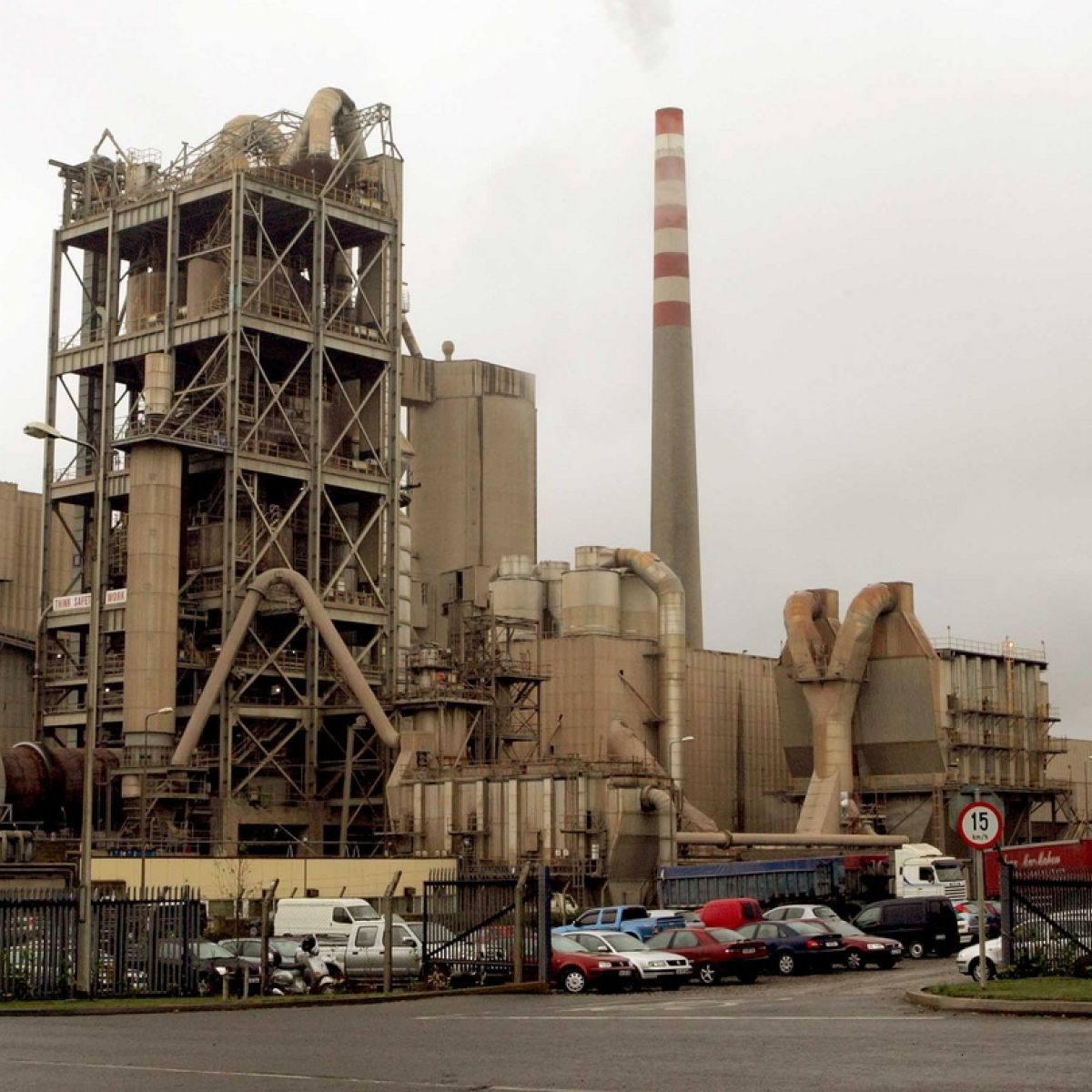
                                            The Irish Cement Factory in Mungret, co. Limerick
 

I have been watching the EPA's oral hearing on the license to pollute the environment by emitting hazardous and toxic substances, i.e. by burning toxic and hazardous material.

Our views are here and here.

What is environment though?

According to the Oxford dictionary,

environment is 

the surroundings or conditions in which a person, animal, or plant lives or operates.
"survival in an often hostile environment"
 
and
the natural world, as a whole or in a particular geographical area, especially as affected by human activity.
"the impact of pesticides on the environment".
 
Environment is air, water, soil, Humans, animals and plants, marine waters, marine animals.
 
In order to identify the hazards of an operation (in this case burning hazardous and toxic material at the Irish Cement Factory), we would need to consider Environment as all its components and the interrelations of its components.
If we think environment is only the air, then we will NEVER be able to assess the impact of a polluted environment to the living organisms, to Humans and to Public Health.
This morning's presentations lacked this approach, the complexity of Environmental, of the Chemosphere are we call it in Science.
 
There is a scientific journal called Chemosphere.
What does it offer?
 
Chemosphere is an international journal designed for the publication of original communications as well as review articles on chemicals in the environment. Chemosphere, as a multidisciplinary journal, offers maximum dissemination of investigations related to all aspects of the identification, quantification, behavior, fate, toxicology, treatment, and remediation of chemicals in the bio-, hydro-, litho- and atmosphere.  
 
= = =
I will stop here now and hopefully I am going to see you tomorrow morning at the hearing where I will present the potential impact of burning toxic material to Humans, the food chain and the Public Health.


Monday, 4 May 2020

let's talk about agricultural emissions


Politicians do not like hot potatoes. For many reasons. The main one is this: the data are complicated and most politicians are not experts of their field. Nothing wrong with that. But they can seek advice before they commit to policies. Because at the end of the political day, policies should be based on science.

One of this hot potatoes today in Ireland is the "sacred cows": agricultural emissions and the food chain. The main gases that are emitted from cattle are carbon dioxide, nitrous oxide and methane.

Greenhouse gas emissions are commonly presented in units of billion tonnes of carbon dioxide equivalent (Gt CO2e). The de facto way of converting non-CO2 emissions to CO2e is to multiply the gas by its GWP100 (global warming potential over 100 years). The value of GWP100 for methane (CH4) from the last IPCC assessment report is 28. This means that methane has 28 times as much “global warming potential” as CO2, so 1Gt CH4 equates to 28 GtCO2e.

However, there is a problem here: CH4 has a half-life of 10 years, ie after ten years, only half of CH4 still exists; after 20 years, only a quarter. This complicates the calculations slightly but as I said at the top, good Science can always help.

Or as Prof Mitloehner explains: 
"The so called biogenic carbon cycle is continuous. In the case of biogenic methane, its carbon originates from atmospheric CO2, goes through plant photosynthesis, then enteric/manure methane, then via hydroxyl oxidation into CO2 again. This process takes approx one decade".  

Let's have a look now on the food side.  

The beef sector in Ireland is very significant accounting for over one-third of all agricultural output and over 20 percent of total Irish food and drink exports. The agri-food sector in general provides direct and indirect employment to over 300,000 people with over 13,000 employed in the meat processing sector alone. The value of beef exports is growing and exceeded €2.6 billion in 2017. Domestic consumption of Irish beef accounted for a further €230 million last year. In all, the value of the Irish beef sector is estimated to be almost €2.9 billion.

So, when we talk about reducing emissions, part of the discussion should be the impact of reducing emissions to farmers and meat industry. This is where it gets complicated and the stakes are rising.

Let me finish on a personal note: I started working on waste management and its impact on the food chain about 13 years ago in the case of Asopos. Poor waste management resulted to polluted water and cross-contaminated food chain with Ni and Cr.
In that case, the polluters should pollute less by investing in cleaner technologies. This, never happened in Asopos. Because the Greek State accepted that polluting (the water and the food chain) is less costly than reducing the chemical wastes.

The end point is this: Science and Technology offer the tools. Politicians need to use the tools wisely and transform the Society. If at the end of the day, we may have to reduce (let's say by 10%) the agricultural sector but at the same time provide subsidized retraining of affected people to newer, greener (not green-washing) technologies, let's consider it. Doing nothing can not be a solution.

IZ


P.S. Many thanks to Prof Frank Mitloehner for the literature.