Showing posts with label ovine. Show all posts

Wednesday, 5 October 2022

Assessment of Antioxidant and Scavenging Activities of Various Yogurts Using Different Sample Preparation Procedures


Assessment of Antioxidant and Scavenging Activities of Various Yogurts Using Different Sample Preparation Procedures

Abstract

Antioxidant activities of various yogurts were assessed using different sample preparation procedures. Specifically, full-fat cow, goat and ewe yogurts as well as cow yogurts with different fat content (4%, 2% and 0%) were employed. Antioxidant activities were determined in two different water-soluble yogurt extracts and also in a total yogurt preparation using the “Clarifying Reagent” for dairy products. Full-fat ewe yogurt preparations exhibited higher antioxidant activities in FRAP and Folin assays as well as higher scavenging capacities against DPPH, hydroxyl and superoxide anion radicals than full-fat cow and goat yogurt preparations. Bradford, Lowry and Ellman’s assays confirmed that the strong antioxidant potential of the ewe yogurt was associated with its high protein content. In addition, antioxidant activities appeared to be related with the fat content of cow yogurt. Particularly, in DPPH, FRAP and Folin assays, and also in assays for scavenging of DPPH, hydroxyl and superoxide anion radicals, it was demonstrated that the fat removal led to the increase of the antioxidant/scavenging activities of the cow yogurts due to the increase of their protein/peptide water-soluble content. Moreover, for the first time, results show that the “Clarifying Reagent” for dairy products can be used for the determination of antioxidant and radical scavenging activities of whole yogurt using the FRAP assay as well as the hydroxyl and superoxide anion radicals scavenging assays.

4. Conclusions

Present results show for the first time that the ”Clarifying Reagent” for dairy products can be successfully used for the determination of antioxidant and scavenging activities of whole yogurt using the FRAP assay as well as hydroxyl radicals and superoxide anion scavenging activity assays. Results also show that both water soluble extract and whole full-fat ewe yogurt exhibit higher antioxidant and scavenging activities than the respective full-fat cow and goat yogurt preparations. In addition, it was indicated that both water soluble extract and whole cow yogurt with less fat content exhibit higher antioxidant and scavenging activities than the respective cow yogurt with higher fat. The presence of proteins was found to be the most important factor for the high antioxidant and radical scavenging activities of the yogurts.

Thursday, 18 February 2021

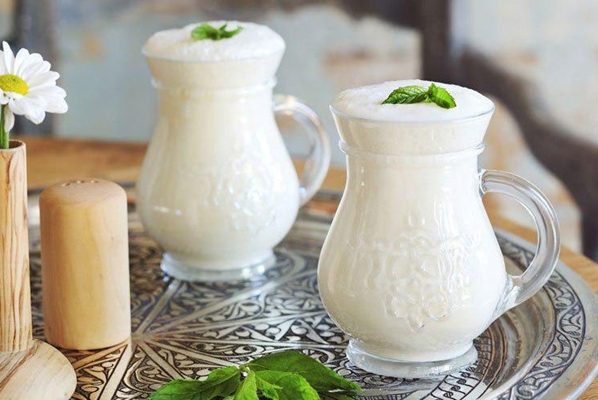
new project on ovine yoghurt drink


We just secured funding from Enterprise Ireland to work on the production of a novel yoghurt drink made from ovine milk and its bioactivities against platelet aggregation. 

It's an Innovation Partnership project collaborating with Rockfield Dairy Ltd.

We are going to soon hire a post-doctoral researcher for this 12months project, if you want to pass the word round, it would be great.

Relevant prior knowledge on this area is here and here.

Watch this area for further updates.


Friday, 25 January 2019

new article from our team

graphical Abs


The effect of ovine milk fermentation on the antithrombotic properties of polar lipids


Abstract

The effect of fermentation on the antithrombotic properties of polar lipids in ovine milk has been assessed through the production of yoghurts. The total lipids (TL), total neutral lipids (TNL), and total polar lipids (TPL) were extracted. 

The fatty acid profiles of all yoghurt polar lipids were analysed by GC-MS. The levels of MUFA increased in the fatty acids of the polar lipids, but there was a reduction in PUFA as milk was fermented to yoghurt. 

The bioactivity of each lipid extract was assessed against platelet-activating factor (PAF) induced platelet aggregation. All yoghurt polar lipids exhibited potent antithrombotic activities with IC50 values ranging from 45 to 77 µg. 

Shotgun metagenomics determined the species-level microbial composition and functional potential of the yoghurts. Yoghurts containing L. acidophilus seem to correlate with greater bioactivity. Several phospholipid biosynthetic genes have been identified in the most antithrombotic yoghurts. This study has demonstrated that fermentation enhances the antithrombotic properties of yoghurt polar lipids against PAF.


Tuesday, 16 May 2017

New Paper on ovine and caprine lipids


Ovine and Caprine Lipids Promoting Cardiovascular Health in Milk and Its Derivatives

 Abstract
The purpose of this commentary is to highlight the anti-inflammatory properties of polar lipids present in ovine and caprine milk and its derivatives (i.e. dairy products such as yogurt and cheese). These lipids inhibit the onset of atherosclerosis and thus promote cardiovascular health. We suggest that further research could focus on the elucidation and bioavailability of these lipids.

Keywords


= = =

You can read the full paper here