Statins have been sold for nearly forty years. In that time the proof they save lives has got thinner, and the number of people told to take them has kept climbing.
1987: the first statin goes on sale in America. It is meant for people whose cholesterol is dangerously high and will not come down with diet.
1994: statins post the best result they will ever post. In men who have already survived a heart attack, deaths over five years fall from about 12 in 100 to 8 in 100.
1996: Lipitor is approved, and the job becomes selling that result to people who have never had a heart attack.
2000: Pfizer buys the whole of Warner-Lambert, the company that made Lipitor, for about $90 billion, just to own the pill outright.
2001: the American cholesterol guideline nearly triples the number of people told to take a statin, from 13 million to 36 million.
2002: the drug is tested in 10,000 older Americans with high blood pressure, most of them without heart disease. It makes no difference to how many die.
2002: in a trial of people over 70, the statin group has no fewer deaths and 25% more new cancers.
2004: Britain decides the drug is safe enough to sell over the pharmacy counter, with no doctor involved.
2011: Lipitor's patent runs out. It has become the best-selling drug in history.
2012: the FDA adds memory loss and raised blood sugar to the warning label.
2013: a new American guideline adds another 12.8 million people to the list.
2014: Britain halves the risk score that qualifies you, and 4.5 million more people become eligible.
2016: the drug is tested in 12,000 people across 21 countries who have no heart disease. Again, it makes no difference to how many die.
2026: a new American guideline makes 87.5 million people eligible, including 93% of everyone in their seventies, and asks for a cholesterol test on every child aged nine to eleven.
The strongest evidence the drug ever produced came in 1994, from men who had already had a heart attack. Every expansion since has handed it to healthier people, in whom the trials keep finding no difference in deaths.
What happened to 'statins save lives'? In this 31,000 person RCT over 7 years, CVD screening put 44.33% of people on statins (compared to 30.25% in non screening) but prevented neither deaths nor CV events (HR 0.96). Funny how I don't see this trial EVER being discussed by cardiologists. One major difference with this trial compared to so many other statin trials is that it is not funded by a statin maker.
Invitation to a comprehensive CT-based screening for subclinical CVD did not decrease death over 7 years among men aged 60–64 years but did increase severe bleeding. Because the trial was powered for events over 10 years, further follow-up is needed.
Research found that taking statins may have a protective effect even for people whose cholesterol is already quite low.
High cholesterol
has long been associated with poor heart health — but it may also
increase your risk of getting dementia, a new study has suggested.
A team from the
National Research Foundation of Korea and the Korean Neurological
Association matched around 109,000 adults with high LDL cholesterol,
above 130 mg/dL, with the same number of people with low LDL levels.
Significantly
more individuals with high cholesterol were diagnosed with dementia or
Alzheimer’s in the six months after testing than those with lower LDL
levels.
The
research, published in the Journal of Neurology, Neurosurgery &
Psychiatry also found that taking statins may have a protective effect
even for people whose cholesterol is already quite low.
Individuals
with low levels of “bad” LDL cholesterol had a 26 per cent lower risk
of being diagnosed with dementia, and those who took statins reduced
that risk by 13 per cent compared with those who did not take them.
ven
among those with cholesterol levels below 70 mg/dL, which GPs consider
low, taking statins seemed to reduce the risk of a dementia diagnosis by
an additional 13 per cent compared with those who did not take the
medication. This effect disappeared when cholesterol levels dropped very
low.
The LDL
cholesterol causes a build-up of plaque in the blood vessels and may
trigger inflammation. Over time, this can lead to blockages that disrupt
blood flow, resulting in heart attacks and strokes.
Last summer, a major study showed that high cholesterol in midlife was an important risk factor for dementia.
According to research commissioned by The Lancet, elevated LDL levels
are responsible for about 7 per cent of all dementia cases.
Previous studies have shown that statins,
which lower cholesterol levels and are already the most commonly
prescribed drug in the UK, can reduce the risk of developing dementia by
around 20 per cent.
Exactly
how LDL cholesterol harms the brain remains unclear. “There is clearly
more to the story of Alzheimer’s than we first thought said Francesco
Tamagnini, a neurophysiologist at the University of Reading who was not
part of the current research. “My lab has looked into the idea that
damage to the blood-brain barrier can lead to accumulation of LDL
cholesterol in the brain and potentially alter the electrical activity
of neurons.”
Researchers
in the past have pointed out that high levels of cholesterol are
associated with greater brain amyloid, which is believed to be key in
Alzheimer’s disease.
“However,
dementia risk is complex and influenced by many factors. Without a
detailed picture of what’s going on in the brain we do not know if there
is a direct link between lower cholesterol and reduced dementia risk”,
said Julia Dudley, head of research at Alzheimer’s Research UK. “In the
meantime, keeping our hearts healthy remains one of the most effective
ways we can protect our brain health.”
About
six in ten people in the UK have high cholesterol and 9.5 million Brits
were dispensed a statin in 2022. But there are other ways to lower cholesterol. Cutting down on fatty foods, which are rich in saturated fats, such as sausages can help.
Adding more vegetables and foods with
high fibre to your diet is also beneficial. Scientists have shown that
tomatoes, almonds, avocados and oats, in particular, may help lower LDL
levels. Regular physical activity, such as aerobics, can further reduce
“bad” cholesterol and protect your brain health.
Conclusions:
In the long-lived population examined, the cholesterol paradox was
unlikely to be a reflection of reverse causality. Our results challenge
the common view that longevity is invariably associated with low
cholesterol levels. Furthermore, moderate hypercholesterolemia does not
preclude the oldest adult from attaining advanced ages, contrary to
common belief.
Chapter Three ........................................................................................... 31 Why We Need to Re-Focus Away from Statins and Omega-3 Supplements 3.1 The demonization of cholesterol
= = = = = = =
The lipid hypothesis is dead and it's high time for GPs to stop prescribing so freely statins.
Το εν λόγω άρθρο μελετά την συσχέτιση της χοληστερόλης με το ρίσκο
εκδήλωσης κολπικής μαρμαρυγής. Και τα αποτελέσματα είναι πολύ
ενδιαφέροντα. Ανεξάρτητα από τους άλλους παράγοντες ρίσκου για
καρδιαγγειακά νοσήματα, χαμηλά επίπεδα χοληστερόλης προκαλούν αύξηση
στον κίνδυνο εκδήλωσης μαρμαρυγής! Είναι εντυπωσιακό πλέον ότι ο μύθος
της χαμηλής χοληστερόλης ότι μειώνει (και καλά!) το ρίσκο για διάφορες
ασθένειες, καταρρίπτεται κάθε μέρα που περνά.
You may remember the nous behind the Seven Countries Study (SCS). His name is Ancel Keys and he investigated if there was a link between coronary disease, diet and...cholesterol.
Some populations showed a linear relationship between levels of cholesterol and deaths caused by heart problems. However, some populations (Greece and Italy, mainly and also the former Yugoslavia) didn't show any such correlation! Instead of looking into the diets of these cohorts, the SSC people made a correlation between total cholesterol and cardiac related deaths...
Today, GPs and medical doctors measure all the above parameters (as per picture) but their thinking and points of action are shortsighted as they look only at the absolute levels of LDL, total cholesterol and triglycerides.
What about though the ratio of HDL/LDL which is actually the main cause of concern, as we have explained in this book?
The picture data are mine.
The ratio of HDL (1.3) / LDL (2.8) is slightly less that 1/2.
How have I managed this? the answer is very very simple: twice a week fish or marine foods and every other day exercise (swimming, mountain bike and sprints). And also, a small bottle of Yakult every morning.
Next Monday, I am going to compete in track and field Munster competition, in the category M50 - i.e., men aged 50-54.
Being 54, I have no chance this year. But, hey it's the participation that matters not the victory.
M50 60m sprint is my event on Monday and getting ready for this event made me getting up from my chair/sofa and go to the track and run with my spikes. Also, having such a purpose, it probably helped me to having such a good ratio of HDL/LDL.
So, if your GP suggests you going on statins if you have high LDL and total cholesterol levels, ask her/him to consider the ratio HDL/LDL. You will challenge her/his beliefs and it might take them out of their comfort zones...but it's worth mentioning this to them.
Στις 14 Νοέμβρη, η έγκυρη εφημερίδα The Irish Times, είχε ολοσέλιδο
αφιέρωμα στις καρδιαγγειακές ασθένεις και την σημασία της πρόληψης
έναντι αυτών. Το άρθρο στην online έκδοση της εφημερίδας μπορείτε να το
βρείτε εδώ.
Ο τίτλος του είναι: «Cardiovascular disease: The case for doing more
on illness prevention, rather than just treatment» με υπότιτλο
«Rethinking how to keep people well promises a ‘win win’ for the State
and the individual».
Διαβάζοντας το άρθρο, μας προέκυψαν κάποιες απορίες…
Στατίνες και Χοληστερόλη
Ο αρθρογράφος αναλώνεται στο τι μπορούμε (και πρέπει) να κάνουμε για
να μην ασθενήσουμε από καρδιαγγειακές ασθένειες αλλά δεν μιλά καθόλου
για την παγκόσμια πρακτική των οικογενειακών γιατρών και των καρδιολόγων να συνταγογραφούν στατίνες.
Σημειώνω εδώ ότι οι στατίνες είναι φάρμακα που σταματούν 100% την
βιοσύνθεση χοληστερόλης στον ανθρώπινο οργανισμό. Ο οργανισμός του
ανθρώπου που καταναλώνει στατίνες ουσιαστικάm του στερείται αυτή η
πολύτιμη ένωση (χοληστερόλη) που παίρνει μέρος σε πολλές και σημαντικές
βιοχημικές λειτουργίες.
Οι στατίνες όμως έχουν ισχυρές παρενέργειες. Προκαλούν μυϊκό πόνο, απώλεια μυϊκού βάρους και σε ποσοστό 50% προκαλούν διαβήτη τύπου 2.
Παρ’όλες αυτές τις επικίνδυνες παρενέργειες, ο ετήσιος τζίρος των
στατινών σε παγκόσμιο κλίμακα είναι 20 δις δολλάρια! Ναι! Καλά
διαβάσατε…20 δις δολλάρια.
Η BigPharma βγάζει πολλά λεφτά από τις στατίνες…
Η χρόνια φλεγμονή και οι καρδιαγγειακές ασθένειες
Αντί λοιπόν, η αρθρογράφος Sheila Wayman να επικεντρωθεί στην
πρωτογενή αιτία των καρδιαγγειακών παθήσεων που είναι η χρόνια φλεγμονή,
μας κάνει ένα αναλυτικό ρεπορτάζ για τα τρόφιμα, την διατροφή και τον
τρόπο διαβίωσης, χωρίς όμως να αναφέρει ούτε μια φορά τις λέξεις «χρόνια
φλεγμονή» και «στατίνες».
Με την ερευνητική μου ομάδα εστιάζουμε στην χρόνια φλεγμονή που
προκαλεί συσσωμάτωση των αιμοπεταλίων στο αίμα μας και την δημιουργία
της λεγόμενης αθηρωματικής πλάκας, που είναι το πρώτο στάδιο των
καρδιαγγειακών ασθενειών.
Έχουμε δημοσιεύσει το 2018 ένα άρθρο με τίτλο «Inflammation, notCholesterol, IsaCauseofChronicDisease» που μπορείτε να βρείτε εδώ.
Αυτό το άρθρο μας έχει 246 παραπομπές στο google scholar, αριθμός που δείχνει ότι δεν έχει περάσει απαρατήρητο.
Tsoupras and colleagues have postulated, in a recent review in
Nutrients, that the key to reducing the incidence of cardiovascular
disease is to control the activities of inflammatory mediators such as
platelet-activating factor (PAF) by diet, exercise, and healthy
lifestyle choices [1].
We agree with this sensible conclusion, which is based on the extensive
scientific literature. The authors argue that their proposal is
contrary to the lipid (or cholesterol) hypothesis.
Τι θα πρέπει να κάνουμε τελικά;
Αν θέλουμε να μιλήσουμε λοιπόν στα σοβαρά για τις καρδιαγγειακές
ασθένειες θα πρέπει να αναφερθούμε στις στατίνες, στη χρόνια φλεγμονή
και στο πόσο λάθος είναι η προσέγγιση του ιατρικού κατεστημένου να
θεωρεί την χοληστερόλη ως πρωτογενές αίτιο των καρδιαγγειακών ασθενειών
και να συνταγογραφεί «με τον κουβά» στατίνες που… προκαλούν διαβήτη
τύπου 2! Με άλλα λόγια, το 50% των ασθενών που λαμβάνουν στατίνες κάθε
μέρα και που θα ασθενήσουν με διαβήτη τύπου 2, θα συνεχίσουν να
λαμβάνουν στατίνες εφ’όρου ζωής αλλά θα πρέπει επιπλέον να λαμβάνουν και
επιπρόσθετη φαρμακευτική αγωγή για τον… διαβήτη τύπου 2.
Καλές και άγιες οι συμβουλές του στυλ «μαγειρέψτε υγιεινά»,
«περπατάτε πιο πολύ», «μειώστε την κατανάλωση επεξεργασμένων τροφίμων
(processed foods)», αλλά αν δεν πιάσουμε τον ταύρο (καρδιααγγειακές
ασθένειες) από τα κέρατα (χρόνια φλεγμονή), τότε είμαστε σαν εκείνο το
παραμύθι που μια πριγκίπισσα στεκόταν μπροστά στον καθρέφτη της και τον
ρωτούσε πόσο όμορφη είναι!
Επιμύθιο
Για τον γράφοντα, οι πιο σημαντικοί παράγοντες που προκαλούν οξεία και χρόνια φλεγμονή είναι οι εξής:
Κακή διατροφή και κακός τρόπος ζωής
Ατμοσφαιρική ρύπανση
Έλλειψη σωματικής άσκησης
Κακή ψυχολογία και
Χημειοθεραπεία (ναι, η χημειοθεραπεία προκαλεί φλεγμονή).
Θα πρέπει λοιπόν οι ομάδες R+D της βιομηχανίας τροφίμων να μελετήσουν
σε βάθος την χρόνια φλεγμονή και να σχεδιάσουν αντιφλεγμονωδή τρόφιμα
που θα βοηθήσουν τους καταναλωτές στην μάχη μας έναντι της χρόνιας
φλεγμονής και έτσι θα μείνουμε μακριά από τις στατίνες!
Ιδού πεδίο δόξης λαμπρόν!
*O Γιάννης Ζαμπετάκης είναι Αναπληρωτής Καθηγητής Χημείας
Τροφίμων, στο Τμήμα των Βιολογικών Επιστημών του Πανεπιστημίου Λίμερικ
(UL) στην Ιρλανδία και “παίζει” πάντα Αριστερό Εξτρέμ.
In a full page on the hard copy of the newspaper (I bought it today to keep it as it's my birthday today), we can read about lifestyle choices, about the role (or rather non-role) of corporations and what we can do in order to decrease the CVD risk.
BUT
Cholesterol and inflammation are NOT mentioned at all!
Statins are NOT mentioned either (Statins have become one of the most widely prescribed medications in the world, with global sales estimated to be over $20 billion annually!). Maybe, talking about BIGPHARMA is a tabou term for the Irish Times, maybe...
The real cause of CVD is inflammation and NOT cholesterol.
Hence, if we want to talk seriously about CVD, then we need to address all the factors that cause acute inflammation, e.g. smoking, air pollution (i.e. burning Polish coal in open fires, chemical additives in the food chain and ....chemotherapy).
(more on this, you can read in chapters 3,6,7,8 and 9 in this book)
Till then, we can wonder... : Quo Vadis Irish Times?
*This is the first systematic review of cohortstudies where low-density lipoprotein cholesterol(LDL-C) has been analysed as a risk factor forall-cause and/or cardiovascular mortality inelderly people.
▪Lack of an association or an inverse associationbetween LDL-C and mortality was present in allstudies.
▪We may not have included studies where an evaluation of LDL-C as a risk factor for mortality was performed but where it was not mentioned in the title or in the abstract.
▪We may have overlooked relevant studies because we have only searched PubMed.
▪Minor errors may be present because some of the authors may not have adjusted LDL-C by appropriate risk factors.
▪Some of the participants with high LDL-C may have started statin treatment during the observation period and, in this way, may have added a longer life to the group with high LDL-C and some of them may have started with a diet able to influence the risk of mortality.
▪We may have overlooked a small number of relevant studies because we only searched papers in English.
Supplementing statin-treated patients with omega-3, as a
adjunct therapy, does not reduce their chances of suffering major
adverse cardiovascular events, according to a new study which was
terminated early due to the lack of positive results.
P.C.C.
has research funding from BASF AS and Bayer Consumer Care; acts as an
advisor/consultant to BASF AS, DSM, Cargill, Smartfish, Nutrileads,
Bayer Consumer Care, and Pfizer (now GSK) Consumer Healthcare; has
received reimbursement for travel and/or speaking from Danone, Fresenius
Kabi, Baxter, Pfizer (now GSK) Consumer Healthcare, Abbott, Smartfish,
Biogredia and the California Walnut Commission; and is President and
member of the Board of Directors of the European Branch of the
International Life Sciences Institute. A.C.C. has received research
funding from Bayer Consumer Care and travel reimbursement from DSM. M.E.
acts as an advisor for DSM and received travel reimbursement from DSM.
He is member of the Scientific Board of PM International and President
of the Gesellschaft für angewandte Vitaminforschung. A.F.G. has received
research funding from Bayer Consumer Care and has acted as an
advisor/consultant for and has received reimbursement for travel and/or
speaking from Bayer Consumer Care.
Dr.
Ridker reports receiving grant support from AstraZeneca, Novartis,
Merck, Abbott, Roche, and Sanofi-Aventis; consulting fees or lecture
fees or both from AstraZeneca, Novartis, Merck, Merck–Schering-Plough,
Sanofi-Aventis, Isis, Dade Behring, and Vascular Biogenics; and is
listed as a coinventor on patents held by Brigham and Women's Hospital
that relate to the use of inflammatory biomarkers in cardiovascular
disease, including the use of high-sensitivity C-reactive protein in the
evaluation of patients' risk of cardiovascular disease. These patents
have been licensed to Dade Behring and AstraZeneca. Dr. Fonseca reports
receiving research grants, lecture fees, and consulting fees from
AstraZeneca, Pfizer, Schering-Plough, Sanofi-Aventis, and Merck; and Dr.
Genest, lecture fees from AstraZeneca, Schering-Plough,
Merck–Schering-Plough, Pfizer, Novartis, and Sanofi-Aventis and
consulting fees from AstraZeneca, Merck, Merck Frosst, Schering-Plough,
Pfizer, Novartis, Resverlogix, and Sanofi-Aventis. Dr. Gotto reports
receiving consulting fees from Dupont, Novartis, Aegerion, Arisaph,
Kowa, Merck, Merck–Schering-Plough, Pfizer, Genentech, Martek, and
Reliant; serving as an expert witness; and receiving publication
royalties. Dr. Kastelein reports receiving grant support from
AstraZeneca, Pfizer, Roche, Novartis, Merck, Merck–Schering-Plough,
Isis, Genzyme, and Sanofi-Aventis; lecture fees from AstraZeneca,
GlaxoSmithKline, Pfizer, Novartis, Merck–Schering-Plough, Roche, Isis,
and Boehringer Ingelheim; and consulting fees from AstraZeneca, Abbott,
Pfizer, Isis, Genzyme, Roche, Novartis, Merck, Merck–Schering-Plough,
and Sanofi-Aventis. Dr. Koenig reports receiving grant support from
AstraZeneca, Roche, Anthera, Dade Behring and GlaxoSmithKline; lecture
fees from AstraZeneca, Pfizer, Novartis, GlaxoSmithKline, DiaDexus,
Roche, and Boehringer Ingelheim; and consulting fees from
GlaxoSmithKline, Medlogix, Anthera, and Roche. Dr. Libby reports
receiving lecture fees from Pfizer and lecture or consulting fees from
AstraZeneca, Bristol-Myers Squibb, GlaxoSmithKline, Merck, Pfizer,
Sanofi-Aventis, VIA Pharmaceuticals, Interleukin Genetics, Kowa Research
Institute, Novartis, and Merck–Schering-Plough. Dr. Lorenzatti reports
receiving grant support, lecture fees, and consulting fees from
AstraZeneca, Takeda, and Novartis; Dr. Nordestgaard, lecture fees from
AstraZeneca, Sanofi-Aventis, Pfizer, Boehringer Ingelheim, and Merck and
consulting fees from AstraZeneca and BG Medicine; Dr. Shepherd, lecture
fees from AstraZeneca, Pfizer, and Merck and consulting fees from
AstraZeneca, Merck, Roche, GlaxoSmithKline, Pfizer, Nicox, and Oxford
Biosciences; and Dr. Glynn, grant support from AstraZeneca and
Bristol-Myers Squibb. No other potential conflict of interest relevant
to this article was reported.
= = =
let's talk about Science now:
when the authors themselves explicitly declare these conflicts of interest, could such declarations raise any doubts ?
Let's talk about the data, then.
In relation to CVDs, our team has been studying this field for 20 years.
Our views on omega-3 and statins are presented below in this review paper
To conclude: omega-3 and statins do not lower cardiovascular risk. The cholesterol hypothesis can not explain CVDs morbidity; inflammation is the killer, as explained few days ago...
We
are told that cholesterol is a major cause of heart disease.
Approximately 100 million people are currently taking
cholesterol-lowering medications, known as statins, and millions more
people are avoiding foods that contain saturated fat and cholesterol.
The basic idea is that dietary saturated fat raises cholesterol levels,
and these two substances somehow clog-up our arteries, causing a heart
attack. This idea is often referred to as the diet-heart hypothesis.
However, a number of doctors and researchers have been challenging this
hypothesis for decades, and the latest heart disease statistics reveal
some alarming facts. Such as:
People with high cholesterol tend to live longer
People with heart disease are more likely to have low levels of cholesterol
Cholesterol-lowering at a population level does not reduce the rate of heart disease
In
addition, despite their widespread use, and description as "wonder
drugs" statin medications do not extend life expectancy for the majority
of people who take them. Cholesterol-lowering has become a huge global
industry, generating around $29 billion each year. Have the facts about
heart disease, cholesterol and cholesterol medications been distorted by
pharmaceutical companies and food manufacturers keen to increase their
profits? If the focus on cholesterol has been a mistake, then the
greatest cost is associated with the lost opportunity to tackle heart
disease.
Recently, Full Measure with Sheryl Attkisson aired a piece describing some of the financial ties between experts who set the cholesterol clinical guidelines and the pharmaceutical industry. This was something that was included in STATIN NATION way back in 2012 but its very rewarding to see larger parts of the media slowly catching up.
Full Measure is produced by and airs nationally on stations of the Sinclair Broadcast Group. According to their YouTube channel it is available in 43 million households via ABC, CBS, NBC, FOX, CW, MyTV, Univision and Telemundo affiliates. Since I am not in the U.S. I didn’t see the broadcast however, someone from the Statin Nation Facebook group kindly informed me about it.
Incidentally, most blog entries are posted on the Statin Nation Facebook page first, so if you use Facebook please follow the page: https://www.facebook.com/statinnation
Even if you are already aware of the issue concerning clinical guidelines it is still worth watching Sheryl Attkisson’s piece below, since there is an interesting short discussion with a statinator doctor (!!!) who receives quite a lot of money for her views.
Two new published studies from Statin Nation interviewees this week should push the cholesterol hypothesis a step back into the history books. Seventeen authors including: Uffe Ravnskov, Paul J Rosch, Sherif Sultan, Tomohito Hamazaki, Peter H Langsjoen, Kilmer S McCully, and Harumi Okuyama, published an article summarising the research showing that LDLs (so called ‘bad cholesterol’) do not cause heart disease. The paper highlights the following points:
The cholesterol hypothesis is based on misleading statistics and ignoring contradictory observations.
Only around 15% of clinical trials that found a negative result for cholesterol-lowering are cited in other reports.
There is no association between total cholesterol levels and the degree of arterial damage - in general, and also with regard to statin clinical trials.
In the Framingham Heart Study. “For each 1 mg/dl drop in TC [total cholesterol] per year, there was an eleven percent increase in coronary and total mortality”.
The LDL level of patients who have had a heart attack is lower than normal.
Elderly people with higher LDL live the longest.
Cardiovascular mortality has not decreased as a result of widespread statin treatment. Here is a quote from the paper that refers to this point:
“In a Swedish study including 289 of the 290 municipalities, no association was found between statin use and the change in mortality from acute myocardial infarction (AMI). Also, the American National Health and Nutrition Examination Survey found that during the period 1999-2006 the number of AMI and strokes increased from 3.4 to 3.7%, and from 2.0 to 2.9%, respectively. During the same period mean LDL-C level decreased from 126.1 to 114.8 mg/dL, and the self-reported use of lipid-lowering drugs increased from 8 to 13.4%. Furthermore, statin utilisation in 12 European countries between 2000 and 2012 was not associated with reduced CHD mortality or its rate of change over the years.”
In the second paper, Uffe Ravnskov writes about familial hypercholesterolemia (FH) - a genetic condition that prevents the body from removing cholesterol. People with FH have very high cholesterol levels. FH has often been used as a part of the explanation for the use of statins. However, there is not sufficient data to say that statins benefit people with FH. This is still unknown. However, for some time Uffe Ravnskov has argued that coagulation factors should be considered as a priority - which is the subject of the paper.
Unfortunately, just this website and the Irish Times seem to have reported on the first study and only this website has reported on the second study. Therefore please share this post with everyone and anyone you can get to listen!
Update (18/09/18): The Sun, Express, and Metro newspapers have now reported on the first study, albeit with various factual errors.
Introduction
For
half a century, a high level of total cholesterol (TC) or
low-density-lipoprotein cholesterol (LDL-C) has been considered to be
the major cause of atherosclerosis and cardiovascular disease (CVD), and
statin treatment has been widely promoted for cardiovascular
prevention. However, there is an increasing understanding that the
mechanisms are more complicated, and that statin treatment, in
particular when used as primary prevention, is of doubtful benefit.
Areas covered
The
authors of three large reviews recently published by statin advocates
have attempted to validate the current dogma. This paper delineates the
serious errors in these three reviews as well as other obvious
falsifications of the cholesterol hypothesis.
Expert commentary
Our
search for falsifications of the cholesterol hypothesis confirms that
it is unable to satisfy any of the Bradford Hill criteria for causality,
and that the conclusions of the authors of the three reviews are based
on misleading statistics, exclusion of unsuccessful trials and by
ignoring numerous contradictory observations.
In 2014 Time Magazine reversed its position on dietary fat and CAD
At the age of 64, after a morning playing golf, president Dwight D
Eisenhower had his first heart attack. As Pulitzer Prize winning author
Gary Taubes describes in his book
“Good Calories, Bad Calories” Eisenhower’s heart attack “constituted a
learning experience on coronary artery disease (CAD).” After the event,
his doctors, considered the top experts in the field, gave the public a
“lucid and authoritative description of the disease itself”, followed by
twice-daily press conferences held on the president’s condition. Soon,
most of America, particularly middle-aged men, became intently aware of
dogma promoted by these “experts”: the notion that CAD is caused by
eating foods high in fat and cholesterol.
Like much of the rest of the nation, Eisenhower began to avidly lower
his fat and cholesterol intake. Yet this plan of attack was
counterintuitive for Eisenhower who, before his heart attack, had none
of these supposed risk factors connected with CAD. His blood pressure
was only seldom elevated, his weight throughout his life remained around
172 pounds (considered optimal for his height). His total cholesterol
was below normal – his last measurement before the attack was 165 mg/dl,
a level that heart disease specialists today consider safe. He had even
quit smoking six years earlier in 1949.
Objective
To assess whether statin treatment is associated with a reduction in
atherosclerotic cardiovascular disease (CVD) and mortality in old and
very old adults with and without diabetes.
Design Retrospective cohort study.
Setting Database of the Catalan primary care system (SIDIAP), Spain, 2006-15.
Participants
46 864 people aged 75 years or more without clinically recognised
atherosclerotic CVD. Participants were stratified by presence of type 2
diabetes mellitus and as statin non-users or new users.
Main outcome measures
Incidences of atherosclerotic CVD and all cause mortality compared
using Cox proportional hazards modelling, adjusted by the propensity
score of statin treatment. The relation of age with the effect of
statins was assessed using both a categorical approach, stratifying the
analysis by old (75-84 years) and very old (≥85 years) age groups, and a
continuous analysis, using an additive Cox proportional hazard model.
Results
The cohort included 46 864 participants (mean age 77 years; 63% women;
median follow-up 5.6 years). In participants without diabetes, the
hazard ratios for statin use in 75-84 year olds were 0.94 (95%
confidence interval 0.86 to 1.04) for atherosclerotic CVD and 0.98 (0.91
to 1.05) for all cause mortality, and in those aged 85 and older were
0.93 (0.82 to 1.06) and 0.97 (0.90 to 1.05), respectively. In
participants with diabetes, the hazard ratio of statin use in 75-84 year
olds was 0.76 (0.65 to 0.89) for atherosclerotic CVD and 0.84 (0.75 to
0.94) for all cause mortality, and in those aged 85 and older were 0.82
(0.53 to 1.26) and 1.05 (0.86 to 1.28), respectively. Similarly, effect
analysis of age in a continuous scale, using splines, corroborated the
lack of beneficial statins effect for atherosclerotic CVD and all cause
mortality in participants without diabetes older than 74 years. In
participants with diabetes, statins showed a protective effect against
atherosclerotic CVD and all cause mortality; this effect was
substantially reduced beyond the age of 85 years and disappeared in
nonagenarians.
Conclusions
In participants older than 74 years without type 2 diabetes, statin
treatment was not associated with a reduction in atherosclerotic CVD or
in all cause mortality, even when the incidence of atherosclerotic CVD
was statistically significantly higher than the risk thresholds proposed
for statin use. In the presence of diabetes, statin use was
statistically significantly associated with reductions in the incidence
of atherosclerotic CVD and in all cause mortality. This effect decreased
after age 85 years and disappeared in nonagenarians.
Observational
data have shown that researchers and patients having differing views on
the relative importance of morbidity and mortality.15
Patients aged 65 or older prioritised reductions in myocardial
infarction and stroke over avoiding death, in contrast with researchers
and those younger than 65. Therefore, if in the process of shared
decision making, older patients express a preference for extending
longevity, then current evidence supporting statins for primary
prevention remains limited. A patient preference for reduction in
myocardial infarction or stroke, however, might help to tilt the balance
in favour of statin prescription, but the absolute risk reduction and
number needed to treat to prevent a CVD event in older patients remains
uncertain.9
A new study published today in the British Medical Journal has found
statins do not provide any benefit for elderly people, unless they have
type 2 diabetes. In order to understand the significance of this study
it is useful to first discuss some background and some key important
concepts.
Authors:
Ioannis ZabetakisRonan LordanAlexandros Tsoupras
Paperback ISBN: 9780128137925
Imprint: Academic Press
Published Date: 1st January 2019
Page Count: 320
Description
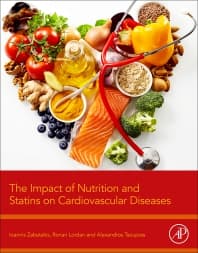
The Impact of Nutrition and Statins on Cardiovascular Diseases
presents a summary of the background information and published research
on the role of food in inhibiting the onset and development of
cardiovascular diseases.
Written from a food science, food chemistry, and food
biochemistry perspective, the book provides an insight on the origin of
cardiovascular diseases, an analysis of statin therapy, the side effects
of statin use, and presents dietary intervention as an alternative
solution to preventing cardiovascular diseases. This knowledge is
important for practitioners and patients alike, as once a patient begins
statin therapy, there is a risk to stopping. In addition, the book
presents how the use of improved nutrition and dietary guidelines could
decrease the dose of statins used to manage cardiovascular disease. The
book focuses on the efficacy of nutrition and statins to address
inflammation, inhibit the onset of cardiovascular diseases and provides
nutrition information and suggested dietary interventions for people
with high cardiovascular risk.
Key Features
Includes a bioscience approach, focuses on
inflammation and revisits the lipid hypothesis, and challenges the view
that statins are a panacea
Presents the view that nutritional interventions have
considerable value not only for reducing cardiovascular risk for CVDs
patients but also acting as the best precaution for "apparently healthy"
people
Advocates that nutritional habits that are formed at a young age are the best way to tackle the global epidemic that is CVDs
Readership
Nutrition
researchers, CVDs and public health researchers, CVDs clinicians,
Nutritionists and Dietitians, Students in health related fields, Food
Chemists and Food Biochemists (Academic, R+D, industrial), Regulatory
bodies
Table of Contents
Table of Contents
The Origin of Chronic Diseases with Respect to Cardiovascular Disease - Ronan Lordan, Alexandros Tsoupras, and Ioannis Zabetakis
Inflammation - Ronan Lordan, Alexandros Tsoupras, and Ioannis Zabetakis
Inflammation and Cardiovascular Diseases - Alexandros Tsoupras, Ronan Lordan, and Ioannis Zabetakis
The Lipid Hypothesis and The Seven Countries Study - Ronan Lordan, Alexandros Tsoupras, and Ioannis Zabetakis
The Role of Cholesterol in Atherosclerosis, CVD, and Dietary Patterns - Alexandros Tsoupras, Ronan Lordan, and Ioannis Zabetakis
Statins: Rationale, Mode of Action, and Side-effects - Sherif Sultan, Ashwini D’Souza, Ioannis Zabetakis, Ronan Lordan, Alexandros Tsoupras, Edel P Kavanagh, and Niamh Hynes
Cardiovascular Risk: Assumptions, Limitations, and Research - Alexandros Tsoupras, Ronan Lordan, and Ioannis Zabetakis
Diet and Cardiovascular Disease: The Mediterranean Diet - Audrey Tierney, Ronan Lordan, Alexandros Tsoupas, and Ioannis Zabetakis
Nutrition Versus Statins in Primary Prevention: Where do we Stand Now? - Ioannis Zabetakis, Ronan Lordan, and Alexandros Tsoupras
Ioannis Zabetakis
has studied and worked in Greece, the UK and Ireland. Originally, a
chemist, he fell in love with food science (sensory and functional
properties of food). After an academic career in the Universities of
Leeds and Athens spanning 15 years, where he developed a strong interest
on lipids and cardiovascular diseases, Ioannis joined the University of
Limerick in Ireland where he is focusing on the cardioprotective
properties of food lipids with an emphasis on dairy and aquaculture
products. He has written over 70 papers and 2 patents, promoting a
healthier diet and lifestyle that will render us less dependent on
medicines.
Affiliations and Expertise
Lecturer and Course Leader, Biological Sciences, Department of Biological Sciences, University of Limerick, Limerick
Ronan Lordan
Ronan Lordan
graduated with a first-class honours Bachelor of Science degree in
Biological Sciences and Education from the University of Limerick in
2015. In 2016, he returned to the University of Limerick to begin his
PhD scholarship in the study of the role of dietary polar lipids in
inflammation and cardiovascular disease. He has lectured on various
topics including lipids chemistry, genetics, and health and has
published several peer-reviewed papers.
Affiliations and Expertise
Biological Sciences, Department of Biological Sciences, University of Limerick, Limerick
Alexandros Tsoupras
Alexandros is a
Chemist-Biochemist with studies (BSc-MSc-PhD) in Athens University
(Greece), where he has also worked as a Postgraduate Research/Teaching
Assistant and Postdoctoral Research/Teaching Associate. After a
Postdoctoral Semester at Albany Medical College (USA) he also worked as a
Part-time Tutor/Instructor/Lecturer of Chemistry-Biochemistry in
several private/public Schools/Post-Secondary Institutes and
Universities/Colleges. Afterwards, he was selected by the “Supreme
Council for Civil Personnel Selection” as a Public Scientist (Region of
Attica, Greece). Alexandros is currently a Postdoctoral Researcher at
the Department of Biological Sciences, University of Limerick, Ireland.
Affiliations and Expertise
Chemist-Biochemist, Department of Biological Sciences, School of Natural Sciences, Faculty of Sciences and Engineering
Reviews
"Low-level
inflammation is the core underlying cause of most illness and disease.
This evidence-based book shines a ground-breaking light on
inflammation’s negative effect with regard to heart disease and the use
of statins. This is a book that all health practitioners should have on
their shelves." ~Lori Shemek, PhD, CNC, bestselling author of ‘How to
Fight FATflammation’ View more >