Four years, we had published this paper on dairy fats and CVD.
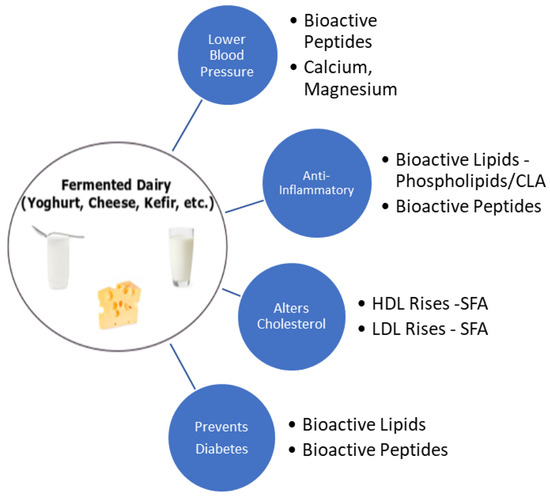
Cardiovascular diseases (CVD) remain a major cause of death and morbidity globally and diet plays a crucial role in the disease prevention and pathology. The negative perception of dairy fats stems from the effort to reduce dietary saturated fatty acid (SFA) intake due to their association with increased cholesterol levels upon consumption and the increased risk of CVD development. Institutions that set dietary guidelines have approached dairy products with negative bias and used poor scientific data in the past. As a result, the consumption of dairy products was considered detrimental to our cardiovascular health. In western societies, dietary trends indicate that generally there is a reduction of full-fat dairy product consumption and increased low-fat dairy consumption. However, recent research and meta-analyses have demonstrated the benefits of full-fat dairy consumption, based on higher bioavailability of high-value nutrients and anti-inflammatory properties. In this review, the relationship between dairy consumption, cardiometabolic risk factors and the incidence of cardiovascular diseases are discussed. Functional dairy foods and the health implications of dairy alternatives are also considered. In general, evidence suggests that milk has a neutral effect on cardiovascular outcomes but fermented dairy products, such as yoghurt, kefir and cheese may have a positive or neutral effect. Particular focus is placed on the effects of the lipid content on cardiovascular health.
two weeks ago, this paper was published:
Dietary Fats and Cardio-Metabolic Outcomes in a Cohort of Italian Adults
Results: After adjustment for potential confounding factors, individuals reporting higher intakes of total and saturated fats were associated with lower likelihood of having hypertension (odds ratio (OR) = 0.57, 95% CI: 0.35, 0.91 and OR = 0.55, 95% CI: 0.34, 0.89, respectively). Moreover, higher intake of short-chain saturated fatty acids (SCSFAs) and medium-chain saturated fatty acids (MCSFAs) was inversely associated with dyslipidemia and diabetes (OR = 0.43, 95% CI: 0.23, 0.82 and OR = 0.25, 95% CI: 0.09, 0.72, respectively). Among MUFAs, C18:1 was inversely associated with hypertension and diabetes (OR = 0.52, 95% CI: 0.30, 0.92 and OR = 0.21, 95% CI: 0.07, 0.67, respectively), while C14:1 intake was inversely associated only with hypertension (OR = 0.57, 95% CI: 0.37, 0.88). In contrast, C20:1 intake was associated with dyslipidemia (OR = 3.35, 95% CI: 1.33, 8.42). Regarding PUFA, C18:2 and 20:5 were inversely associated with hypertension (OR = 0.33, 95% CI: 0.18, 0.60 and OR = 0.30, 95% CI: 0.10, 0.89, respectively). Conclusions: The consumption of SFA does not seem to be harmful to cardio-metabolic health and, on the contrary, SCSFA may exert beneficial effects. Further studies are needed to clearly validate the results of the present study.
= = =
This is another development that shows that dairy fats do not pose a cardiovascular risk!