A 6-month trial just showed that a higher-fat, low-carbohydrate diet lowered circulating saturated fat compared with a higher-carbohydrate diet, even though people on the low-carb diet ate far more saturated fat. Palmitoleic acid, a marker of the liver making new fat from carbohydrates, also fell. All of this matches up with previously published data: when carbohydrate comes down, circulating saturated fat comes down with it.
That is the part the diet-heart story often misses. Much of the saturated fat in the blood is not arriving from the meal, but is being made. Cut the carbohydrates, insulin comes down, and the fat-generating signal to the liver turns down. All of this matters for insulin resistance. When circulating saturated fats in the blood come to a cell, they can be used to make ceramides--the very molecules that impair insulin signaling. Less saturated fat in circulation means less raw material for that process.This blog is fanatic about FunFood (i.e. FUNctional Food to make us happier and healthier).
Thursday, 3 September 2026
Wednesday, 12 August 2026
Editorial: The role of lipids in relation to preventing inflammation and chronic diseases.
Our latest publication
Editorial: The role of lipids in relation to preventing inflammation and chronic diseases
Despite substantial advances in pharmaceutical treatments targeting inflammation and the chronic non-communicable diseases (NCDs) associated with it, these conditions continue to cause considerable morbidity and mortality worldwide. NCDs, including cardiovascular disease (CVD), cancer, obesity, type 2 diabetes mellitus (T2DM), metabolic syndrome, and stroke, remain the leading causes of ill health and premature death. Indeed, CVD alone is responsible for over 18 million deaths annually, while cancer and obesity claim 10 million and 4.7 million deaths, respectively. These figures highlight the profound societal and healthcare burden of chronic illness. In recent years, chronic low-grade systemic inflammation has been increasingly recognized as a key contributor to the development and progression of many non-communicable diseases (NCDs). Addressing the mechanisms underlying systemic inflammation may therefore offer important opportunities for the prevention and management of these conditions. In spite of therapeutic advances, treatments often show variable effectiveness, underscoring the need for a deeper understanding of the mechanisms of NCDs. Lipids have been long recognized as structural and energy-storing molecules; today bioactive lipids regulate inflammatory and immune responses through multiple signaling pathways. Studying the diverse roles of lipids may uncover novel pathways in NCDs and inform the development of more precise, personalized interventions. Nutritional strategies and especially personalized nutrition represents a promising avenue for disease prevention and management.
The goal of this Research Topic was multidimensional. There is a clear and urgent need to better understand which mechanisms are related to the onset and progression of NCDs and how different lipids play a role in the onset, progression, and amelioration of these diseases. Previous research on this topic has shown that specific lipid nutrients can play a pivotal role in inhibiting inflammation and therefore the development of chronic diseases. It is of high interest to look into the research investigating dietary or exogenous lipids or other nutrients affecting lipid metabolism or pathways that may have a positive impact on reducing inflammation. Thus, this Research Topic addressed major gaps in our academic and medical knowledge, which may inform new research avenues.
Several studies in this Research Topic converge on remnant cholesterol (RC) as an emerging biomarker across multiple chronic diseases. Li, Chen, et al. studied how cardiometabolic risk factors (CMRF) are related to remnant cholesterol (RC) and diabetes. Their study focused on two East Asian cohorts. They performed a study using data from a Chinese (n = 112,694) and Japanese (n = 12,489) cohorts, stratified by CMRF status. The association between RC and diabetes mellitus (DM) was assessed using Cox regression models, restricted cubic splines (RCS), extreme gradient boosting (XGboost), receiver operating characteristic (ROC) analysis, and mediation analysis. RC was significantly associated with DM only in individuals with CMRF in both cohorts, and the association was non-linear. Their study found also differences between the two cohorts: RC showed better predictive performance compared to LDL-C and total cholesterol in predicting DM risk among individuals with CMRF (AUC 0.606 and 0.647 in Chinese and Japanese cohorts, respectively). CMRF mediated 76.3 and 66.3% of the RC-DM association in the Chinese and Japanese cohorts. Their conclusion was that RC is non-linearly associated with the incidence of DM in individuals with CMRF, primarily promoting its onset through the presence of CMRF.
Emerging evidence also indicates that remnant cholesterol (RC) and inflammation play a crucial role in diabetic kidney disease (DKD) pathogenesis. Xie X. et al. investigated the association and diagnostic efficacy of remnant cholesterol inflammatory index (RCII), integrating RC and inflammatory markers, with DKD. They found both overall and non-linear positive correlations between the risk of DKD and both RC (P for overall < 0.001, P for non-linear = 0.049) and RCII (P for overall < 0.001, P for non-linear < 0.001). Also, machine learning models incorporating RCII and traditional risk factors demonstrated robust diagnostic efficacy, with extreme gradient boosting (XGBoost) achieving the highest AUC values in the testing set (AUC: 0.953). Given that RCII is a novel and promising biomarker for DKD risk, they suggested that its integration into diagnostic models may enhance early identification and personalized prevention strategies for DKD.
An independent study conducted by Xie R. et al. investigated whether RC can be a novel risk factor for osteoarthritis (OA). They carried out a large prospective cohort of middle-aged and older adults; where RC showed a positive, dose–response association with incident osteoarthritis that attenuated to near-null after adjustment for BMI. Mediation analysis indicated that approximately 84% of the total association operated via BMI, supporting adiposity as the principal pathway and suggesting limited BMI-independent effect of RC. Their results highlighted that RC is potential modifiable metabolic biomarker and underscore the interplay of dyslipidemia and obesity in OA pathogenesis, suggesting that RC management combined with weight control may offer an effective strategy for OA prevention.
In another study under the theme on how RC is implicated to a number of CD, Ren et al. studied the association of plasma remnant cholesterol with cognitive function in middle-aged and elderly Chinese adults with T2DM in a cross-sectional study. They recruited one thousand eight hundred seventeen participants aged 55 to 75 from communities in Beijing. Demographic information and daily dietary intakes were collected by self-designed questionnaire. Fasting venous blood was obtained for quantitative analysis of plasma lipid parameters. The Montreal Cognitive Assessment (MoCA) was used to assess cognitive function. They identified that an increase in plasma RC level is a potential risk factor for MCI. A plasma RC concentration below 0.578 mmol/L was associated with a decreased risk of MCI in middle-aged and older individuals with T2DM. In a similar pattern, a plasma RC concentration below 0.581 mmol/L may lower the risk of MCI in non-T2DM subjects. The daily consumption of vegetables and legumes could help reduce the concentration of RC.
Collectively, these studies demonstrate that RC is not only associated with CVD, but it is also associated with risk of T2DM, diabetic kidney disease, osteoarthritis, and cognitive decline. Collectively, these findings reinforce the concept that remnant lipoproteins are more than passive lipid carriers, instead acting as important mediators of cardiometabolic dysfunction and inflammation.
Staying with the theme of lipoproteins, the role of high-density lipoproteins (HDL) in NCDs was also an examined in this Research Topic. Geng et al. investigated the association between HDL subfractions and long-term major adverse cardiac and cerebrovascular events (MACCEs) in patients with acute myocardial infarction (AMI). During a median follow-up of 52.4 months, 132 MACCEs (10.7%) occurred. Patients in the highest HDL-3 tertile had a lower MACCEs incidence than those in the lowest tertile (6.7% vs. 16.4%, p < 0.001). Higher HDL-3 levels were associated with improved event-free survival (HR = 0.58, 95% CI: 0.37–0.91) and demonstrated discriminative ability for MACCE risk (AUC = 0.62; 95% CI: 0.57–0.67), whereas HDL-C and HDL-2b were not significant. The levels of HDL-3 levels were independently associated with a higher long-term risk of MACCEs in AMI patients. Thus, HDL-3 may represent a potential biomarker for residual cardiovascular risk stratification and a potential therapeutic target for improving post-infarction outcomes.
HDL may also play a role in non-CVD related events. Sun et al. studied the association between the non-HDL to HDL cholesterol ratio and non-alcoholic fatty liver disease (NAFLD) in Chinese adults with and without gout. The non-HDL cholesterol to HDL cholesterol ratio (NHHR) serves as a comprehensive lipid index. Therefore, their study aimed to the association between NHHR and the risk of NAFLD in patients with gout. Their analysis of quartile groups stratified by NHHR levels revealed an increased prevalence of NAFLD corresponding to higher NHHR levels. They addressed their research question using multifactorial logistic regression analysis and they established a significant association between NHHR and NAFLD, yielding an odds ratio (OR) of 1.242 [95% confidence interval (CI): 1.089–1.416, p = 0.001]. Their study identified a positive correlation between NHHR and the incidence of NAFLD in individuals with gout, suggesting that NHHR may serve as a reliable indicator of NAFLD within the gout patient.
The systematic review of Mustafa et al. aimed to present an updated evidence synthesis on the potential link between circulating Lp(a) concentrations and this prevalent hepatic disease in adults. Twenty-one observational studies were included in their meta-analysis (137,494 cases; 281,261 controls). A three-level meta-analysis resulted in a pooled mean difference of 1.40 mg/dL [95% confidence interval: −2.81, 5.61; p = 0.50], indicating no significant difference in circulating Lp(a) concentrations between patients with Metabolic dysfunction-associated steatotic liver disease (MASLD) or NAFLD or metabolic dysfunction-associated fatty liver disease (MAFLD) and controls. They highlighted the limited potential for circulating Lp(a) as a diagnostic/prognostic biomarker for MASLD has limited potential, although this biomarker could still be utilized to assess CVD risk in the context of steatotic liver disease.
While dyslipidemia is synonymous with CVD, Ruan et al. provided a retrospective cohort study on renal outcomes and predictive value of dyslipidemia in patients with IgA nephropathy. Even though dyslipidemia is common in chronic kidney disease (CKD), including immunoglobulin A (IgA) nephropathy (IgAN), and may be associated with renal prognosis; the value of dyslipidemia in IgAN remains insufficiently assessed. Their investigation focused on clinicopathological characteristics and renal outcomes in IgAN patients with dyslipidemia and evaluated the prognostic value of lipid abnormalities. IgAN patients with dyslipidemia exhibited more severe clinicopathological features. Tubular atrophy/interstitial fibrosis and arteriosclerosis/arteriolosclerosis were closely associated with dyslipidemia. They concluded that dyslipidemia not only indicates adverse renal outcomes but also serves as an independent prognostic predictor.
CVD can be studied using atherosclerosis index and the group of Li, Gu, et al. carried out a prospective cohort analysis from the China Health and Retirement Longitudinal Study in order to study whether Cumulative Atherosclerosis Index of Plasma (CumAIP) is related to new-onset diabetes in middle-aged and older adults. They used data from the China Health and Retirement Longitudinal Study (CHARLS) and they analyzed 10,395 diabetes-free participants at baseline (2011) with follow-ups in 2013, 2015, and 2018. Multivariable logistic regression was adjusted for sociodemographic (age, gender, education), lifestyle (smoking, alcohol, sleep, physical activity), and clinical factors (systolic and diastolic blood pressure, BMI, waist circumference). They concluded that CumAIP exposure independently predicts diabetes incidence in middle-to-older adults and this result highlighted its potential for clinical risk stratification.
Over the past years, there has been considerable research on the role of polyunsaturated fatty acids (PUFAs) and their role in the development and treatment of NCDs. In the review paper of Kouti et al. the role of PUFAs as a potential preventive and therapeutic intervention for MASLD and its progression to hepatocellular carcinoma was discussed. MASLD is currently the leading cause of chronic liver disease worldwide and a major cause of hepatocellular carcinoma (HCC), a cancer with poor prognosis. Considering the immense public health impact of MASLD and MASLD-HCC, preventive and more effective management strategies for these diseases are urgently needed. Their review discussed the role of PUFAs, more specifically n-3 and n-6, in MASLD and MASLD-HCC, by critically reviewing evidence from human clinical and observational studies, and experimental models.
In another study of PUFAs in health, Huang et al. examined whether omega-6/omega-3 fatty acid ratio (O6:O3) measured by nuclear magnetic resonance (NMR) spectroscopy can improve cardiovascular risk prediction. The plasma O6:O3 ratio, a marker of inflammatory balance, is a promising biomarker for risk stratification. Therefore, they aimed to evaluate if adding the O6:O3 ratio to the SCORE2 model improves the prediction of major adverse cardiovascular events (MACE). They compared the predictive performance of the SCORE2 model with and without the O6:O3 ratio in an independent validation cohort (N = 54,940) using Harrell's C-index, net reclassification improvement (NRI), and integrated discrimination improvement (IDI).They concluded that incorporating the plasma O6:O3 PUFA ratio can provide a modest but statistically significant improvement in 10-year MACE risk prediction with the SCORE2 algorithm. Also, the O6:O3 ratio, being a modifiable biomarker, may has the potential to refine risk stratification and guide personalized nutritional interventions.
The trans-fatty acids are another type of dietary fatty acids implicated in CVD development. Ye et al. provided some meaningful insights on the impact of diets high in trans-fatty acids (TFA) on CVD in adults older than 55 years. They studied global trends and health inequalities in CVD burden attributable to high TFA intake from 1990 to 2021 and project future patterns through 2036. Using data from the Global Burden of Disease (GBD) Study 2021, they analyzed age-standardized mortality rates (ASMR), disability-adjusted life years (ASDR), and inequality indicators across 204 countries and territories. Age-Period-Cohort (APC) models and Bayesian projections were applied to estimate future trends. While global progress in reducing TFA-related CVD burden is evident, persistent disparities and emerging risks in low-resource settings still exist and underscore the need for global elimination of industrial TFA, strengthened health systems, and targeted strategies to protect high-risk groups.
Ketone bodies derived from ketogenesis of fatty acids in the liver, are water-soluble molecules that are vital alternative energy sources when glucose availability is limited, which in recent years have been of interest for other biological effects. Dai et al. published a review paper with some novel insights on how ketone bodies (KBs) and their metabolism affect kidney diseases. They discussed the role of KBs as important energy fuels and their complex roles in the occurrence and development of diseases by regulating metabolism, inflammation, and multi-organ cellular crosstalk. They highlighted that high mortality and morbidity of kidney diseases (KDs) is an urgent global public health problem. The pathogenesis of KDs is complex, with metabolic disorders underlying. Ketone body metabolism has recently become a hot spot, and ketogenic diets (KDs), sodium-glucose cotransporter 2 inhibitors (SGLT2i) along with exogenous steatotic liver disease body supplements have drawn much attention for their role in treating obesity and type 2 diabetes. They suggested that it is essential to clarify the effects of KBs on kidney diseases to understand the occurrence and development of kidney diseases correctly and guide clinical treatment.
Zhao et al. presented a pharmacological and metabolomic exploration on how nutrients of red yeast rice extract (RYRE) can have an impact on liver health. They investigated the therapeutic mechanism of red yeast rice extract (Xuezhikang, XZK) in high-fat diet (HFD)-induced non-alcoholic fatty liver disease (NAFLD) through untargeted metabolomics analysis and experimental validation. They performed an untargeted metabolomics analysis based on UHPLC-QTOF/MS in order to identify differential metabolites in liver tissues. A NAFLD model was established in hamsters by HFD feeding. They found that XZK effectively ameliorated hepatic steatosis, dyslipidemia, and inflammation in HFD-induced NAFLD hamsters. The therapeutic effects were mediated through restoration of metabolic homeostasis and suppression of the JNK/AP-1/TNF-α signaling pathway.
Finally, although an acute condition, the impact of nutrition and NCDs on the outcomes of the viral infection requires further research. Bleffgen et al. addressed these aspects via an observational study on the micronutrient status and fatty acid profile of adults with SARS-CoV-2 infection. Micronutrient levels (vitamin D, selenium, zinc, magnesium, and iron) and lipid profiles between 139 SARS-CoV-2 -positive patients (62 hospitalized, 77 home care) and 314 healthy controls, were compared using dried blood spots. Differences by treatment setting (hospitalized vs. home care) as a proxy for disease severity were also examined. Patients with SARS-CoV-2 infection exhibited similar micronutrient levels but showed a significantly impaired lipid profile compared to healthy controls. Notably, there was a significant decrease in palmitic (p-value < 0.01) and stearic acid levels (p-value < 0.01) while a significant increase in omega-3 and omega-6 PUFAs, like AA (p-value < 0.01), DHA (p-value < 0.01), and EPA (p-value < 0.05) was observed. In the SARS-CoV-2 positive cohort, hospitalized patients had significantly lower micronutrient levels (p < 0.01 for all measured micronutrients) compared to those receiving home care.
Taken together, the studies presented in this Research Topic highlight that lipids are far more than passive structural or energy-storage molecules; they are active regulators of inflammation and key determinants of chronic disease risk. The growing evidence linking lipid metabolism with cardiovascular, metabolic, renal, musculoskeletal, hepatic, and neurological disorders points toward new opportunities for earlier disease detection and more targeted interventions. Future research should focus on translating these mechanistic insights into clinically meaningful biomarkers, nutritional strategies, and therapeutic approaches that can prevent, delay, or even reverse the progression of chronic non-communicable diseases.
Thursday, 30 July 2026
The dairy food matrix and its role in future diets from an Irish perspective: An invited review
The picture is from here. Exploring the Power of the Food Matrix in Health Outcomes
= = = = = =
This is a topical paper on the food matrix.
Abstract
Background
Dairy foods are a rich source of nutrients such as protein, calcium, iodine and riboflavin, which are important for biological processes and health. Several of these nutrients have been highlighted as nutrients of concern, with suboptimal intakes reported globally. In Ireland, the dairy food category is a key contributor to these nutrients; however, suboptimal intakes are observed in some subpopulations which may have longer term health implications. Current dietary guidelines recommend ~3 dairy servings/day with low-fat varieties often recommended, as dairy fat contains >60% saturated fat which has been linked to elevated cholesterol concentrations and increased cardiovascular disease risk. However, more recent evidence indicates full-fat dairy foods may have neutral or beneficial effects on cardiovascular health, including lipid and glucose metabolism, blood pressure and anthropometry.
Aim
This article reviews the published evidence linking the dairy food matrix and health, with a focus on the Irish perspective and future diets.
Major Findings
The dairy food matrix, the interaction of dairy food structures and the nutrients contained within, is thought to influence this relationship. Several mechanisms of action have been described that may act in concert, including insoluble calcium soap formation, fat globule size, bioactive compounds such as polar lipids, as well as probiotics from the fermentation process during cheese and yogurt manufacture. Furthermore, the debate around the full-fat and low-fat dairy and health is an emerging topic, particularly in relation to food-based dietary guidelines. However, while the impact of dairy food intake on human health has received much attention, current and future research and practice must also consider environmental and planetary health.
Implications
As a rich source of several nutrients important for health and with the potential for improved environmental metrics across the food system, dairy has an important role to play in future, sustainable diets, both in Ireland and globally.
= = =
Our comments on this : dairy fats have no impact on CVD as we are writing here.
In general, evidence suggests that milk has a neutral effect on cardiovascular outcomes but fermented dairy products, such as yoghurt, kefir and cheese may have a positive or neutral effect. Particular focus is placed on the effects of the lipid content on cardiovascular health.
= = =
Our opinion on this topic is here.
The Abstract of my paper is this:
Abstract
Milk and dairy products have been consumed for thousands of years and their impact against chronic diseases has been extensively studied. However, there is no clear understanding yet of the link of dairy lipids (e.g. triglycerides, polyunsaturated fatty acids and phospholipids) with inflammation and how the food matrix impacts this link. Fermented dairy products (e.g. yoghurt, kefir, cheese) have strong anti-inflammatory activities and these activities are discussed here in relation to the structures of their lipids and the food matrix. Dairy lipids are particularly effective against a number of diseases that develop over a number of years and coined as chronic diseases (i.e. cardiovascular diseases, cancer, stroke, high blood pressure, obesity, metabolic syndrome and diabetes mellitus type 2). Today there is some understanding as to the underlying mechanisms of how dairy lipids inhibit chronic diseases, the biochemical pathways that are involved in the development of chronic diseases and also on how to control them and ultimately inhibit them. The role of dairy lipids against the onset and development of these diseases is vital and it is discussed here. This article addresses the lack of a clear link between dairy lipids, food matrix and chronic diseases and suggests ways of future research.
= = =
Monday, 19 February 2024
Atherosclerosis and the LDL hypothesis
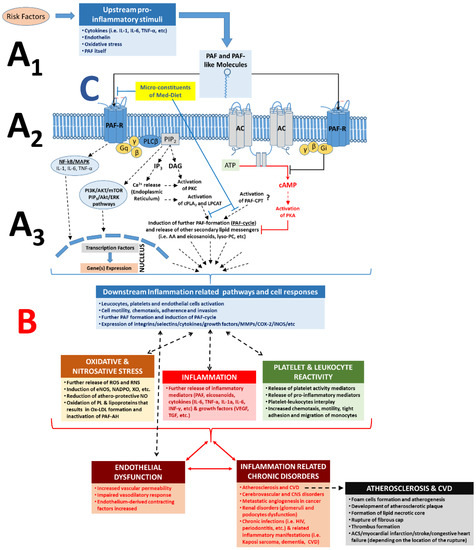
Role of PAF, PAF-R, and its related pathways in the inflammatory cascades and in the pathogenesis of inflammation-related chronic disorders; increased PAF levels by pro-inflammatory stimuli and binding of PAF on its receptor, PAF-R, on the membranes of several cell types can lead to intracellular cascades and a PAF cycle-related amplification of the initial stimuli (A) and in numerous cell responses according to each cell type (B), which can lead to endothelial dysfunction and the onset and progression of inflammation-related chronic diseases. A1. Several risk factors and related upstream pro-inflammatory stimuli trigger formation of PAF and PAF-like molecules (i.e., oxidised phospholipids) and expression of PAF-R. A2. Binding of PAF/PAF-like molecules on PAF-R promote several inflammation-related intracellular pathways; activation of the PAF-R signalling initiates (through a Gq-linked mechanism) PLCβ-mediated hydrolysis of PIP2 to produce IP3 and DAG, leading to transient elevation of cytosolic Ca2+ released from intracellular stores and activation of PKC. The rise in Ca2+ also activates cPLA2α, leading to the release of AA and lysophosphatides, which can serve as substrates for further synthesis of eicosanoids and PAF, respectively. Signalling through Gi-linked PAF-R inhibits the conversion of ATP to cAMP by adenylate cyclase, in this way preventing the activation of PKA and related anti-inflammatory signalling events. A3. Activation of the PAF/PAF-R intracellular pathways leads to the activation of cPLA2 and PAF biosynthetic enzymes (LPCAT) for further formation of PAF and other lipid second messengers, thus creating a PAF cycle and further amplification of the initial inflammatory stimuli, while expression of genes involved in inflammatory manifestations (such as genes of several cytokines, integrins, selectins, metalloproteinase, several enzymes for eicosanoids, and ROS, etc.) is also induced. The pathways inducing the PAF-CPT-related synthesis of PAF are not fully elucidated. B. Increased PAF levels at the site of inflammation and ligand binding (PAF and/or oxidised phospholipids binding) on PAF-R can promote a broad spectrum of PAF effects depending on the cell type and tissue, which is achieved through the production and release of various downstream mediators, such as PAF itself and several other mediators of inflammation such as eicosanoids, cytokines (i.e., TNF-α, IL-1α, IL-6, IL-8, INF-γ, etc.), growth factors (i.e., VEGF, IGF, TGF), ROS, and RNS, but also through the expression of selectins and integrins (i.e., ICAM, VCAM, P-Selectin, E-Selectin) in the membranes of activated cells. Thus, increased downstream mediators, PAF levels, and the subsequent further activation of the PAF/PAF-R pathways promotes the activation and aggregation of platelets and leukocytes, activation of endothelial cells, leukocyte adherence, motility, chemotaxis, invasion, migration, and subsequent endothelial dysfunction, thus stimulating the onset and development of inflammation-related chronic diseases and disorders. C. Microconstituents of several foods of the Mediterranean diet have been found to beneficially inhibit the PAF/PAF-R pathways and PAF synthesis towards homeostatic re-equilibration of PAF levels and activities [57]. PAF: platelet-activating factor; PAF-R: G-protein-coupled PAF-receptor; AC: adenylate cyclase; NF-kB: nuclear factor-kappa light-chain-enhancer of activated B cells; MAPK: mitogen activated protein kinase; ERK: extracellular signal-regulated kinases; Akt: protein kinase B; PI3K: phosphatidylinositol 3-kinase; mTOR: mechanistic target of rapamycin; DAG: diacylglycerol; AA: arachidonic acid; cPLA2: cytosolic phospholipase A2; PKC: protein kinase C; PKA: protein kinase A; LPCAT: acetyl-CoA: lyso-PAF acetyltransferases; PAF-CPT: dithiothreitol l-insensitive CDP-choline: 1-alkyl-2-acetyl-sn-glycerol cholinephosphotransferase; ATP: adenosine triphosphoric acid; cAMP: cyclic adenosine monophosphate; PLC: phospholipase C; MMP: metalloproteinase; COX: cyclooxygenase; iNOS: nitric oxide synthase; eNOS: endothelial nitric oxide synthase; ROS: reactive oxygen species; RNS: reactive nitrogen species; NADPO: nicotinamide-adenine dinucleotide phosphate oxidase; XO: xanthine oxidase; IL-6: interleukin-6; IL-1: interleukin-1; TNFα: tumour necrosis factor-α; ACS: acute coronary syndrome; VEGF: vascular endothelial growth factor; PL: phospholipids; CVD: cardiovascular diseases; CNS: central nervous system.
[ the figure is from our paper: Inflammation, not Cholesterol, Is a Cause of Chronic Disease ]
= = = = = = = = = = = =
Four years ago, the European Heart Journal published a paper titled "Low-density lipoproteins [LDLs] cause atherosclerotic cardiovascular disease: pathophysiological, genetic, and therapeutic insights: a consensus statement from the European Atherosclerosis Society Consensus Panel."
Unfortunately, some researchers have cited this paper as proof that LDLs cause atherosclerosis, just as the title suggests. But if we analyze the content of the paper, we will find that it implicates modified LDLs.
Thus, the true title should read:
Modified low-density lipoproteins cause atherosclerotic cardiovascular disease.
To illustrate why, let us look at examples.
(Image: Taken from the Borén et al.)
And many researchers agree.
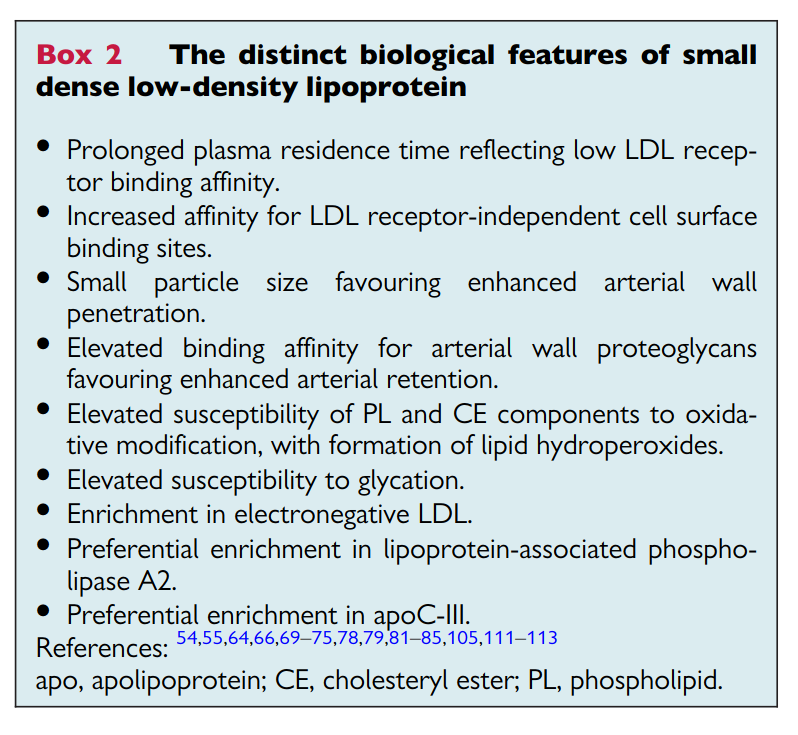
Ikezaki and colleagues, for example, have repeatedly stated that small dense LDL is the "most atherogenic lipoprotein parameter" (see here, here, and here).
Deeper in the paper, the European Consensus Panel states:
Several early studies involving quantitative coronary angiography without or with intravascular ultrasound demonstrated modest but significant benefits from statin-mediated LDL lowering on the degree of coronary artery stenosis.
But one of the cited studies showed that changes in LDL size had the strongest association with coronary stenosis, which was considerably stronger than the associations for apoB or LDL cholesterol.
More recently, Jung et al. (2023), McGarrah et al. (2022), Sekimoto et al. (2022), Sæther et al. (2023), Ceponiene et al., (2021), and Aneni et al. (2019) did not find harmful relationships between large LDL particles and atherosclerosis.
Modified and Oxidized LDLs
Besides small dense LDL, the European Consensus Panel mentions the words "modified" and "oxidized" (or related words) throughout the paper.
These modified LDLs, they note, are linked to many aspects of atherosclerosis, including inflammation and thrombosis.
By contrast, the paper mentions "native" or non-modified LDL only a few times. But even in those cases, the data implicated modified LDL.
For example, take the following statement:
Both native and oxidized forms of LDL may prime platelets and increase platelet activation in response to various agonists, thereby contributing to increased risk of atherothrombosis.
But the cited papers (here and here) did not implicate native LDL.
The second paper, for example, explicitly concluded:
L5 but not L1 induced tissue factor and P-selectin expression in human aortic ECs, thereby triggering platelet activation and aggregation with activated ECs. These findings indicate that elevated plasma levels of L5 may promote thrombosis that leads to STEMI [ST-elevation myocardial infarction].
And:
LDL-cholesterol levels were similar between patients with STEMI and control subjects. However, the mean L5% was significantly elevated in STEMI patients compared with that in control subjects.
L5 is a modified LDL called electronegative LDL, which may be a form of oxidized LDL.
Researchers also propose that modified LDLs are more likely to be retained in the arteries. Just last year, for instance, Law and colleagues found that the arteries of animals tend to retain L5 LDL and that L5 LDL (but not L1 LDL) has atherogenic properties.
As they stated:
L1 LDL [the least electronegative LDL] has no negative effects and just provides nutrients; in contrast, L5 [the most electronegative LDL] is highly atherogenic even at low concentrations such as 5 mg/dL.
Vulnerable Plaques
According to the European Consensus Panel:
A pioneering investigation of bilateral, biopsied carotid endarterectomy samples at baseline and after 6 months of pravastatin treatment was seminal in demonstrating statin-induced increases in collagen content and reductions in lipid content, inflammatory cells, metalloprotease activity, and cell death, all of which favour plaque stabilization.
But statin treatment is not the same as LDL treatment.
In two studies the Panel cited, the data showed that statins may have antioxidant and anti-inflammatory effects independent of lipid-lowering effects, and that statins reduce oxidized LDL independent of any effect on LDL-C or total cholesterol.
Why is this important?
Well, unlike normal LDL, oxidized lipoproteins, oxidized lipids, and oxidative stress are associated with plaque vulnerability.
OxLDLs play key roles in the initiation and progression of atherosclerosis and previous studies have shown a strong association between plasma OxLDLs and plaque instability in coronary and carotid artery disease [Kim et al., 2020].
Transcytosis
In the discussion of transcytosis — a process by which LDL is transported across endothelial cells — the European Consensus Panel states:
Many risk factors modulate the propensity of LDL and other atherogenic lipoproteins to traverse the endothelium and enter the arterial intima.
But the cited paper notes:
The first regulator of LDL transendothelial passage is the glycocalyx, a thick and negatively charged matrix layer, that lines the inner wall of healthy blood vessels. . . . It is known that the glycocalyx is severely impaired in diabetes, a disease accompanied by enhanced ROS [reactive oxygen species] production. Furthermore, ox-LDL [but not normal LDL] reduce the effective thickness of the glycocalyx.
Similarly, Lankin, Tikhaze, and Melkumyants (2023) stated:
Numerous studies showed that the leading factor responsible for damage to the glycocalyx and abnormal endothelial performance in atherosclerosis is the oxidative stress.
The European Consensus Panel also ignores the "outside-in" hypothesis, where most lipoproteins enter the coronary intima from the adventitia (the outer layer of the artery) through immature, fragile, and leaky neovessels.
In fact, the Panel cited an autopsy study by Nakashima and colleagues (2007). But according to Subbotin (2016), Haverich and Boyle (2019), and one author of that study, the data were consistent with the outside-in hypothesis:
The fact that the lipid builds up in the outer layer of the intima and not within the intima close to the lumen raises questions as to whether circulating lipid may be coming from the vasa vasorum rather than the luminal side of the vessel [Wight, 2018].
In 2022, Goldberg and Khatib also criticized the transcytosis hypothesis, stating:
By extensively reviewing the existing evidence, we could reasonably conclude that most lipoproteins enter the wall of large arteries not from the lumen by transcytosis but through the vv [vasa vasorum].
Incidentally, oxidized LDL may affect the small blood vessels of the adventitia. Singla et al. (2021), for example, found that oxidized LDL in the adventitia may harm the lymphatic vessels. But they did not observe this harm with native LDL.
Intimal Thickening
Another topic the European Consensus Panel mentioned was intimal thickening:
Autopsy studies in young individuals demonstrated that atherosclerosis-prone arteries develop intimal hyperplasia, a thickening of the intimal layer due to accumulation of smooth muscle cells (SMCs) and proteoglycans. In contrast, atherosclerosis-resistant arteries form minimal to no intimal hyperplasia.
I agree with the Panel that intimal thickening is "critical to the sequence of events leading to plaque formation," and that disturbances in blood flow or hemodynamic stresses cause intimal thickening.
But as with many aspects of atherosclerosis, oxidative stress can contribute. For example, intimal thickening in the prenatal or infancy period is associated with maternal smoking, possibly caused by oxidants in cigarette smoke.
Atherosclerosis Regression
The European Consensus Panel states:
Beyond atherosclerosis progression are questions relating to mechanisms of plaque regression and stabilization induced following marked LDL-cholesterol (LDL-C) reduction by lipid-lowering agents.
The Panel cites five studies here. But two of those studies were about Lp(a), and another study was one I already cited above.
This leaves us with two studies: ASTEROID and SATURN.
In the ASTEROID study, LDL had no association with atherosclerosis regression:
The on-treatment atheroma volume, change in atheroma volume, and high percentage of subjects with atheroma regression did not differ by the achieved LDL cholesterol . . . Atheroma regression occurred in most patients and was not linked to the LDL cholesterol achieved.
The researchers also admitted that statins have pleiotropic effects:
These multiple mechanisms of the beneficial effects of statins could explain why event reduction and lesion modification correlated poorly with LDL cholesterol lowering alone.
Meanwhile, in the SATURN study, there was no convincing evidence of benefit for lower LDL levels:
Despite the lower level of LDL cholesterol and the higher level of HDL cholesterol achieved with rosuvastatin, a similar degree of regression of PAV was observed in the two treatment groups.
Modified LDL, on the other hand, might be a better marker. Tani and colleagues, for instance, found that the change in modified LDL was associated with atherosclerosis regression, but the change in LDL cholesterol was not.
Calcification
On the topic of coronary calcification, the Panel claimed:
Although the role of LDL in coronary artery calcification remains unclear, it is well-established that an elevated LDL-C level is a strong risk factor for progression of calcification.
But the cited study showed a weak correlation (i.e., a correlation coefficient of only 0.25). As such, many individuals with higher LDL levels had similar or less progression of coronary calcification compared to individuals with lower LDL levels.
Furthermore, the Panel noted in the next sentence that modified LDL is likely the problem:
Modified LDL stimulates vascular calcification by driving osteoblastic differentiation of vascular SMCs, while inhibiting osteoclast differentiation of macrophages. In contrast, HDL appears to exert beneficial effects on vascular calcification . . .
Thus, as Allison and Wright stated two decades ago:
The relationship between LDL cholesterol and atheroma development is dependent on the oxidized form of LDL. Biochemical research has provided evidence that low-density lipoprotein cholesterol can promote atherosclerotic calcification of vascular cells. However, this effect was found to be due to products of lipid oxidation and not a function of native LDL or its concentration in serum.
A Chat with Dr. Borén
Interestingly enough, I had a short email exchange with the lead author of the consensus paper, Jan Borén, six months before the paper was published.
Before the consensus paper, Borén and Williams (2016) published a paper claiming that oxidized LDL was a mere "bystander" in cardiovascular disease. But I was unconvinced.
Therefore, in 2019, I emailed Dr. Borén and challenged his paper with contrary evidence. After a few back-and-forth emails, he agreed that many things about atherosclerosis are still unclear and we should remain open-minded.
What I could not predict, however, was that six months after this email exchange, Borén and colleagues would feature oxidative stress as a major part of their argument!
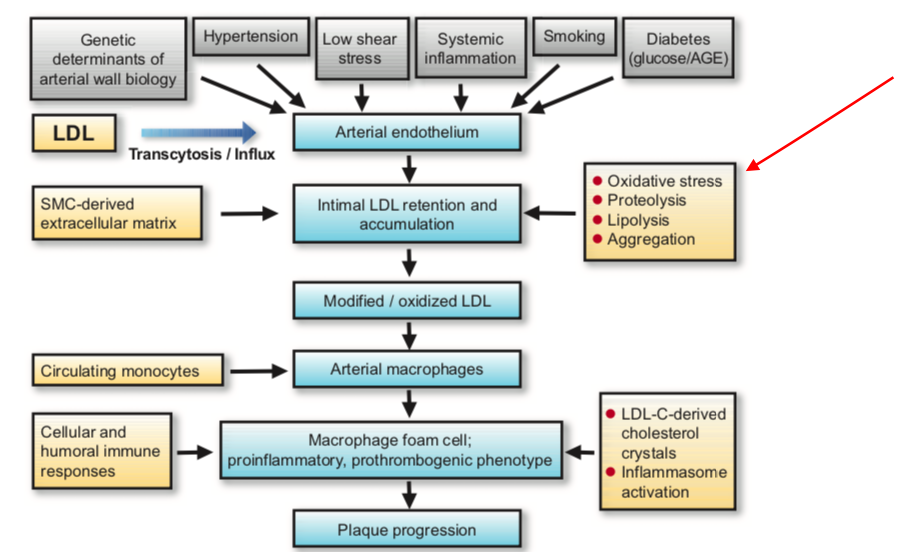
Oxidative stress even appears in their take-home figure:
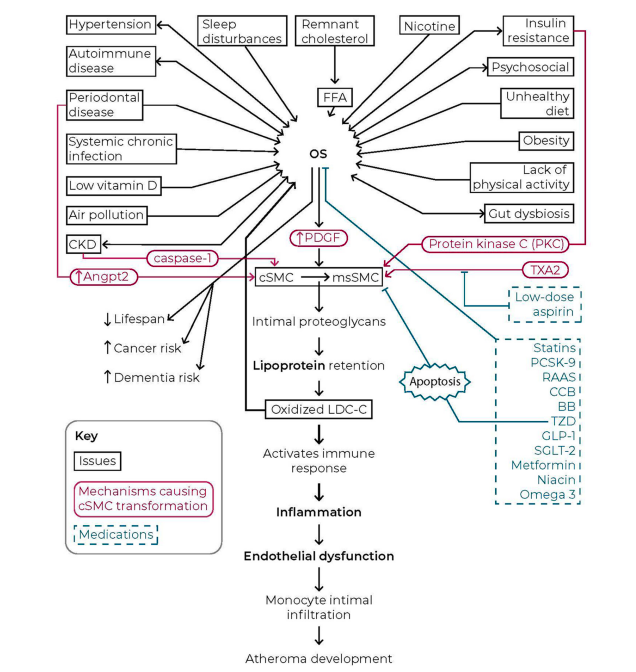
But since oxidative stress (OS) is related to the risk factors in grey (top of the figure), a more accurate diagram would be the one from Bale and colleagues (2022):
This diagram is not perfect as well, but it's a start.
For example, these diagrams assume that LDLs become modified only after getting "stuck" in the artery. But modified LDLs in blood circulation could also be caused by other factors, such as oxidized lipids in the diet (Ahotupa et al., 2009; Addis and Grootveld, 2021; Spiteller, 2007; Gonçalinho et al., 2023).
Conclusions
Contrary to what supporters of the lipid hypothesis claim, the European Consensus Panel did not prove that LDL itself is harmful. Instead, the Panel made the case that modified LDLs drive the disease.
Therefore, as Sánchez-Quesada and colleagues wrote:
Native LDL does not present any of the typical features of an atherogenic lipoprotein. It is not inflammatory, apoptotic or recognized by scavenger receptors. Furthermore, its binding to arterial proteoglycans is low. Therefore, there is a general consensus that LDL must be modified in order to acquire atherogenic characteristics [bold emphasis mine].
= = = = = = = = = = = = = =
the full paper is here.
Tuesday, 26 September 2023
Sex-specific responses in glucose-insulin homeostasis and lipoprotein-lipid components after high-dose supplementation with marine n-3 PUFAs in abdominal obesity: a randomized double-blind crossover study
A must read article
Front. Nutr., 19 June 2023Sec. Clinical Nutrition
Volume 10 - 2023 | https://doi.org/10.3389/fnut.2023.1020678
Background: Clinical studies on effects of marine-derived omega-3 (n-3) polyunsaturated fatty acids (PUFAs), mainly eicosapentaenoic acid (EPA) and docosahexaenoic acid (DHA), and the plant-derived omega-6 (n-6) PUFA linoleic acid (LA) on lipoprotein-lipid components and glucose-insulin homeostasis have shown conflicting results, which may partly be explained by differential responses in females and males. However, we have lacked data on sexual dimorphism in the response of cardiometabolic risk markers following increased consumption of n-3 or n-6 PUFAs.
Objective: To explore sex-specific responses after n-3 (EPA + DHA) or n-6 (LA) PUFA supplementation on circulating lipoprotein subfractions, standard lipids, apolipoproteins, fatty acids in red blood cell membranes, and markers of glycemic control/insulin sensitivity among people with abdominal obesity.
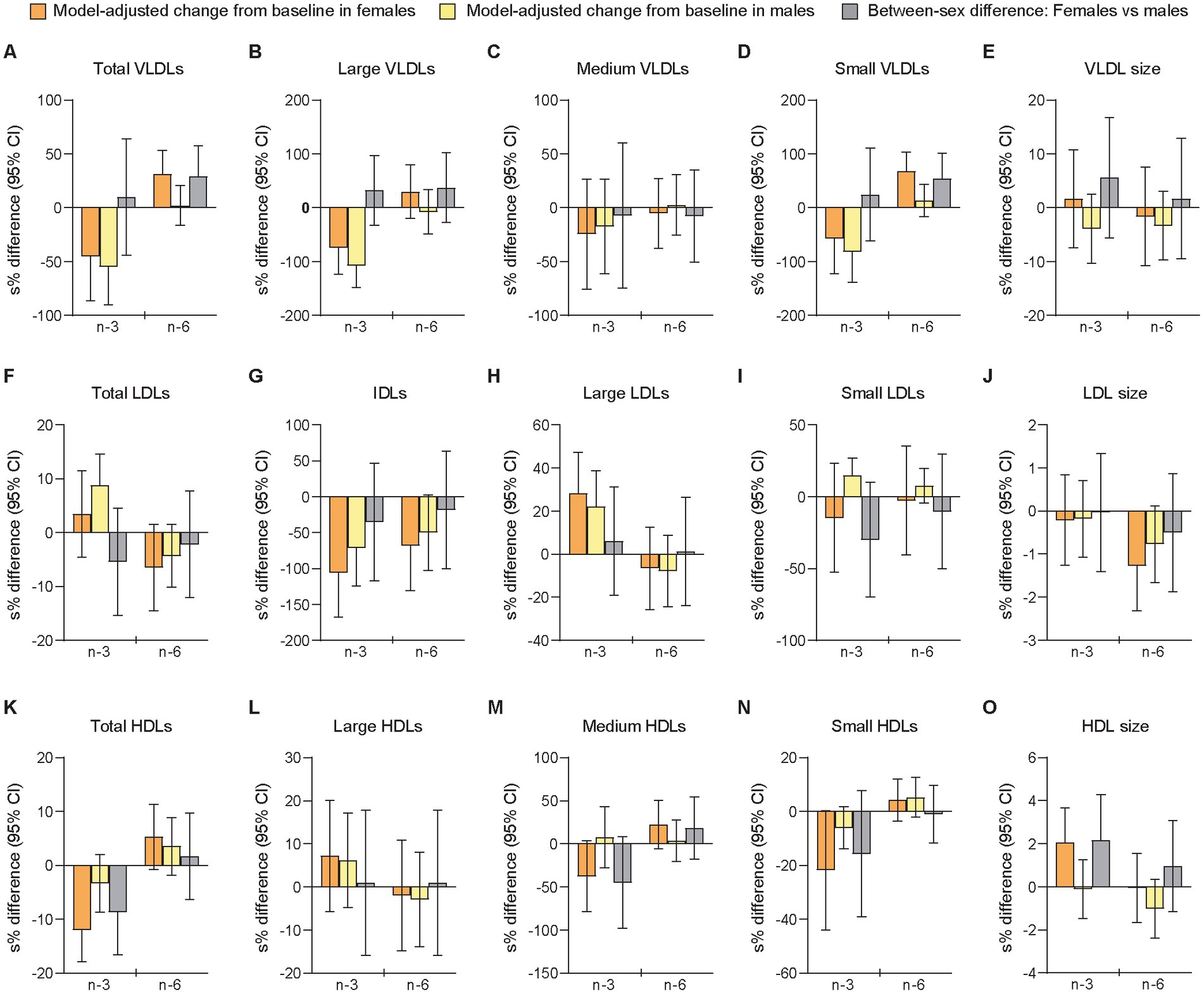
Methods: This was a randomized double-blind crossover study with two 7-week intervention periods separated by a 9-week washout phase. Females (n = 16) were supplemented with 3 g/d of EPA + DHA (fish oil) or 15 g/d of LA (safflower oil), while males (n = 23) received a dose of 4 g/d of EPA + DHA or 20 g/d of LA. In fasting blood samples, we measured lipoprotein particle subclasses, standard lipids, apolipoproteins, fatty acid profiles, and markers of glycemic control/insulin sensitivity.
Results: The between-sex difference in relative change scores was significant after n-3 for total high-density lipoproteins (females/males: −11%*/−3.3%, p = 0.036; *: significant within-sex change), high-density lipoprotein particle size (+2.1%*/−0.1%, p = 0.045), and arachidonic acid (−8.3%*/−12%*, p = 0.012), and after n-6 for total (+37%*/+2.1%, p = 0.041) and small very-low-density lipoproteins (+97%*/+14%, p = 0.021), and lipoprotein (a) (−16%*/+0.1%, p = 0.028). Circulating markers of glucose-insulin homeostasis differed significantly after n-3 for glucose (females/males: −2.1%/+3.9%*, p = 0.029), insulin (−31%*/+16%, p < 0.001), insulin C-peptide (−12%*/+13%*, p = 0.001), homeostasis model assessment of insulin resistance index 2 (−12%*/+14%*, p = 0.001) and insulin sensitivity index 2 (+14%*/−12%*, p = 0.001), and quantitative insulin sensitivity check index (+4.9%*/−3.4%*, p < 0.001).
Conclusion: We found sex-specific responses after high-dose n-3 (but not n-6) supplementation in circulating markers of glycemic control/insulin sensitivity, which improved in females but worsened in males. This may partly be related to the sex differences we observed in several components of the lipoprotein-lipid profile following the n-3 intervention.
Wednesday, 19 April 2023
Marine-Derived Compounds Applied in Cardiovascular Diseases: Submerged Medicinal Industry