 |
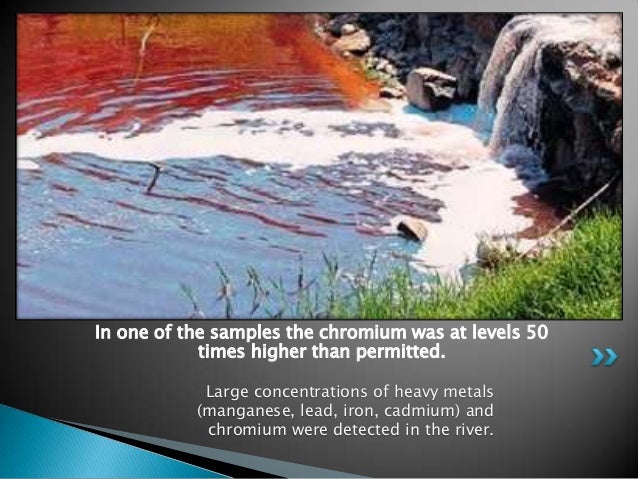
| Asopos River, Greece |
this is about the past...(or about the future, as well?)
If we do not learn from the past, we are condemned to live it again, though.
September 2009: I stood as a candidate MP for the Greek Green Party...
Failed miserably, on one hand.
On the other hand, though, that was a catalyst to start a project on the pollution of the river Asopos in Greece and the impact of the river pollution to the food chain.
Intro
Asopos river basin: heavy metal pollution may be a white collar crime
The Asopos River basin (map), 60 km to the north of Athens, is a heavily industrialized area responsible for an estimated
twenty percent of Greece’s industrial output. It also produces agricultural goods destined for domestic and international consumption.
Studies have shown that since industrialization in the region began in the late 1960s,
cancer and mortality rates have risen disproportionately among the residents of
Oinofyta compared to the rest of the country. The severity of the case has drawn international attention, with Greece being
condemned last June for violating the residents’ right to health by the
European Committee of Social Rights, an institution overseen by the
Council of Europe. Their plight even came to the attention of U.S. activist
Erin Brockovich, whose role in establishing in the U.S. corporate culpability for heavy metal pollution, and in particular
hexavalent chromium just like in the Asopos case, was made famous by the eponymous
Hollywood film in which she was portrayed by
Julia Roberts.
The Problem and our Research
This article is based on our previous paper.
1 Heavy metals do not biodegrade in the environment and readily bioaccumulate to toxic levels.
2 Anthropogenic activities are the main sources of heavy metal contamination in plants,
3 especially in countries where domestic and industrial waste is widely applied to the land for irrigation purposes.
The impact on our diet of contaminated crops such as carrots, onions and potatoes is of great importance
4,5
as it has been proved that serious systemic health problems can develop
as a result of excessive accumulation of dietary heavy metals in the
human body.
6
Our team in the Laboratory of Food Chemistry and Analytical Chemistry
(Deptartment of Chemistry, University of Athens) has analysed the
levels of heavy metals in carrots, onions and potatoes cultivated in the
Asopos region in central Greece; this is the second largest industrial
area in Greece and an area where the water bed is polluted by heavy
metals.
7
The results showed that the levels of nickel (Ni) and chromium (Cr) in
Asopos food were up to nine times higher than the respective levels of
the plants grown in non-polluted areas. The impact of these trace
elements on the concentrations of secondary metabolites and antioxidant
activity in the above-mentioned tuber plants has also been studied by
our team and the results showed that, in carrots, the levels of
b-carotene and in potatoes, the levels of lutein, both from the Asopos
area, were statistically significantly lower compared to the control
ones.
8
In a further study,
1
we also investigated the uptake of Ni and Cr added in known levels to
the irrigation water, by potatoes, carrots and onions. The plants were
cultivated in a soil which had never previously been polluted with Cr
and Ni from external sources. The levels of Cr(VI) and Ni(II) used in
irrigation water were similar to those that can actually be found in the
two polluted areas (Asopos river and Messapia, due to polluted
underground waters).
The cross-contamination of the food chain (our first Scientific paper)
The levels of Ni in Asopos food were found up to 9 times higher than
control (e.g., Asopos potatoes had an average Ni content of 800 µg/kg
compared to 78 µg/kg in control, whereas Asopos carrots had an average
Ni content of 474 µg/kg compared to 93 µg/kg in control). Likewise, the
levels of Cr were found to be about 2 times higher than control (e.g.,
Asopos carrots were found to have an average Cr content of 43 µg/kg
compared to 20 µg/kg in control).
some thoughts
In the area of
Asopos, Greece,
there is an interesting polluting phenomenon: some industries dump
directly to the water bed chemical waste while few hundred yards
further, the farmers use bore wholes to pump out water to cultivate food
tubers.
In the lab, our team has carried out experiments simulating the polluted water-bed in Asopos region and
proved recently
that heavy metals (i.e. nickel and chromium in this case) can migrate
from the polluted water bed to tuberous plants and root vegetables.
The implications of such migration being that these toxic agents can
enter the food chain leading to long-term, chronic consumption and the
many putative health problems such exposure can cause. Part of the issue
is that unlike certain organic residues metal ions persist, they cannot
be degraded or otherwise broken down into less harmful constituents by
virtue of being elements rather than compounds. Toxic chemical pollution
originates also by mining activities, industrial and domestic
wastewater and sewage sludge.
Despite the dire situation of the emerging presence of heavy metals in the food chain, the application of the EU
“polluter pays-principle” is still non-existing.
= = =
any similarity to Irish cases might be coincidental (or might not be?)
Ioannis Zabetakis [ioannis.zabetakis@ul.ie]
Head
Biological Sciences
UL