off the press
This blog is fanatic about FunFood (i.e. FUNctional Food to make us happier and healthier).
Thursday, 23 April 2026
Anticoagulant Effect and Platelet Bioactivities of a Novel Cephalopod Byproduct Oil
Wednesday, 25 October 2023
the "cardiovascular end" of PUFAs and all marine oils containing n-3 PUFAs (aka omega-3s)
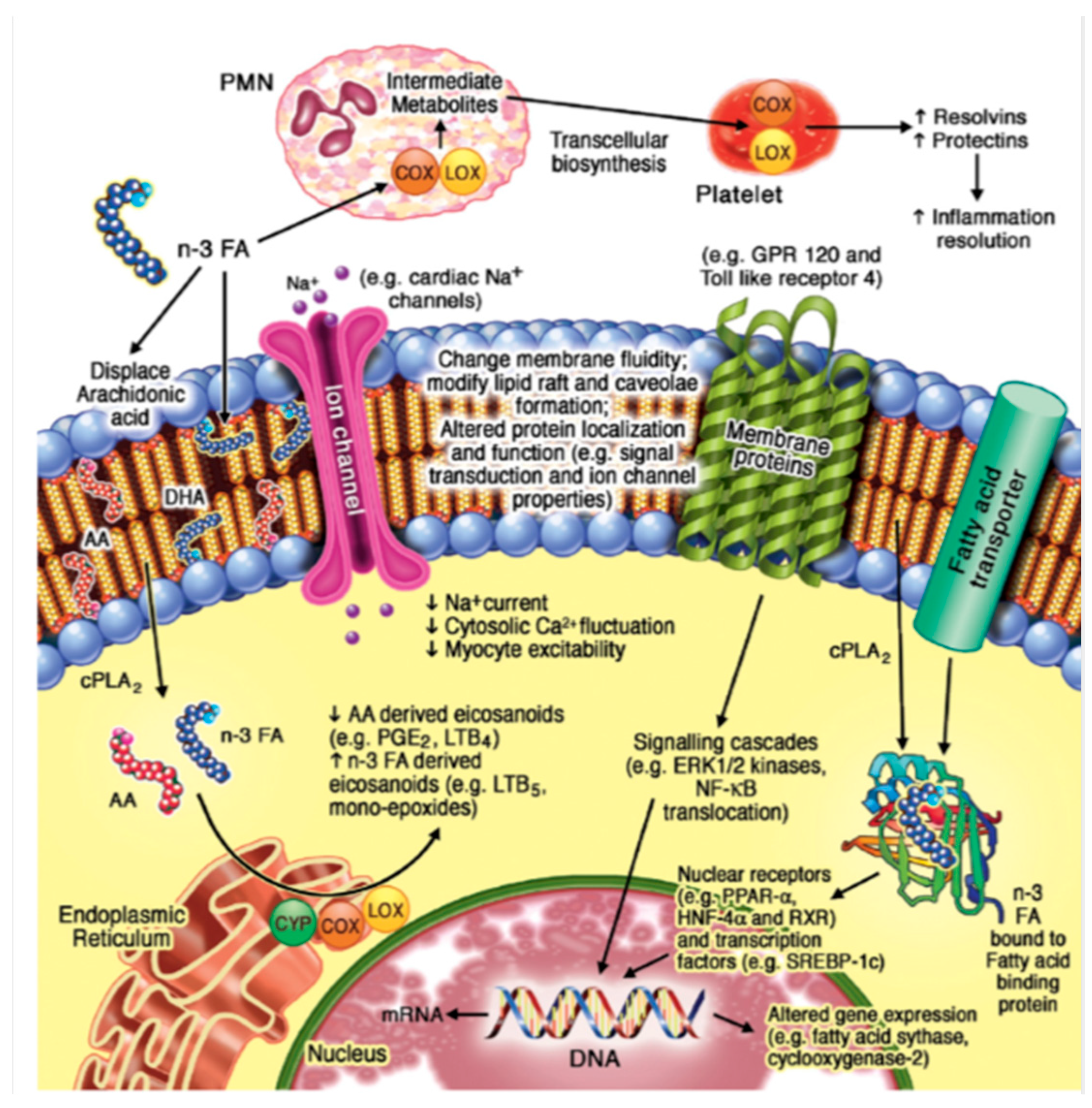
Hypothesized molecular effects of n-3 PUFAs on the cell membrane. Reproduced with permission [1].
= = = = = = = = = = =
In an Final Year Project (FYP) of the Academic Year 2022-23, I had the luck and honour to work with 3 amazing final year students, now UL graduates in Food Science and Health:
Cliodhna, Anna and Ellen
on a project focusing on the cardioprotective properties of omega-3 PUFAs and polar lipids (PL).
In our work, we have been focusing on PL for a number of years as PL are more labile in human organism and they can reach the bloodstream within 3-4 hours (data in house).
This paper is the fruit of this FYP:
Cardiovascular Diseases and Marine Oils: A Focus on Omega-3 Polyunsaturated Fatty Acids and Polar Lipids
We present all the relevant literature to prove that omega-3 PUFAs don't lower the cardiovascular risk; therefore bying omega-3 pills at your chemist is a waste of money!
= = =
I am grateful to Cliodhna, Anna and Ellen and my colleagues and friends Constantina (Angie) and Ronan!
Well done everyone!
Best of Luck in whatever you are doing and planning to do!
Keep up the good work!
Carpe Diem!
Ioannis
Wednesday, 1 March 2023
new publication from our group: Milk Polar lipids: Untapped Potential for Pharmaceuticals and Nutraceuticals
Pawar
A, Zabetakis I, Gavankar T, Lordan R (2023) Milk polar lipids: untapped
potential for
pharmaceuticals and nutraceuticals. PharmaNutrition
100335.
Abstract
Background
Milk contains polar lipids may confer health benefits upon consumption. Therefore, polar lipids have received considerable attention for development in the nutraceutical and pharmaceutical space. We review the prophylactic and therapeutic potential of milk polar lipids and their current market trends.
Methods
The following databases were used to retrieve articles for this narrative review: SCOPUS, ScienceDirect, PubMed, and Google Scholar. The search criteria included the following keywords and synonyms combined: (“milk polar lipids” or “milk phospholipids” or “milk glycerophospholipids” or “milk sphingolipids”) AND (“anti-inflammatory” or “cardiovascular” or “cancer” or “cognitive health” or “nutraceutical” or “pharmaceutical” or “supplement”).
Results
Milk polar lipid supplementation appears to improve cognitive health in both child development and age-associated cognitive decline. Milk polar lipids modulate cardiovascular risk factors including lipid levels, inflammation, and platelet function in preclinical studies, but evidence is limited in humans. Milk polar lipids may also affect colon cancer pathogenesis through anti-inflammatory mechanisms. Polar lipids are gaining attention in the nutraceutical and pharmaceutical space for their use in the development of novel therapeutics and pharmaceutical delivery systems.
Conclusions
Milk polar lipids exhibit a multitude of health benefits that may be of value in the nutraceutical and pharmaceutical industries as reflected in current market and research trends for the use of polar lipids and the development of products targeting infant cognitive development, cognitive decline in the aged, cardiovascular diseases, and cancer. Further clinical studies are required to assess efficacy and safety of milk polar lipid supplementation in human diseases.
Thursday, 6 October 2022
new publication of our group: Cadmium: A Focus on the Brown Crab (Cancer pagurus) Industry and Potential Human Health Risks
the full paper is here.
Lordan R, Zabetakis I (2022) Cadmium: a focus on the brown crab (Cancer pagurus) industry and potential human health risks. Toxics 10(10) 591.
Abstract
Tuesday, 16 August 2022
The Nutri-Score algorithm: Evaluation of its validation process
the full paper is here.
The Nutri-Score front-of-pack label, which classifies the nutritional quality of products in one of 5 classes (A to E), is one of the main candidates for standardized front-of-pack labeling in the EU. The algorithm underpinning the Nutri-Score label is derived from the Food Standard Agency (FSA) nutrient profile model, originally a binary model developed to regulate the marketing of foods to children in the UK. This review describes the development and validation process of the Nutri-Score algorithm. While the Nutri-Score label is one of the most studied front-of-pack labels in the EU, its validity and applicability in the European context is still undetermined. For several European countries, content validity (i.e., ability to rank foods according to healthfulness) has been evaluated. Studies showed Nutri-Score's ability to classify foods across the board of the total food supply, but did not show the actual healthfulness of products within different classes. Convergent validity (i.e., ability to categorize products in a similar way as other systems such as dietary guidelines) was assessed with the French dietary guidelines; further adaptations of the Nutri-Score algorithm seem needed to ensure alignment with food-based dietary guidelines across the EU. Predictive validity (i.e., ability to predict disease risk when applied to population dietary data) could be re-assessed after adaptations are made to the algorithm. Currently, seven countries have implemented or aim to implement Nutri-Score. These countries appointed an international scientific committee to evaluate Nutri-Score, its underlying algorithm and its applicability in a European context. With this review, we hope to contribute to the scientific and political discussions with respect to nutrition labeling in the EU.
Tuesday, 21 June 2022
new paper from our group: Fermentation Enhances the Anti-Inflammatory and Anti-Platelet Properties of Both Bovine Dairy and Plant-Derived Dairy Alternatives
Figure 1. The anti-inflammatory and anti-platelet potency of bioactive PL (A), TL (B), and NL (C) from fermented and non-fermented plant-derived dairy alternatives, versus bovine milk and yogurt. The anti-inflammatory and anti-platelet potency of lipid bioactives from all samples were assessed against human platelet aggregation induced by the inflammatory and thrombotic mediator PAF (anti-PAF effects in blue bars) or by a classic platelet agonist, ADP (anti-ADP effects in yellow bars). Results are expressed as means of the IC50 values (half-maximal inhibitory concentrations) in µg of lipid extract in the aggregometer cuvette that causes 50% inhibition of PAF/ADP-induced platelet aggregation (the lower the IC50 value for a lipid extract the higher its inhibitory effect against the specific agonist of platelet aggregation). * Denotes statistically significant difference (p < 0.05) when the strongest anti-PAF potency (IC50 value) of the most bioactive lipid extracts were compared with those of all the other samples. # Denotes statistically significant difference (p < 0.05) when the intermediate anti-PAF effects of the PL bioactives from the samples assessed were compared with those showing the lowest anti-PAF effects. † Denotes statistically significant difference (p < 0.05) when the anti-PAF potency (IC50 values against PAF) of the lipid bioactives from a sample was compared to its anti-ADP potency (IC50 values against ADP) of the same sample. Abbreviations: PL: polar lipids; TL: total lipids; NL: neutral lipids; PAF: platelet-activating factor; ADP: adenosine 5′ diphosphate; CPBM: Commercially Purchased Bovine Milk; HMFBM: Homemade Fermented Bovine Milk (Homemade Yogurt); CPFBM: Commercially Purchased Fermented Bovine Milk (Commercially Purchased Yogurt); HMAD: Homemade Almond Drink; CPAD: Commercially Purchased Almond Drink; HMFAD: Homemade Fermented Almond Drink; CPFAD: Commercially Purchased Fermented Almond Drink; HMCD: Homemade Coconut Drink; CPCD: Commercially Purchased Coconut Drink; HMFCD: Homemade Fermented Coconut Drink; CPFCD: Commercially Purchased Fermented Coconut Drink; HMRD: Homemade Rice Drink; CPRD: Commercially Purchased Rice Drink; HMFRD: Homemade Fermented Rice Drink.
===========================================================================
Glenn-Davi
K, Hurley A, Brennan E, Coughlan J, Shiels K, Moran D, Saha SK, Zabetakis I,
Tsoupras A
(2022) Fermentation enhances the anti-inflammatory
and anti-platelet properties of both bovine dairy and
plant-derived dairy alternatives. Fermentation
8 292.
Abs: Within the present study, the effects of fermentation on the anti-inflammatory and anti-platelet properties of both homemade and commercially purchased bovine dairy and almond, coconut, and rice-based dairy alternatives were evaluated. The extracted total lipids (TL) from homemade and commercially- purchased fermented and unfermented bovine, almond, coconut, and rice-based products were further separated into their neutral lipids (NL) and polar lipids (PL) fractions by counter current distribution. The TL, PL, and NL of each sample were assessed in human platelets against the inflammatory and thrombotic mediator, platelet-activating factor (PAF), and the well-established platelet agonist, adenosine 5′ diphosphate (ADP). In all samples, the PL fractions showed significantly stronger inhibitory effects against human platelet aggregation induced by PAF or ADP, in comparison to the TL and NL, with higher specificity against PAF. PL of all fermented products (bovine yogurt and fermented dairy alternatives from almond, rice, and coconut), exhibited the strongest anti-inflammatory and anti-platelet potency, in comparison to PL from their initial pasteurized materials (bovine milk and rice, almond, and coconut-based dairy alternative drinks). PL of the pasteurized rice-based drink and, especially PL from the novel homemade rice-based fermented product (HMFRD), showed the strongest anti-PAF and anti-ADP potency compared to all samples, with anti-PAF activity being most potent overall. The unfermented pasteurized coconut-based drink showed the lowest anti-inflammatory and anti-platelet potency, and the bovine and almond-based fermented products showed an intermediate effect. Further lipidomics with LC-MS analysis of all these PL fractions revealed that fermentation altered their fatty acid content in a way that decreased their degree of saturation and increased the content of unsaturated fatty acids, thus providing a rationale for the stronger anti-inflammatory and anti-platelet potency of the more unsaturated PL fractions of the fermented products. This study has shown that fermentation alters the fatty acid content and the bio-functionality of the PL bioactives in both fermented bovine dairy and plant-based dairy alternatives, and subsequently improved their anti-inflammatory and anti-platelet functional properties.
the full paper is here
Friday, 3 June 2022
new paper from our group: Anti-inflammatory and antithrombotic properties of polar lipid extracts, rich in unsaturated fatty acids, from the Irish marine cyanobacterium Spirulina subsalsa
Highlights
- •
Spirulina contains anti-inflammatory and antithrombotic polar lipids (PL)
- •
Spirulina PL strongly inhibited platelet activating factor (PAF) and thrombin.
- •
SQDG, MGDG and glycosphingolipids were the most bioactive Spirulina glycolipids.
- •
The most bioactive phospholipids were PC and PE rich in omega-3 PUFA and oleic acid.
Abstract
The characterization of cardio-protective lipid bioactives from cyanobacteria, such as Spirulina spp., has rarely been investigated. In this study, neutral lipids, glycolipids, and phospholipids of Irish marine cyanobacterium Spirulina subsalsa, were tested for anti-inflammatory and antithrombotic activities in vitro in human platelets. Glycolipids and phospholipids inhibited strongly platelet aggregation induced by platelet-activating factor (PAF) or thrombin, with IC50 (half maximal inhibitory concentration) values ranging ∼60–110 µg of polar lipids. The characterisation of the glycolipids revealed the presence of sulfoquinovosyl diacylglycerols (SQDG), monogalactosylodiglycerides (MGDG) and glycosphingolipids (cerebrosides and ceramides). Phospholipids contained mostly bioactive phosphatidylcholines (PC) and phosphatidylethanolamines (PE) molecules such as, diacyl-PC, diacyl-PE, alkyl-acyl PC, and alkyl-acyl-PE, as well as considerable amounts of phosphatidylglycerols (PG), phosphatidylinositols (PI), phosphatidylserines (PS), and phosphatidic acids (PA). The total presence of such lipid bioactives with cardio-protective properties makes marine Spirulina subsalsa a candidate as a sustainable source for health supplements with cardiovascular health benefits.
Monday, 28 March 2022
α-Hederin inhibits the platelet activating factor-induced metastasis of HCC cells through disruption of PAF/PTAFR axis cascaded STAT3/ MMP-2 expression
α-Hederin inhibits the platelet activating factor-induced metastasis of HCC cells through disruption of PAF/PTAFR axis cascaded STAT3/ MMP-2 expression.
Linna Cao, Yiwei Zhang, Jinxia Mi, Zhanhao Shi, Zhaoqin Fang, Dongwei Jia, Zhiqiang Pan Peike Peng
Pharmacological Research 178 (2022) 106180.
https://doi.org/10.1016/j.phrs.2022.106180
Πρόσφατα (11/3/2022) στο επιστημονικό περιοδικό Pharmacological Research δημοσιεύτηκε η εργασία Κινέζων επιστημόνων (από δύο Πανεπιστήμια και ένα Ερευνητικό κέντρο της Σαγκάης) που αναφέρεται σε νέες στρατηγικές που υποδεικνύουν νέο πιθανό φάρμακο για την θεραπεία του ηπατοκυτταρικού καρκινώματος. Στη δημοσίευση αυτή επισημαίνεται ότι η μετάσταση παραμένει ένα κρίσιμο εμπόδιο στην κλινική θεραπεία του ηπατοκυτταρικού καρκινώματος. Και επιπλέον ότι η έρευνα για πιθανές αντικαρκινικές ενώσεις από φαρμακευτικά βότανα που δρουν κατά της μετάστασης του ηπατοκυτταρικού καρκινώματος, παρουσιάζει ιδιαίτερο ενδιαφέρον.
Στη συνέχεια αναφέρονται τα ακόλουθα: Η ένωση α-Hederin (που από χημική άποψη είναι μία τριτερπενοειδής σαπωνίνη) έχει αναφερθεί ότι παρουσιάζει κυτταροτοξικότητα για διάφορες καρκινικές κυτταρικές σειρές, προκαλώντας καταστροφή των μιτοχονδρίων των καρκινικών κυττάρων και θάνατο αυτών. Ωστόσο, λίγα είναι γνωστά για την ανασταλτική δράση της α-Hederin για τη μετάσταση του ηπατοκυτταρικού καρκινώματος και για τους μηχανισμούς που γίνεται αυτή. Στην εργασία αυτή, με τη βοήθεια γνωστών σύγχρονων και επιστημονικά αποδεκτών μεθόδων, διερευνήθηκαν οι πιθανοί τρόποι που δρα η α-Hederin, και τελικά επικεντρώθηκε η μελέτη στον υποδοχέα (PTAFR) του Παράγοντα Ενεργοποίησης των Αιμοπεταλίων (Platelet-Activating Factor, PAF). Είναι γνωστό από τη βιβλιογραφία ότι η ενεργοποίηση της δράσης της πορείας PAF/PTAFR συμβάλλει στην έναρξη και στην εξέλιξη του καρκίνου. Στην εργασία αυτή αποδεικνύεται, για πρώτη φορά διεθνώς, ότι μια μη τοξική ποσότητα της α-Hederin αναστέλλει σε πειραματόζωα την κυτταρική μετάσταση του ηπατοκυτταρικού καρκινώματος που προκαλείται από τον PAF, όπως και την πνευμονική μετάσταση. Επιπλέον, αποδεικνύεται ότι, όταν τα καρκινικά κύτταρα του ήπατος διεγείρονται από PAF, η α-Hederin (που είναι ένας αναστολέας του PAF) μειώνει την προκαλούμενη από τον PAF παραγωγή της μεταλλοπρωτεϊνάσης-2, λόγω της αναστολής της ενεργοποίησης της μετάδοσης του σήματος μέσω της πορείας STAT3 στα κύτταρα του ηπατοκυτταρικού καρκινώματος. Αυτά τα ευρήματα αναδεικνύουν μια νέα στρατηγική στην θεραπεία του ηπατοκυτταρικού καρκινώματος που υποδεικνύει μηχανισμούς που εμπλέκουν τον PAF. Τέλος, αποδεικνύει ότι o αναστολέας του υποδοχέα του PAF, η α-Hederin, μπορεί να χρησιμοποιηθεί ως υποψήφιο φάρμακο για την θεραπεία του ηπατοκυτταρικού καρκινώματος.
Στην εργασία τους αυτή γίνεται αναφορά (References #18,21,38,39,59,62,63) σε 7 δημοσιευμένες σε διεθνή επιστημονικά περιοδικά εργασίες μελών της Ελληνικής ερευνητικής ομάδας μελέτης του PAF, η οποία έχει δημιουργηθεί από τον Ομότιμο καθηγητή του ΕΚΠΑ Κων. Α. Δημόπουλο.
Ο PAF είναι ένας ισχυρός μεσολαβητής της φλεγμονής που εμπλέκεται σε πολλές φλεγμονώδους αιτιολογίας παθολογικές καταστάσεις όπως η αθηροσκλήρωση, οι καρδιαγγειακές, ηπατικές και νεφρικές παθήσεις, η αλλεργία, το AIDS κ.λπ. Ασκεί δε τις βιολογικές του δραστηριότητες μέσω υποδοχέα G-πρωτεϊνών. Η ανακάλυψη της χημικής δομής του PAF έχει γίνει από τον Κων. Α. Δημόπουλο όπως και η χημική σύνθεση του PAF. Από το 2009 η εν λόγω ομάδα δημοσίευσε για την εμπλοκή του PAF στην ανάπτυξη και μετάσταση του καρκίνου, όπως και στην ευεργετική δράση των αναστολέων του PAF και μάλιστα στην πιθανή ευεργετική δράση της Μεσογειακής δίαιτας, λόγω των αναστολέων του PAF που έχει αποδείξει η ομάδα ότι υπάρχουν στα τρόφιμα/γεύματα της Μεσογειακής δίαιτας. Η έρευνα της ομάδας σχετικά με τον καρκίνο συνεχίζεται κυρίως στην συνεισφορά νέων συμπλόκων ενώσεων με αντι-PAF και αντικαρκινική δράση.
Wednesday, 9 March 2022
New Book Chapter: Investigation of Platelet Aggregation in Atherosclerosis
A new book on Atherosclerosis has just been published where we have contributed a chapter.
The title of the book is
Atherosclerosis: Methods and Protocols
Platelet activation and aggregation is implicated in all stages of inflammation-related atherosclerosis from the initial steps of endothelial dysfunction and plaque formation, to plaque rupture and atherothrombotic events, such as acute coronary syndrome, myocardial infarction, and ischemic incidences. Platelet aggregometry assays are the mainstream for evaluating and monitoring platelet reactivity in such conditions and for the investigation of prophylactic and therapeutic approaches. The most established methodology is light transmittance aggregometry (LTA). Here we describe the appropriate preparation of platelet suspensions from human blood and the methodology of LTA-based assays that is used for basic and clinical research for monitoring and evaluating the activities of several thrombotic mediators, as well as determining the dose efficacy and safety of several pharmaceutical and nutraceutical compounds intended for therapeutic and prophylactic interventions for atherosclerosis.
Key words
Atherosclerosis Inflammation Thrombosis Platelet aggregation Light transmission aggregometry Platelet-activating factor Thrombin ADP Collagen AntiplateletFriday, 29 October 2021
new paper from our group: The Role of an Anti-Inflammatory Diet in Conjunction to COVID-19
From right to left: Sakshi, Harish and Victoria. At the background, Nicola Tesla reminds us that "I don't care that they stole my idea. I care that they don't have any of their own".
= = = = = = = = = = = = = = = = = = = = = = =
This is the 100th research paper of mine and a chance to celebrate the moment with my current research team having a coffee at Scholars at UL.
Victoria is at her 4th year of BSc in Food Science and Health in our Department and has done some great work on this paper! A paper that shows that undergraduate students have the potential to publish!
The Role of an Anti-Inflammatory Diet in Conjunction to COVID-19
by Victoria Ling andIoannis Zabetakis
Abstract
Wednesday, 25 August 2021
new paper from our group: Anti-Platelet Properties of Apple Must/Skin Yeasts and of Their Fermented Apple Cider Products
Anti-Platelet Properties of Apple Must/Skin Yeasts and of Their Fermented Apple Cider Products
Abstract
Friday, 13 August 2021
New book from our team
In early 2022, our new book on functional foods will be published by Elsevier.
In this book, a strong group of colleagues and our team, we are writing about functional foods (of plant, animal and marine origin) and their implications for health promotion.
We cover these topics:
- vegetables
- coffee and tea
- cocoa
- olive oil
- pomaces
- berries
- yoghurt
- cheese
- probiotic drinks
- seafood and shellfish
- fish
- beer and cider
- wine and
- legislation
Wednesday, 12 May 2021
new paper from our group: Anti-Inflammatory and Anti-Platelet Properties of Lipid Bioactives from Apple Cider By-Products
Anti-Inflammatory and Anti-Platelet Properties of Lipid Bioactives from Apple Cider By-Products
Abstract
Friday, 12 February 2021
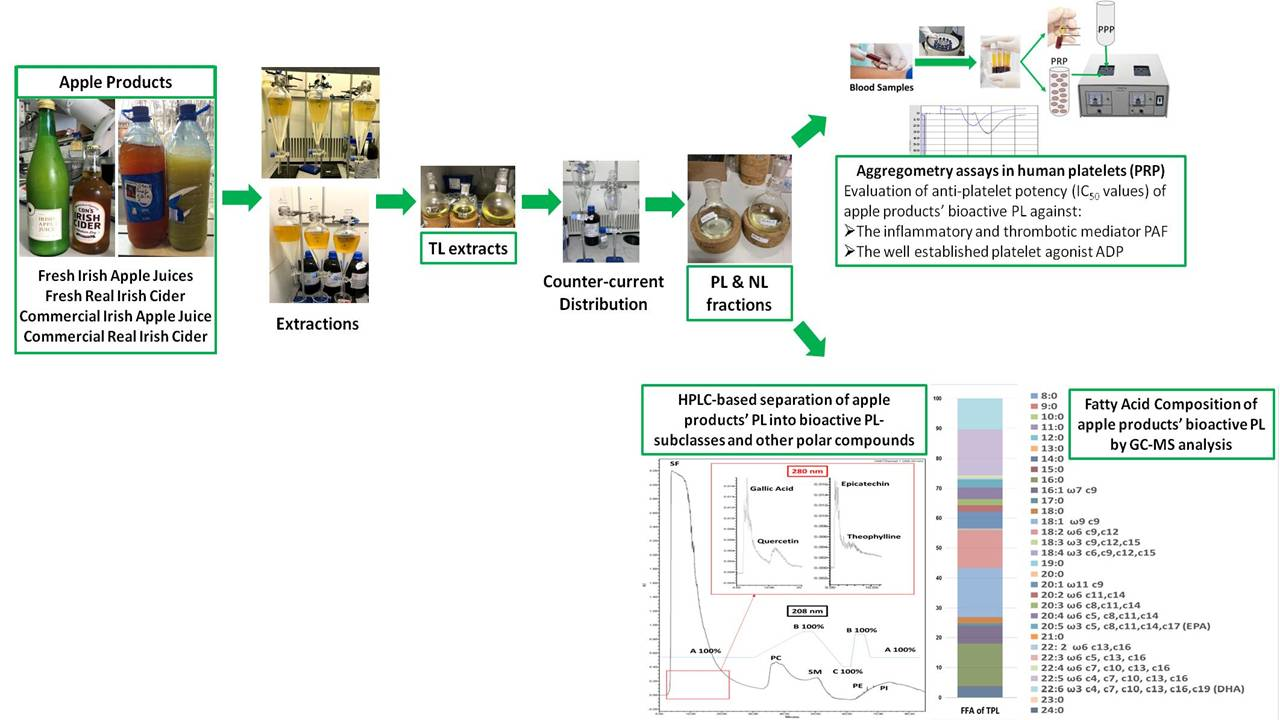
new paper from our group: Beneficial Anti-Platelet and Anti-Inflammatory Properties of Irish Apple Juice and Cider Bioactives
paper just published in Foods
Sunday, 31 January 2021
Lack of an association or an inverse association between low-density-lipoprotein cholesterol and mortalityin the elderly: a systematic review
*This is the first systematic review of cohortstudies where low-density lipoprotein cholesterol(LDL-C) has been analysed as a risk factor forall-cause and/or cardiovascular mortality inelderly people.
▪Lack of an association or an inverse associationbetween LDL-C and mortality was present in allstudies.
▪We may not have included studies where an evaluation of LDL-C as a risk factor for mortality was performed but where it was not mentioned in the title or in the abstract.
▪We may have overlooked relevant studies because we have only searched PubMed.
▪Minor errors may be present because some of the authors may not have adjusted LDL-C by appropriate risk factors.
▪Some of the participants with high LDL-C may have started statin treatment during the observation period and, in this way, may have added a longer life to the group with high LDL-C and some of them may have started with a diet able to influence the risk of mortality.
▪We may have overlooked a small number of relevant studies because we only searched papers in English.
the full paper is here
Friday, 27 November 2020
The effect of green Mediterranean diet on cardiometabolic risk; a randomised controlled trial
A very interesting publication on the effects of a "greener" MedDiet to CV health.
Abstract
Background A Mediterranean diet is favourable for cardiometabolic risk.
Objective To examine the residual effect of a green Mediterranean diet, further enriched with green plant-based foods and lower meat intake, on cardiometabolic risk.
Methods For the DIRECT-PLUS parallel, randomised clinical trial we assigned individuals with abdominal obesity/dyslipidaemia 1:1:1 into three diet groups: healthy dietary guidance (HDG), Mediterranean and green Mediterranean diet, all combined with physical activity. The Mediterranean diets were equally energy restricted and included 28 g/day walnuts. The green Mediterranean diet further included green tea (3–4 cups/day) and a Wolffia globosa (Mankai strain; 100 g/day frozen cubes) plant-based protein shake, which partially substituted animal protein. We examined the effect of the 6-month dietary induction weight loss phase on cardiometabolic state.
Results Participants (n=294; age 51 years; body mass index 31.3 kg/m2; waist circumference 109.7 cm; 88% men; 10 year Framingham risk score 4.7%) had a 6-month retention rate of 98.3%. Both Mediterranean diets achieved similar weight loss ((green Mediterranean −6.2 kg; Mediterranean −5.4 kg) vs the HDG group −1.5 kg; p<0.001), but the green Mediterranean group had a greater reduction in waist circumference (−8.6 cm) than the Mediterranean (−6.8 cm; p=0.033) and HDG (−4.3 cm; p<0.001) groups. Stratification by gender showed that these differences were significant only among men. Within 6 months the green Mediterranean group achieved greater decrease in low-density lipoprotein cholesterol (LDL-C; green Mediterranean −6.1 mg/dL (−3.7%), −2.3 (-0.8%), HDG −0.2 mg/dL (+1.8%); p=0.012 between extreme groups), diastolic blood pressure (green Mediterranean −7.2 mm Hg, Mediterranean −5.2 mm Hg, HDG −3.4 mm Hg; p=0.005 between extreme groups), and homeostatic model assessment for insulin resistance (green Mediterranean −0.77, Mediterranean −0.46, HDG −0.27; p=0.020 between extreme groups). The LDL-C/high-density lipoprotein cholesterol (HDL-C) ratio decline was greater in the green Mediterranean group (−0.38) than in the Mediterranean (−0.21; p=0.021) and HDG (−0.14; p<0.001) groups. High-sensitivity C-reactive protein reduction was greater in the green Mediterranean group (−0.52 mg/L) than in the Mediterranean (−0.24 mg/L; p=0.023) and HDG (−0.15 mg/L; p=0.044) groups. The green Mediterranean group achieved a better improvement (−3.7% absolute risk reduction) in the 10-year Framingham Risk Score (Mediterranean−2.3%; p=0.073, HDG−1.4%; p<0.001).
Conclusions The green MED diet, supplemented with walnuts, green tea and Mankai and lower in meat/poultry, may amplify the beneficial cardiometabolic effects of Mediterranean diet.
= = =
Figure 1
Flow chart of the DIRECT-PLUS trial. HDG, healthy dietary guidance; MED, Mediterranean.
MED: In addition to guidance for physical activity, participants were also guided to follow a calorie-restricted traditional MED diet, low in simple carbohydrates, as described in our previous trials.1 2 The MED diet assigned was rich in vegetables, with poultry and fish replacing beef and lamb. The diet included 28 g/day of walnuts.
Green-MED: In addition to the physical activity intervention and the 28 g/day walnuts, the dieters following the green MED were guided to avoid red/processed meat consumption. The green MED diet was richer in plants and polyphenols, as the participants were encouraged further to consume the following items: 3–4 cups/day of green tea and 100 g of Wolffia globosa (Mankai strain; a newly developed duckweed grown under highly supervised conditions) frozen cubes, as a green plant-based protein shake, replacing animal protein at dinner. The green tea and Mankai shake were included in the daily calorie count.
Figure 2
Adherence to dietary intervention by food group changes a, b and c labels denote statistical difference (p<0.05) between intervention groups, as groups with the same labelling were statistically similar and groups with different labelling were statistically different. The total change score for each nutritional pattern was summarised according to participant answers to the food change questionnaire as follows: increased consumption = +1, decreased consumption = −1, same consumption=0. The totals obtained were then divided by the number of participants in each intervention group, so each score represents the percentage of change. Data are presented as the percentage of all participant answers (within each group) to the food frequency change questionnaire. HDG, healthy dietary guidance; MED, Mediterranean.
Obesity reflecting anthropometric changes across intervention groups over 6 months. Data are presented as mean±SE of mean (SEM) Ψ, p<0.05 within group. HDG, healthy dietary guidance; MED, Mediterranean.
Cardiovascular risk changes
After 6 months, the 10-year Framingham Risk Score significantly decreased in all study groups (HDG 13.3% to 11.2%, p=0.001; MED 11.5% to 9.5%, p<0.001; green MED 13.7% to 10.4%, p<0.001). Both MED and green MED groups had a greater reduction in the 10-year Framingham Risk Score than the HDG group (p=0.038 and p<0.001, respectively). The green MED group had a numerically greater reduction in the score than the MED group (p=0.073). There was a declining trend in the 10-year Framingham Risk Score across interventions (p=0.004).
Discussion
This study’s results suggest that while calorie restricted MED diets promote weight loss and benefit metabolic state, the green MED diet, lower in meat/poultry and richer in green plants food sources, provides a greater WC regression and significant improvement in cardiovascular risk, with a decrease of ~4% in LDL-C and ~20% in hsCRP within 6 months.
Several limitations of this study should be considered. Our study population consisted mainly of men as a result of the gender profile of the workplace where our study was conducted. Thus, the value of extrapolating our results to women might be limited and presents a considerable constraint in reaching a conclusion about the effects of the explored interventions in this population. However, the randomisation process was stratified by gender, thereby maintaining a similar number of women in each intervention group. A sensitivity analysis limited to men yielded similar findings. Although we monitored gym use, the physical activity intervention was monitored solely by self-report and not by objective direct measures. Also, although we assessed the participants’ compliance with their assigned diet using a validated food-frequency-questionnaire14 and food-changes-questionnaire,15 we were unable to isolate the specific factors in the green MED diet responsible for the positive effects observed. Thus, the partial reduction in meat/poultry consumption was based on self-report and not obtained using an objective measurement based on biochemical bodily fluid analyses. It should also be noted that we did not match caloric restriction individually, but rather by an estimated gender-based range, as demonstrated in our previous studies.1 2 Finally, this report is exclusive to the dietary induction induced weight loss phase, and its results do not necessarily reflect long-term effects. However, previous studies have shown that changes achieved during the dietary induction phase are highly reflective of longlasting metabolic and cardiovascular effects.11 12 16 The strengths of the study include the closed workplace setting, which enabled monitoring of the free provided lunch, and the presence of an onsite clinic, intense dietary guidance and group meetings with multidisciplinary teams of physicians, dietitians and physical trainers. The sample size was relatively large and high adherence was maintained.
The larger reduction in WC in the green MED group suggests a facilitated reduction in visceral adiposity, which may be explained by findings from previous reports, where supplementation with green tea was found to increase 24-hour energy expenditure and fat oxidation17 and to suppress fatty acid synthase.18 The apparent enhanced reduction in visceral adiposity may explain the improved sensitivity to insulin, decrease in BP, improved lipid profile and decreased hsCRP. The beneficial hsCRP dynamics may also be explained by the direct systemic antioxidative influence of dietary polyphenols.19 The reductions in transaminases and alkaline phosphatase can be explained by weight reduction and might reflect the regression of obesity-related steatohepatitis.20
Both MED dietary regimens were accompanied by similar improvements in triglycerides and HDL-C levels, as in previous studies.1 2 However, only the green MED diet resulted in significant reductions in LDL-C levels (~7 mg/dL, roughly −4%), similar to those previously reported in lacto-ovo vegetarian diet.21 The additive effect of the green MED diet beyond that of the MED diet on LDL-C levels might result from the lower intake of meat and poultry, reducing dietary cholesterol and intake of saturated fatty acids,22 or alterations in cholesterol efflux mediated by dietary polyphenols.23 24 Specifically, the high phytosterol content of the Mankai shake might have led to the extent of the diet induced reduction in LDL-C.
Dieters receiving a MED diet, and specifically those receiving a green MED diet, had significant improvement in insulin sensitivity. The improvement in insulin sensitivity and lipid profile with a MED diet are in line with findings from a recent report25 comparing calorie-restricted and non-calorie-restricted MED diets. These findings match a previous meta-analysis, in which regular consumption of epigallocatechin gallate, derived from green tea, was associated with lower fasting plasma glucose.26 Another study that assessed the effects of olive-leaf extracted polyphenols for 14 weeks reported beneficial effects on fasting insulin levels, consistent with our results. This finding could be explained by the increased fibre content in the green MED diet,27 probably derived from Mankai. The reduction in insulin resistance demonstrated here also corresponds with our recent report about the beneficial acute glycaemic response to Mankai compared with yoghurt shake28 and might suggest that regular consumption of Mankai improves short-term glucose tolerance, and also promotes long-term improvement in sensitivity to insulin. The beneficial effects of green MED intervention on systolic and diastolic BPs might be mediated by the increase in green leaf derived fibre content27 or higher levels of bioavailable nitric oxide that accompany consumption of vegetables.29
Previous evidence supports the superiority of the MED diet in preventing cardiovascular events.3 Compared with MED diet, the green MED dietary pattern was associated with regression of central obesity and improved insulin sensitivity, and also with greater reduction in blood pressure and atherogenic lipoprotein levels. These beneficial effects ultimately resulted in a nearly twofold 10-year Framingham Risk Score reduction among those receiving a green MED diet. Moreover, the green MED diet substantially reduced systemic inflammation, estimated by hsCRP levels, which is a pivotal player in advancement of atherosclerosis.13 Thus, education and encouragement to follow a green MED dietary pattern in conjunction with physical activity has the potential to be a major contributor to public health as it may improve balancing of cardiovascular risk factors, eventually preventing cardiovascular morbidity and mortality.
In conclusion, our findings suggest that additional restriction of meat intake with a parallel increase in plant-based, protein-rich foods may further benefit the cardiometabolic state and reduce cardiovascular risk, beyond the known beneficial effects of the traditional Mediterranean diet.