Showing posts with label Ronan Lordan. Show all posts

Tuesday, 6 October 2026

What space travel teaches us about sleep and circadian rhythms

 On Earth, most of us rarely have to think about the signals that keep our internal clocks aligned. The Sun rises, daylight changes, darkness arrives and morning comes again.

Our bodies have evolved alongside this roughly 24-hour cycle. Light is one of the strongest signals our bodies use to synchronise the circadian clock. But what happens when the Sun no longer provides a reliable schedule?

A spacecraft orbits Earth roughly every 90 minutes, so astronauts experience about 16 sunrises and sunsets every 24 hours. They cannot go to sleep every time the Sun disappears – but their bodies still need to know when it is time to sleep, wake, eat, exercise and work.

This makes spaceflight more than just an engineering challenge. It is an extraordinary experiment in human biology – one that can reveal what happens when the environmental cues that normally regulate our sleep disappear.

Sleep is thought to be controlled by two interacting biological systems. One is the circadian clock, which helps determine when the brain expects sleep and wakefulness. The other is sleep pressure, which gradually builds the longer we remain awake and dissipates while we sleep. Usually, these systems work together. But jet lag, shift work and spaceflight can pull them apart.

An astronaut may be exhausted after many hours awake but still struggle to sleep because their circadian system is signalling it is daytime. Feeling tired and being biologically ready to sleep are not always the same thing. This distinction is one of the most important lessons spaceflight can teach us about sleep.


[read the rest of the article, here]

Friday, 2 October 2026

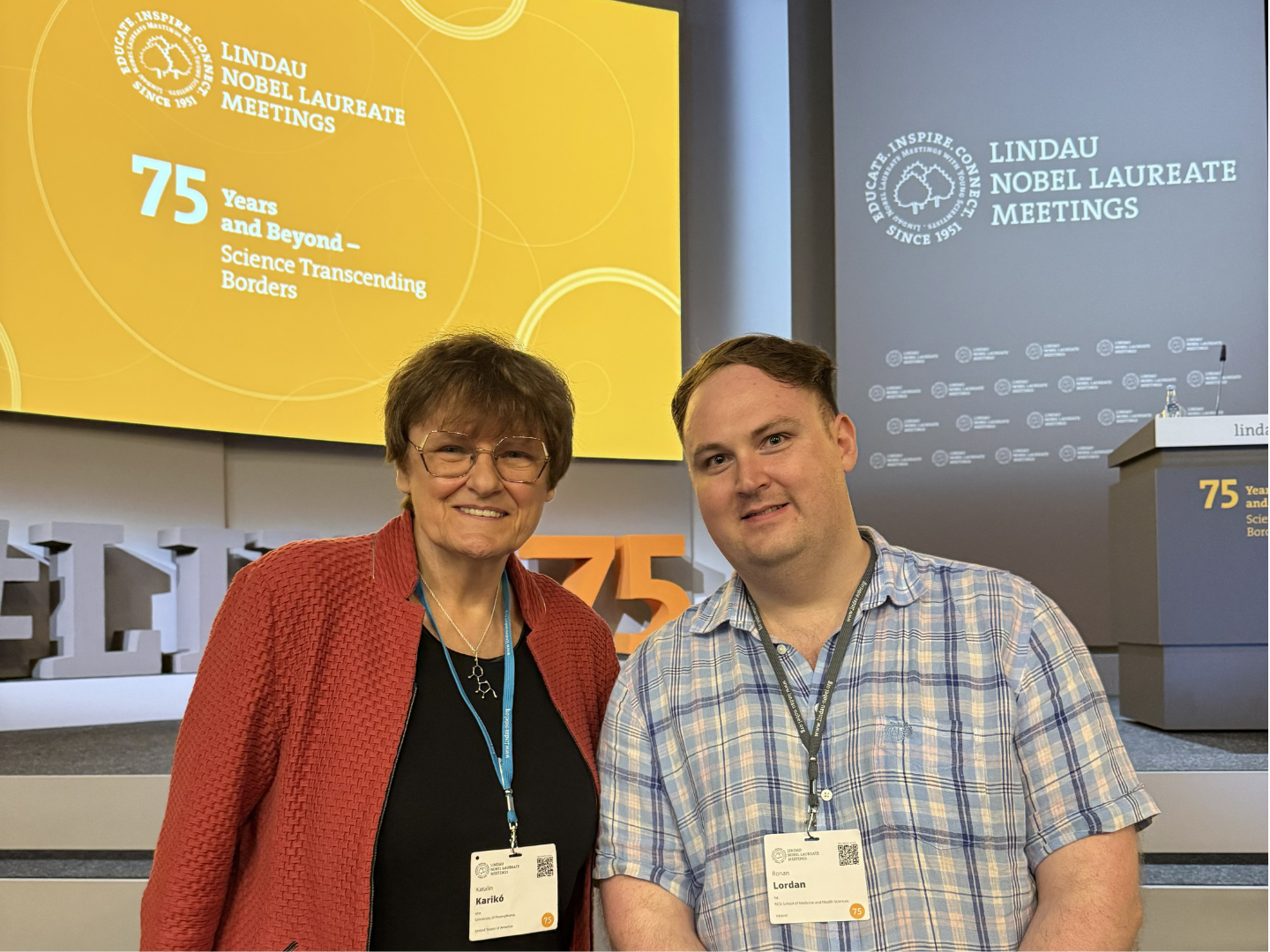
Ronan Lordan- Reflections from the 75th Lindau Nobel Laureate Meeting


I had the privilege to work for few years with Ronan. He is my first PhD student in Ireland. He is just a unique scientist, full of ideas and the ways to apply them in Science. I am so happy for Ronan that he goes from summit to summit on his way to his Ithaca.

Yannis


===


My name is Ronan Lordan, and I am a circadian biologist. I’m a Senior Postdoctoral Researcher and NeuroAdapt Marie Skłodowska-Curie Fellow at the FutureNeuro Research Centre for Translational Brain Science, the Tissue Engineering Research Group, and the School of Pharmacy and Biomolecular Sciences at RCSI University of Medicine and Health Sciences. My research focuses on the role of circadian rhythms in neuroimmunology, particularly in bipolar disorder.

Our internal biological clocks regulate nearly every aspect of physiology, from sleep and hormone secretion to metabolism and mood. When these rhythms become disrupted, they can contribute to the development and progression of psychiatric disorders. My research aims to better understand how circadian dysfunction influences bipolar disorder and how restoring healthy biological rhythms through chronotherapeutic approaches may improve treatment outcomes.

What drives me...


it continues here

Thursday, 13 February 2020

Special Issue "Lipids, Health, and Diseases: The Interplay"


 Special Issue "Lipids, Health, and Diseases: The Interplay"

A special issue of Diseases (ISSN 2079-9721).  

Deadline for manuscript submissions: 31 December 2020.

Special Issue Information

Dear Colleagues,

Lipids are an incredibly diverse group of organic compounds that are structurally and biochemically involved in many physiological and cellular processes. They act as messengers in inflammation and immunity and are crucial in apoptosis, autophagy, and cell division. Over the last few decades, research has demonstrated that the role of lipids in health and diseases is of major importance and requires further research to advance therapeutics. The purpose of this Special Issue is to present current research that tackles the role of lipids in disease development and/or treatment. Current challenges to treat diseases such as cancer, neurological diseases, and cardiovascular diseases involve potent lipid mediators including eicosanoids and platelet-activating factors or changes of cellular lipid compositions. With the advances in ‘omics’ technologies and research, there is potential to discover novel lipid biomarkers and lipid mediators with pro-resolving effects, such as resolvins and protectins, and design new treatments.  
This Special Issue will provide an open access opportunity to publish research work and review articles related to recent advances in understanding the role of lipids in health and disease and will hopefully present new molecular insights for developing potential therapeutic treatments as well as better patient diagnostic and disease prevention strategies.

Dr. Ronan Lordan
Dr. Ioannis Zabetakis
Guest Editors

Wednesday, 22 January 2020

for Ronan: my first Dr in Ireland


Ronan waiting to be capped
and the ...moment!

A PhD ( doctorate of Philosophy ) is (part of) a journey to our own Ithaka as Cavafy has put it! 

A PhD actually includes three very valuable processes:

1. it helps a young Scientist to build strength, courage and research skills,

2. it promotes knowledge and science and

3. it builds a bond between the candidate and the mentor.

In all these 3 fronts, working with Ronan has been a pleasure. 

The information we created and published has been outstanding.

With more 15 papers, 1 book and a Scopus h-index of 7, Ronan's PhD has been a remarkable Journey.

Congratulations and Thank you, Ronan!

And best of luck on the other side of the Atlantic on your postdoc-ing journey!

Ioannis

p.s. Ronan has now joined the club of my previous four Drs, 
Constantina Nasopoulou who is a Senior Lecturer in Lemnos Greece, 
Panagiotis Koutsompogeras who is a Science Teacher in Santorini Greece, 
Sotiris Stasinos who is a Manager in a top company in waste management in Greece and 
Eleni Sioriki who is a research fellow in Belgium.


Tuesday, 3 December 2019

new paper from our team


During my BSc studies in the Univ of Athens, one of my teachers was Prof Constantinos Demopoulos. He taught me Biochemistry and his lectures made me wanting to combine Food Sci with Biochemistry.
When I got my lectureship in Leeds in 1998, we started collaborating on food lipids and PAF. We published our first paper in 2000, almost 20 years ago. Since then, we worked together in many projects all PAF-related, published many papers and a couple of patents and here we are today...
40 years after Constantinos' work on PAF.

The rest is in our paper below. The interesting links on the authorship of this paper are: Alexandros was a PhD student of Constantinos and Ronan did his PhD with me... A team with a combined PAF experience of 3/4 of a century...

Ioannis
= = = = = =


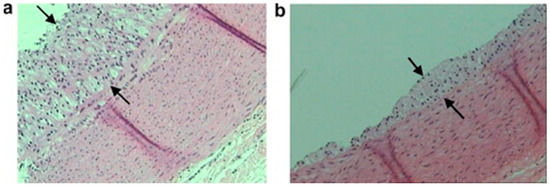
Representative optic micrographs ×100 of aortic wall sections stained with hematoxylin and eosin obtained from the two rabbit experimental groups. Atherosclerotic lesions appear as foam cells between the arrows. Each tissue sample was approximately 5 µm thick. (a) Group A (atherogenic diet) and (b) group B (atherogenic diet enriched with seabream polar lipids). Reproduced with permission from Nasopoulou et al. [220].


1
Department of Biological Sciences, University of Limerick, V94 T9PX Limerick, Ireland
2
Health Research Institute (HRI), University of Limerick, V94 T9PX Limerick, Ireland
3
Department of Chemistry, National and Kapodistrian University of Athens, Panepistimioupolis, 15771 Athens, Greece
*
Author to whom correspondence should be addressed.
Academic Editor: Ferdinando Nicoletti
Molecules 2019, 24(23), 4414; https://doi.org/10.3390/molecules24234414 (registering DOI)

 
In the late 1960s, Barbaro and Zvaifler described a substance that caused antigen induced histamine release from rabbit platelets producing antibodies in passive cutaneous anaphylaxis. Henson described a ‘soluble factor’ released from leukocytes that induced vasoactive amine release in platelets. Later observations by Siraganuan and Osler observed the existence of a diluted substance that had the capacity to cause platelet activation. In 1972, the term platelet-activating factor (PAF) was coined by Benveniste, Henson, and Cochrane. The structure of PAF was later elucidated by Demopoulos, Pinckard, and Hanahan in 1979. These studies introduced the research world to PAF, which is now recognised as a potent phospholipid mediator. Since its introduction to the literature, research on PAF has grown due to interest in its vital cell signalling functions and more sinisterly its role as a pro-inflammatory molecule in several chronic diseases including cardiovascular disease and cancer. As it is forty years since the structural elucidation of PAF, the aim of this review is to provide a historical account of the discovery of PAF and to provide a general overview of current and future perspectives on PAF research in physiology and pathophysiology. View Full-Text

Wednesday, 16 May 2018

Pint of Science @ JJ Bowles Pub

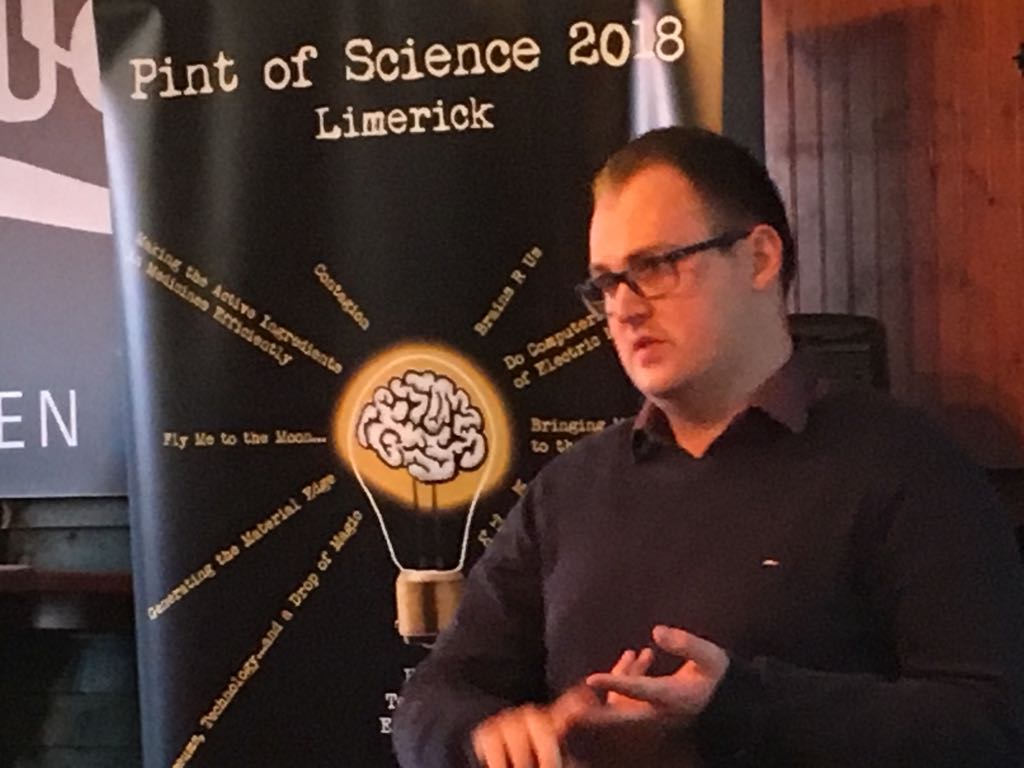
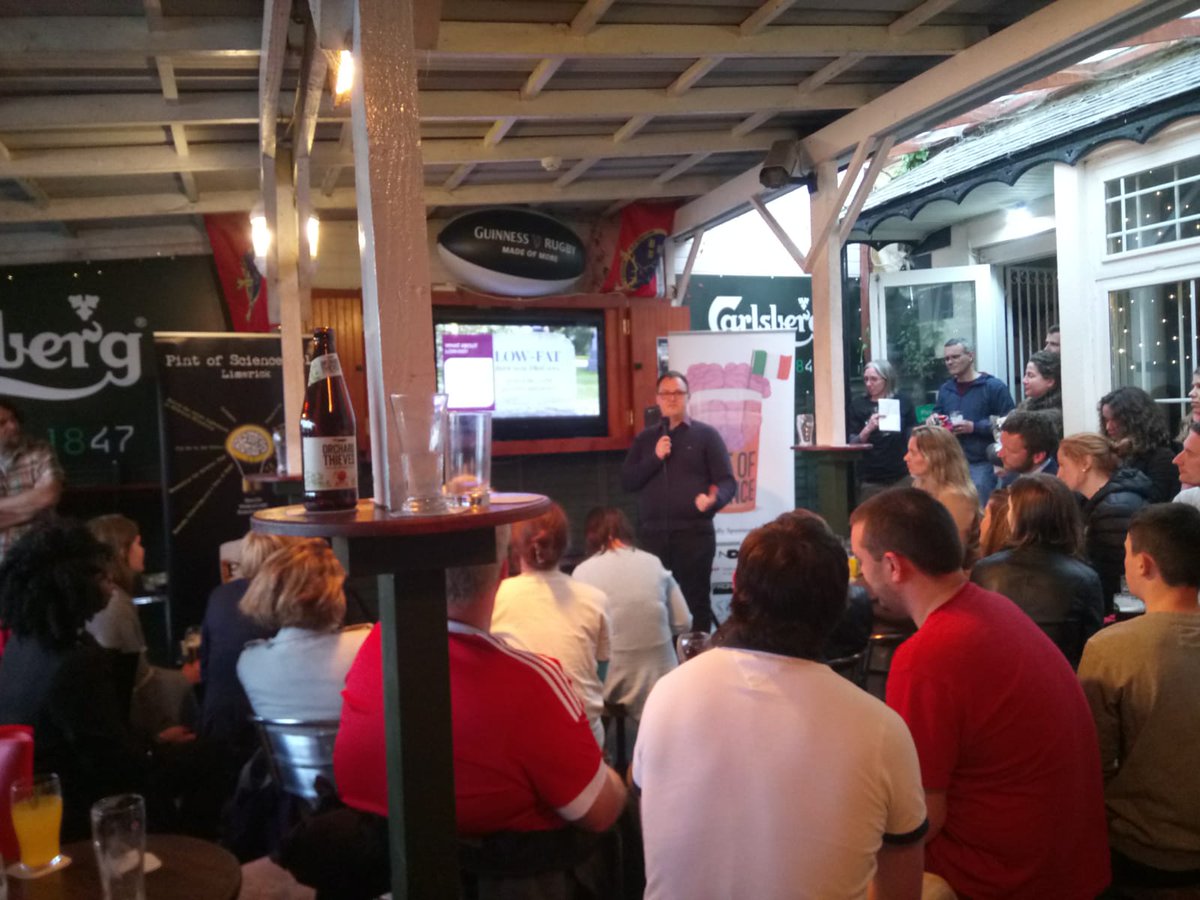
Last night, it was great fun; Pint of Science 2018 in JJ Bowles Pub in Thomondgate.

Five interesting presentations and some great presenting skills in play.

Ronan Lordan gave a solid presentation on his PhD research on fermented dairy and Cardiovascular diseases.
He talked about Med diet, where we can source information on diet, which sites to avoid and also he gave some good hints on the power of media and sponsorship. 👍


You can read more on our work

here 

 and

here

And as we write in our latest Nutrients paper...

Nature has provided us with a wide range of dietary weapons, which, if appropriately combined in dietary patterns such as the Med-diet, can beneficially contribute to improving our quality of life, health, and life expectancy by equilibrating the inflammatory milieu to normal levels and thus preventively reducing the risk of inflammation-related chronic disorders. Let us not forget the words of Hippocrates of Kos (460-377 BC), who is universally recognised as the father of modern medicine: “Let food be thy medicine and medicine be thy food”.