Wednesday, 26 February 2025

Log Posts (ΛB' : 32) : Σαν να μην πέρασε μια μέρα

Και ο κάθε κατεργάρης να γυρίσει στον εργαστηριακό του πάγκο, παρακαλώ!

Επιστροφή λοιπόν - εκεί στα γνώριμα σοκάκια.

Με τις γνώριμες φατσούλες που ζητούν γνώση.

Hey Teacher, leave the kids alone.

Πόσο επιτακτική είναι η ανάγκη για πιο ουσιώδη Παιδεία και Εκπαίδευση;

Αν ζούσε σήμερα ο Μίλτος ο Κουντουράς, τι θα άλλαζε στο βιβλίο του "Κλείστε τα σχολειά" ;;;

Μήπως, μήπως λέω, δεν θα άλλαζε ούτε ένα κόμμα;

We don't need no education.

We don't need no thoughts control.

Γιατί τα παιδιά που πάνε σχολείο και Πανεπιστήμιο, πάνε για να μάθουν, να παιδευτούν, να ωριμάσουν και να αναπτύξουν κριτικό πνεύμα.

Η μητέρα μου λέει πάντα το εξής : "στο Πανεπιστήμιο δεν μαθαίνεις απλά γνώσεις αλλά μαθαίνεις τον τρόπο να ψάχνεις την βιβλιογραφία για να βρεις τις γνώσεις για να λύσεις ένα πρόβλημα".

Και κάτι τέτοιο προσπαθώ να εφαρμόσω: στα μαθήματα μου, οι εξετάσεις είναι με ανοικτά βιβλία.

Μπορούν να φέρνουν στο αμφιθέατρο ότι έντυπο υλικό θέλουν

όχι όμως κινητά και laptops.

Μιας και θέλω τα πνευματικά μου παιδιά να μπορούν να συνδυάσουν γνώσεις και όχι να αποστηθίζουν γνώσεις. 

Και που είστε παιδιά : Carpe Diem - make your lives extraordinary


 [Log posts on this blog are short texts/poems that I started writing in Oct 2018, I chose this name for these posts as Georgios Seferis has written poems using this title]


[Τα Log Posts σε αυτό το ιστολόγιο είναι σύντομα ποιήματα που ξεκίνησα να γράφω τον Οκτώβρη του 2018, διάλεξα αυτό το όνομα μιας και ο Γιώργος Σεφέρης έχει γράψει ποιητικές συλλογές με τίτλο "Ημερολόγια Καταστρώματος"]


Wednesday, 19 February 2025

A gift for peace

Yesterday, I received by post an amazing book - I started reading it this morning.

The sender was a friend but I don't know who. One way or another, I am grateful for the beautiful gift.

The book is about Rami and Bassam; two fathers who live in Jerusalem but on the other sides of the eternal war...

They are both fathers.

They are both fathers of daughters.

They have both lost their daughters.

The first pages of this book bring this in mind.

It was aired at BBC2 last Monday and it is strong, detailed, cruel and realistic. 

At this documentary, we follow the Gaza war through the eyes of three Palestinian children.

And now?

What the future holds for Rami and Bassam?

What the future holds for the three children of the documentary?

What the future holds for Palestinians and Israelis who have lost sons, daughters, husbands or wifes?

What the future holds for all the innocent people in Gaza, in Israel, in Syria, in Lebanon, in Iran, in Iraq, in Armenia, in Russia, in Ukraine?

These words come to mind:

“Government is the Entertainment division of the military-industrial complex.” ― Frank Zappa


Tuesday, 18 February 2025

The year of hope: ‘Exciting’ advances achieved in search to reverse Alzheimer’s disease


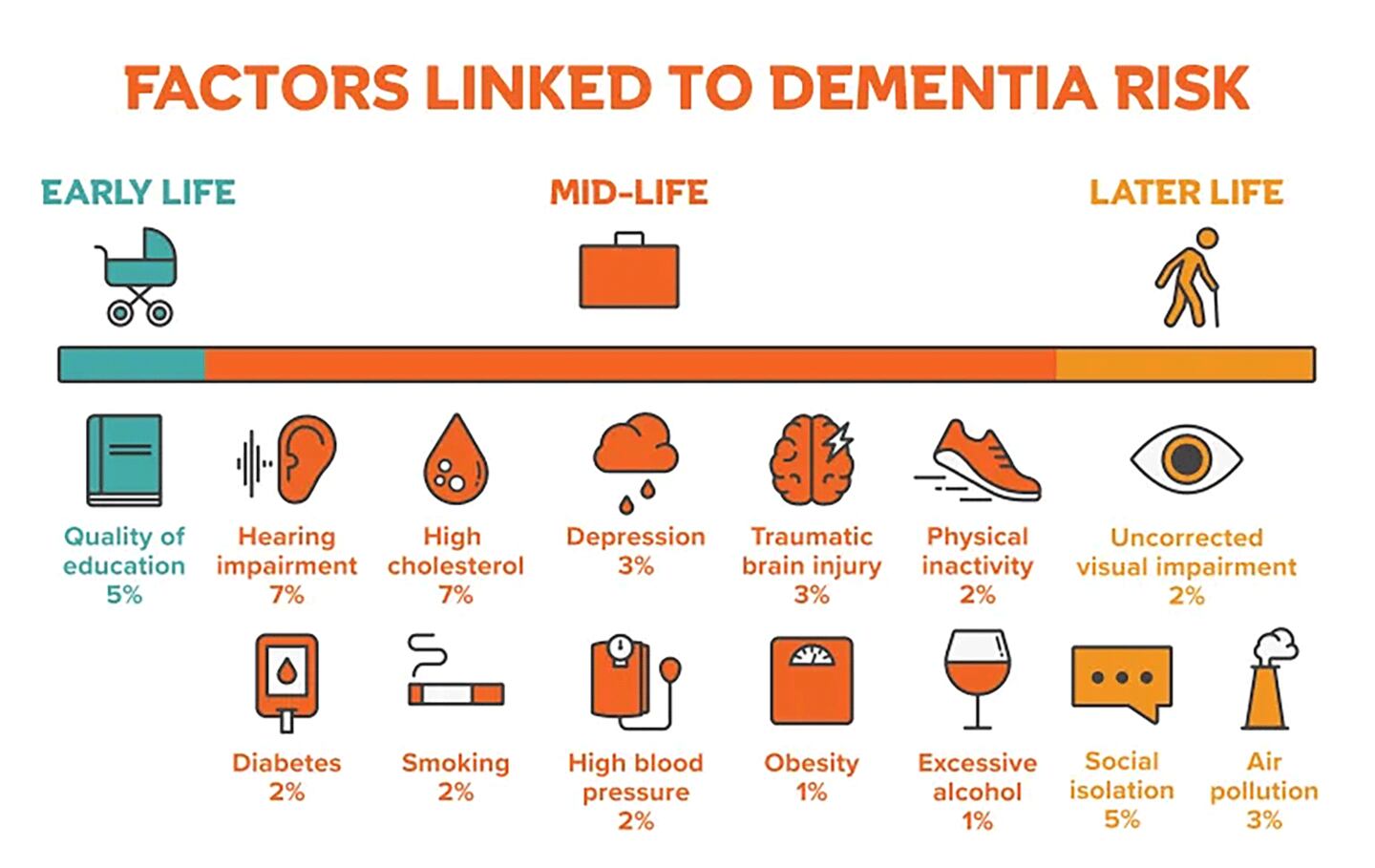
Factors linked to dementia. Graphic: UK Alzheimer’s Society 


from the Irish Times / the article is behind a paywall so you can read it here.

Merits of simple lifestyle changes to curb risk of dementia have never been so compelling


There may be no cure yet for Alzheimer’s disease, a leading cause of death in most developed countries including Ireland, but 2024 has brought a succession of breakthroughs.

They range across drugs reducing rogue proteins in the brain linked to the disease, blood tests enabling rapid and more accurate diagnosis, and growing evidence that specific lifestyle changes can reduce risk of Alzheimer’s by up to 50 per cent.

Geriatrician Prof Seán Kennelly, clinical lead in the Memory Assessment Clinic at Tallaght University Hospital, agrees these are “very exciting” advances.

He tries to avoid hype. “I’m always conscious that there are people who are living, and supporting the care of somebody, with dementia now – they’re at a stage whereby these treatments are probably not going to be effective.”

Tantalisingly, the breakthroughs bring us closer to reversing Alzheimer’s while evidence continues to emerge that something as simple as integrating a healthy lifestyle can reverse symptoms of the disease.

The biggest news for Kennelly is confirmation of the first medicine in 20 years for treating Alzheimer’s. “We finished the year with the recommendation from the European Medicines Agency (EMA) for Lecanemab ... this is the first medicine that we know removes this culprit protein – amyloid – which is responsible for causing Alzheimer’s disease.”

It is different from early treatments known as cognitive enhancers. “They didn’t alter trajectory of the illness. They really just helped with symptoms for a short period of time in a small number of people.”

We are moving into “a new era of chemotherapy” where it’s becoming like the treatment paradigm for cancer, he says. “It’s around timely and specific diagnosis, and we have new tests to help us diagnose Alzheimer’s disease ... and then delivery of medicines at earlier stages of the condition, because these proteins build up in the brain about 15 to 20 years before people have clinical symptoms.”

The EU is about to rule on licensing Lecanemab. Public reimbursement then arises in the national context, with a HSE process expected to be completed within a year. Analysis indicates 10 per cent of people who come through the memory clinic every year will benefit.

“These are like the first chemotherapies we would have had for cancer. They’re more dangerous than we’d like, and they’re less effective than we’d like.” Lecanemab is a drip administered every two weeks. Donanemab, which the EMA will adjudicate on shortly, is a monthly infusion. Soon injections under the skin mean people may not need to have infusions at all.

[ Nearly half of dementia cases could be prevented or delayed by addressing ‘14 modifiable risk factors’Opens in new window ]

The era of targeting these proteins at an early stage to minimise risk of Alzheimer’s progressing has started. The prospect of it becoming a managed condition, such as HIV or diabetes, is very real. “Five years ago that was pretty much unthinkable,” Kennelly says.

“As these new medicines become available for people with little or no symptoms, more people at that milder stage will start presenting,” he explains – which will push that 10 per cent upwards.

Since 2016, the clinic has been doing more than 200 CSF lumbar tests a year, numbing the lower back, extracting cerebrospinal fluid and measuring amyloid and tau – the culprit proteins – the main route to definitive diagnosis.

He expects a blood test will be available within two years. New blood tests are as good as the CSF test and more advanced imaging tests.

A blood test called pTau217 looks as accurate as the CSF test or amyloid PET scans. The FDA in the US has already approved some of these tests, while applications are with the EMA. They are much easier to do, while a PET scan costing €2,500 are not as successful and require radiation.

As with cancer treatment, you need to have “accurate biology” to start chemotherapy. “That’s why these two streams of better diagnosis happening alongside better treatment potentials is what has a lot of excitement for what is in the developed world probably the main cause of illness as we grow older now.”

Better management of dementia will bring wide-scale benefits, Kennelly predicts. “Dementia is the common thread of frailty as we get older. It’s the main predictor somebody will have difficulty managing in their own home. It’s the main reason why people end up going into nursing homes ... why people have falls when they grow older, why they have incontinence.”

The life expectancy of somebody born in 2021 is about 105 years of age by current evidence “but we have this health span gap between the length of time people are healthy versus the length of time they’re living” – and the main cause nowadays is dementia.

“What we know is an 80-year-old today is 40 per cent less likely to develop or have dementia than an 80-year-old 40 years ago. But we have so many more 80-year-olds now.”

While innovation is moving quickly, many are still in the early stages of real-world application, says Dr Laura O’Philbin, research and policy manager at the Alzheimer Society of Ireland.

“Amid this excitement, we must also remember the 64,000 people already living with dementia in Ireland, who need services and supports to live as well as possible for as long as possible,” she adds.

[ The demon dementia has made me uncertain about the net benefit of being around my motherOpens in new window ]

“Nobody is stopping the fight to try and find better treatments for people with advanced symptoms,” Kennelly states, but most of the good news this year and most of these new treatments are going to be focused on that group of people who don’t have significant symptoms.”

He often says “this is the best news people didn’t know they needed, because many of the people who will probably benefit from them don’t know that these proteins are building up in their brain – and have no symptoms right now”.

The merits of simple lifestyle changes to curb risk of dementia, and its most common form, Alzheimer’s disease, have never been so compelling but the range of advice can seem overwhelming.

“About 40 to 50 per cent of all of our risk for developing dementia is modifiable. So people do have power to alter that risk,” says Kennelly.

Fortunately, the Lancet Commission on Dementia provides clarity. It gathers 27 of the world’s leading dementia specialists to distil evidence and update advice. Its latest report published in July confirmed almost half of dementia cases worldwide can be prevented or delayed.

Its finding that far more cases could be avoided or delayed than previously thought was seismic. The modifiable risk factors, starting in childhood and continuing throughout life, could prevent or delay 45 per cent of dementia cases, even as people live longer, it concluded.

Healthy lifestyles involving regular exercise, not smoking, cognitive activity in midlife – including outside formal education – and avoiding excess alcohol can lower risk but may also push back dementia onset.

“There is much more that millions of people could and should do to reduce the risk of dementia. Many people around the world believe dementia is inevitable but it’s not,” said lead author Prof Gill Livingston.

There is stronger evidence that longer exposure to risk has a greater effect, yet it shows it’s never too early or late to take action.

Their report adds two risk factors associated with 9 per cent of dementia cases. About 7 per cent of cases are linked to high low-density lipoprotein (LDL) – or “bad” cholesterol – in midlife from about the age of 40, while 2 per cent of cases are attributable to untreated vision loss in later life.

The new risk factors are in addition to 12 identified in 2020. They are lower levels of education; hearing impairment, high blood pressure, smoking, obesity, depression, physical inactivity, diabetes, excessive alcohol consumption, traumatic brain injury, air pollution and social isolation.

Age and genetics, however, remain the biggest risk factors for dementia, while women are more likely to get the disease.

Kennelly helps run Ireland’s first brain health clinic for people with mild memory symptoms which helps with behavioural changes by providing a support infrastructure. “So how do you get to exercise? What is the best diet? How do you get to a best diet? How do you improve your social network? We check their vision and hearing. [It] emphasises the whole potential to prevent dementia.”

In explaining to patients, he compares the approach to SSIAs – the savings scheme in which the State topped up deposits by individuals – “in that later investment offers and brings a better value outcome. We know that doing this later in life, actually you get an even amplified effect because your risk is so much higher”.

“So people doing all the good stuff at 40 is a good thing ... if you stop doing it at 50, you’re still accruing risk at that stage whereas if we can really get people at the age of 60 into doing more exercise, better diets, better social connectivity, getting their eyesight and their hearing checked.”

Hearing loss is a big risk factor, Kennelly underlines. “And people won’t be aware of it because your brain will always tell you your hearing is fine. You can’t hear what you haven’t heard. So you have to get these things formally checked by a third party.”

And there is “really strong evidence” for a 40 per cent reduction in risk of developing dementia with the shingles vaccine, he adds – the same for the flu vaccine. By turning down the immune system or inflammatory response within the body, vaccination seems to be very effective at reducing risk, though the effect is not fully understood.

The shingles vaccine costs about €500, but given the health dividend, Kennelly says the cost should be fully reimbursed in Ireland – as it is in the UK.

It is never too early or too late to start thinking about our brain health and taking early steps to reduce our risk of dementia, says Dr Laura O’Philbin of the Alzheimer Society of Ireland. While there is no one specific method or treatment proven to prevent dementia, there are lifestyle changes we can make and strategies we can adopt to lower our risk.

However, she adds, brain health is not just about individual choice as it is intrinsically linked to social inequalities. “Factors such as poverty, ethnicity, and geographic location significantly impact access to education, healthcare, and air quality, all of which influence dementia risk.”


= = = = 

In UL, with my research team, we have started working on this topic. One of our latest publication is this one:

Polar lipids modify Alzheimer’s Disease pathology by reducing astrocyte pro-inflammatory signaling through platelet-activating factor receptor (PTAFR) modulation.


Background

Pro-inflammatory processes triggered by the accumulation of extracellular amyloid beta (Aβ) peptides are a well-described pathology in Alzheimer's disease (AD). Activated astrocytes surrounding Aβ plaques contribute to inflammation by secreting proinflammatory factors. While astrocytes may phagocytize Aβ and contribute to Aβ clearance, reactive astrocytes may also increase Aβ production. Therefore, identifying factors that can attenuate astrocyte activation and neuroinflammation and how these factors influence pro-inflammatory pathways is important for developing therapeutic and preventive strategies in AD. Here, we identify the platelet-activating factor receptor (PTAFR) pathway as a key mediator of astrocyte activation. Intriguingly, several polar lipids (PLs) have exhibited anti-inflammatory protective properties outside the central nervous system through their inhibitory effect on the PTAFR pathway. Thus, we additionally investigated whether different PLs also exert inhibitory effects on the PAF pathway in astrocytes and whether their presence influences astrocytic pro-inflammatory signaling and known AD pathologies in vitro.

Methods

PLs from salmon and yogurt were extracted using novel food-grade techniques and their fatty acid profile was determined using LC/MS. The effect of PLs on parameters such as astrocyte activation and generation of oxygen species (ROS) was assessed. Additionally, effects of the secretome of astrocytes treated with these polar lipids on aged neurons was measured.

Results

We show that PLs obtained from salmon and yogurt lower astrocyte activation, the generation of reactive oxygen species (ROS), and extracellular Aβ accumulation. Cell health of neurons exposed to the secretome of astrocytes treated with salmon-derived PLs and Aβ was less affected than those treated with astrocytes exposed to Aβ only.

Conclusion

Our results highlight a novel underlying mechanism, why consuming PL-rich foods such as fish and dairy may reduce the risk of developing dementia and associated disorders.


Wednesday, 12 February 2025

Log Posts (ΛΑ' : 31)

Embrace the Day

Metabolise Adversity and don't compromise your speed

Η πρώτη φράση είναι σε μια κούπα που μου χάρισε ο αδερφός μου για το 2024.

Η δεύτερη φράση είναι συμβουλή ενός φίλου καλού.

Δυο συμβουλές,

μια όμως φιλοσοφία ζωής...

Δυο συμβουλές,

11 λέξεις...

11 λέξεις που με βοήθησαν για 16 μήνες...

Πολύμηνη περίοδος...

Δύσκολη...

Κακοτράχαλη...

Απαιτητική!

Δεν υπέκυψα όμως,

δεν έσκυψα,

δεν έχασα την αισιοδοξία μου και την Πίστη μου,

16 μήνες... 

χωρίς να χαμηλώνω όμως τον ρυθμό μου,

χωρίς να πατήσω φρένο...

Μια περίοδος που αναθεώρησα πολλά και ...πολλούς!

Μια περίοδος με διάβασμα, sprints, πολλά Km περπάτημα με τον τετράποδο κολλητό μου,


 Μια περίοδος με Μουσική (μάθημα και άκουσμα),

Μια περίοδος που τέλειωσα την συγγραφή ενός (ακόμη...) βιβλίου.

Και τώρα που έχει μπει η Άνοιξη του 2025,

(εδώ στα κέλτικα εδάφη, η Άνοιξη μπαίνει στην ονομαστική εορτή της Saint Brigid, 1η Φλεβάρη)

Και τώρα που ήρθε η Νίκη,

Και τώρα που ξεκινά ένα νέο κεφάλαιο,

ένα νέο Project,

μια νέα "περιπέτεια",

οι στίχοι του Αλεξανδρινού είναι στο μυαλό μου αλλά και η αφιέρωση που έκανα στο τελευταίο μου βιβλίο.


Γράφω εκεί:

Dedication

Life is a sailing journey: to arrive to interesting ports and eventually to the final destination, a skipper needs a compass and bright stars, not GPS. On the journey to my own Ithaca, I am grateful to Nathaniel and Thiseas (my two brightest stars in the sky) and to Breda (my compass for life).

Love always,

Ioannis


Νυνὶ δὲ μένει πίστις, ἐλπίς, ἀγάπη, τὰ τρία ταῦτα· μείζων δὲ τούτων ἡ ἀγάπη. 

 Από την επιστολή του Αποστόλου Παύλου Πρὸς Κορινθίους Α' 13

[13.1] ἐὰν ταῖς γλώσσαις τῶν ἀνθρώπων λαλῶ καὶ τῶν ἀγγέλων, ἀγάπην δὲ μὴ ἔχω, γέγονα χαλκὸς ἠχῶν ἢ κύμβαλον ἀλαλάζον. [13.2] καὶ ἐὰν ἔχω προφητείαν καὶ εἰδῶ τὰ μυστήρια πάντα καὶ πᾶσαν τὴν γνῶσιν καὶ ἐὰν ἔχω πᾶσαν τὴν πίστιν ὥστε ὄρη μεθιστάναι, ἀγάπην δὲ μὴ ἔχω, οὐθέν εἰμι. [13.3] κἂν ψωμίσω πάντα τὰ ὑπάρχοντά μου, καὶ ἐὰν παραδῶ τὸ σῶμά μου ἵνα καυθήσωμαι, ἀγάπην δὲ μὴ ἔχω, οὐδὲν ὠφελοῦμαι.

[13.4] ἡ ἀγάπη μακροθυμεῖ, χρηστεύεται, ἡ ἀγάπη οὐ ζηλοῖ, {ἡ ἀγάπη} οὐ περπερεύεται, οὐ φυσιοῦται, [13.5] οὐκ ἀσχημονεῖ, οὐ ζητεῖ τὰ ἑαυτῆς, οὐ παροξύνεται, οὐ λογίζεται τὸ κακόν, [13.6] οὐ χαίρει ἐπὶ τῇ ἀδικίᾳ, συγχαίρει δὲ τῇ ἀληθείᾳ· [13.7] πάντα στέγει, πάντα πιστεύει, πάντα ἐλπίζει, πάντα ὑπομένει.

[13.8] ἡ ἀγάπη οὐδέποτε πίπτει· εἴτε δὲ προφητεῖαι, καταργηθήσονται· εἴτε γλῶσσαι, παύσονται· εἴτε γνῶσις, καταργηθήσεται. [13.9] ἐκ μέρους γὰρ γινώσκομεν καὶ ἐκ μέρους προφητεύομεν· [13.10] ὅταν δὲ ἔλθῃ τὸ τέλειον, τὸ ἐκ μέρους καταργηθήσεται. [13.11] ὅτε ἤμην νήπιος, ἐλάλουν ὡς νήπιος, ἐφρόνουν ὡς νήπιος, ἐλογιζόμην ὡς νήπιος· ὅτε γέγονα ἀνήρ, κατήργηκα τὰ τοῦ νηπίου. [13.12] βλέπομεν γὰρ ἄρτι δι᾽ ἐσόπτρου ἐν αἰνίγματι, τότε δὲ πρόσωπον πρὸς πρόσωπον· ἄρτι γινώσκω ἐκ μέρους, τότε δὲ ἐπιγνώσομαι καθὼς καὶ ἐπεγνώσθην. [13.13] νυνὶ δὲ μένει πίστις, ἐλπίς, ἀγάπη, τὰ τρία ταῦτα· μείζων δὲ τούτων ἡ ἀγάπη.


 [13,1] Εάν τις γλώσσες των ανθρώπων1 μιλώ και των αγγέλων, αλλά δεν έχω αγάπη, έγινα χαλκός που ηχεί2 ή κύμβαλο που αλαλάζει. [2] Και αν έχω το χάρισμα της προφητείας3 και κατέχω όλα τα μυστήρια και όλη τη γνώση, κι αν έχω όλη την πίστη, ώστε και όρη να μετακινώ, αλλά δεν έχω αγάπη, είμαι ένα τίποτα. [3] Και αν μοιράσω στους φτωχούς όλα μου τα υπάρχοντα, και αν παραδώσω στη φωτιά το σώμα μου για να καεί, αλλά δεν έχω αγάπη, ποιο το όφελος;

[4] Η αγάπη μακροθυμεί, είναι γεμάτη καλοσύνη· η αγάπη δεν είναι ζηλότυπη, δεν μεγαλαυχεί, ούτε επαίρεται, [5] δεν ασχημονεί, δεν είναι εγωιστική, δεν είναι ευερέθιστη, δεν θυμάται το κακό, [6] δεν χαίρεται με την αδικία, μετέχει όμως στη χαρά για το ορθό· [7] όλα τα ανέχεται, όλα τα πιστεύει, για όλα ελπίζει, όλα τα υπομένει.

[8] Η αγάπη ποτέ δεν θα πάψει να υπάρχει. Τα λόγια των προφητών κάποτε θα στερέψουν, οι γλώσσες θα σιγήσουν· η γνώση θα καταργηθεί. [9] Γιατί γνωρίζουμε σπαράγματα μόνο της αλήθειας, και οι προφητείες μας είναι ατελείς. [10] Όταν όμως έλθει το τέλειο, το μερικό θα παύσει να υπάρχει. [11] Όταν ήμουν μικρό παιδί, μιλούσα σαν μικρό παιδί, σκεπτόμουν σαν μικρό παιδί, συλλογιζόμουν σαν μικρό παιδί. Όταν έγινα άντρας,4 κατάργησα τους τρόπους του νηπίου. [12] Γιατί τώρα βλέπουμε αμυδρά σαν μέσα σε καθρέφτη· τότε όμως θα βλέπουμε πρόσωπο με πρόσωπο. Τώρα η γνώση μου είναι μερική, τότε όμως θα έχω πλήρη γνώση, όπως και ο Θεός ήδη στην εντέλεια με γνωρίζει. [13] Στο τέλος μένουν αυτά τα τρία: η πίστη ,η ελπίδα, η αγάπη· και από αυτά το μέγιστο η αγάπη.

 (μετάφραση Γιώτα Κριτσέλη)


 [Log posts on this blog are short texts/poems that I started writing in Oct 2018, I chose this name for these posts as Georgios Seferis has written poems using this title]


[Τα Log Posts σε αυτό το ιστολόγιο είναι σύντομα ποιήματα που ξεκίνησα να γράφω τον Οκτώβρη του 2018, διάλεξα αυτό το όνομα μιας και ο Γιώργος Σεφέρης έχει γράψει ποιητικές συλλογές με τίτλο "Ημερολόγια Καταστρώματος"]


Friday, 7 February 2025

μια ιδέα για βιβλίο

Ο Θεός και η Χημεία: πώς αλληλοσχετίζονται;
 
Λέω να γράψω ένα βιβλίο με τον παραπάνω τίτλο.
Ακόμα και για εκείνους που πιστεύουν στο bing bang, πού βρέθηκαν τα σωματίδια του bing bang?
 
Kαι μερικές χημικές παρατηρήσεις:
αρχή διατήρησης μάζας - δημιουργία κόσμου, ο φανερός αριθμός του Θεού είναι το 7: χρειάζονται 7 συζυγιακοί δεσμοί για να έχει χρώμα μια ένωση, οι πιο αποτελεσματικές διαμεμβρανικές πρωτεΐνες είναι αυτές που έχουν 7 αναδιπλώσεις, άπειρα τα χρώματα στο ουράνιο τόξο αλλά το ανθρώπινο μάτι μπορεί να διακρίνει 7, συστήματα κρυστάλωσης και η συμμετρία στον κόσμο κλπ κλπ

Monday, 3 February 2025

Blue zones, where people live to 100, are a lovely idea. It’s a shame they don’t exist

 [from the Irish Times ; it's behind a paywall, so here is the full article]


The impressive ages of people who live in these areas may be due more to poor record keeping than healthy lifestyle habits


Blue zones are places where people reportedly live in good health to over 100 years of age. These locations seem to hold the secrets of exceptional longevity wrapped up in the warm glow of red wine with family.

Blue zones are a lovely idea, but they likely don’t exist. In fact, the extreme age of people who live in these areas may be more due to poor record keeping than healthy lifestyle habits.

Examples of blue zones include Okinawa in Japan, Loma Linda in California, Sardinia in Italy and Ikaria in Greece. These areas have been studied in detail to understand why their people live such long and healthy lives and, more importantly, what we can do to emulate their longevity successes.

The common factors include daily activity, drinking red wine, prioritising family, eating vegetables, having faith in something, taking time off, and celebrating life. These are (mostly) all very sensible things most people could integrate into their lives. But while all the blue zones mentioned have these factors in spades, it doesn’t take long to realise that endless small towns around the world, particularly in the Mediterranean, share these traits, yet lack exceptional longevity.

Why do these blue zones have populations that are routinely dying at over 100 years of age if it’s not down to the factors listed above?

It’s worth looking more closely at these areas and the factors that unite them. Some other factors common to blue zones include poor birth and death registration, poverty, specifically old-age poverty, high crime rates, worse health metrics, and remote regions of birth.

In some blue zones, rates of smoking are often as high as 50 per cent, and rates of illiteracy reach as high as 80 per cent. This is not exactly what you would expect from an area where people are supposed to have exceptionally long and healthy lives.

As a centenarian or supercentenarian who has lived to over 110 years, you would have been born when the record-keeping of births and deaths was either not present or less robust. The number of supercentenarians plummeted after the rollout of mandatory birth registration and census keeping in the United States. This suggests that when formal record-keeping was mandated, self-estimations of age, which were common practice at the time, were no longer accepted.

But the strange birth registration issues don’t end there. Supercentenarians born in the US are 1.5 times more likely to be born on the first day of the month. In Japan, that figure rises to 2.7 times. This, to put it mildly, seems a little odd. When countries attempt to count their true number of centenarians, they are frequently surprised to learn that many of them are already dead. A 2010 Japanese investigation discovered that almost a quarter of a million of their centenarian population was already deceased. A similar investigation in the US found that 35 per cent of all supercentenarians were already dead. Of all the supercentenarians in the US and France, not one has an authentic birth certificate. Record-keeping for those born in the early 1900s in areas of the world that have struggled with poverty has been subpar.

In reality, blue zones may be more of an artefact of poor record keeping rather than lifestyle. But that doesn’t mean we should ignore the lifestyle patterns identified in blue zones. They probably won’t be the determining factor that gets you to 110 years of age; they are, however, a great place to start if you want to add ten years to your life and live to 90.

Rather than focusing on blue zones, it is better to examine lifestyle factors in longer-term studies and see how they impact lifespan. When people get the basics right by age 50 – not smoking, maintaining a normal weight, being active daily, maintaining modest alcohol intake, and maintaining a good diet – they can extend their lives by over a decade. That is more than a 10 per cent life extension. This means that the average male who gets these factors in check by age 50 will die on average at 87, and the average female who gets them right will live on average to 93.

Getting them right is unlikely to get you to 110, as the blue zones would suggest, but you’re likely to live significantly longer than those who don’t get them right. What is even more important is that getting these healthy factors right can delay the onset of many serious medical conditions, including heart disease, cancer and type 2 diabetes, by 10 years. An additional 10 years without a major illness means the life years gained will be much higher quality. Adhering to these healthy patterns does not guarantee longevity, but it seriously increases the odds.

If following a “blue zone” diet or way of life seems attractive to you, the data shows that it will likely extend your life by over a decade – just don’t plan on it extending your life to over 110 years of age. For that, you might need to work on your birth certificate forgery skills.

Dr Paddy Barrett is a preventive cardiologist at the Blackrock clinic and author of Heart An Owner’s Guide


===


and my view: The point of Dr Barett is that the blue zones do not exist. This point is irrelevant! The real point should be to focus on the Power of 9 and how we can create more places where people follow the Power of 9.

Blue zones do exist, as I am writing at my latest book

Preventing Inflammation and Cardiovascular Diseases: How Food Polar Lipids Can Reduce Inflammation


and this short interview proves this point and it worth watching.