Tuesday, 26 March 2024

Low-paid PhD students: ‘I work three part-time jobs to make ends meet living in Dublin’


Despite their vital role in higher education, many survive on less than €10,000 a year

= = =

from the Irish Times

 = = = 

The third-level sector, and the wider economy, depends on PhD researchers. They provide vital support to academics. They produce important research for the public and private sectors, allowing for breakthroughs in science and technology, innovations in law and business, and deeper understandings of society and culture. Their fees are a vital source of income for higher education institutions, and the number of PhD students in each institution impacts on their all-important ranking.

Yet most PhD researchers live below the poverty line and with no assurance that their work and doctorate will lead them out of precarious employment. Less than a third will receive a form of funding, but many survive on less than €10,000 or less per year. Humanities scholars, in particular, struggle to find the same level of support as those working in science, technology or engineering.

PhD researchers have a simple and consistent demand. Over the past 15 years they have lobbied and fought to be treated as workers, with access to the same rights – including pensions and maternity leave – of all workers.

But successive governments and university administrators, knowing that this group of campaigners will wash through the system, have usually been able to wait them out. In recent years, however, the Postgraduate Workers’ Organisation (PWO) has steadily been putting in place a structure that may ensure it lasts as a lobbying organisation.

Meanwhile, almost all Opposition parties have supported their demands, ratcheting up the political pressure on the Government.

Earlier this year the PWO published research into the conditions of PhD researchers in Ireland. The report – Workers in all but name, pay and conditions – suggests moving away from treating PhD researchers merely as students in receipt of an education and towards a model that recognises them as workers that higher education cannot function without.

On foot of a call-out on X (formerly Twitter), The Irish Times received dozens of stories from PhD researchers. The majority asked not to be identified. Several themes emerged: subsistence wages; lack of sick leave or maternity leave; a sense of precarity and delayed adulthood with researchers staying at home and putting off having their own family.

“My funding is €9,000 per year, including teaching work and grading of hundreds of assignments,” said one. “I am a full-time PhD researcher with three part-time jobs in order to make ends meet living in Dublin. I find myself with little time for writing in this, my final year, so I am not going to make my deadline.”

Many PhD researchers say that there is more than just financial pressure, and that they are at the mercy of their supervisors.

“The workload demanded of me and a fellow PhD student was extreme, and at times we were working over 50 hours a week, including evenings and weekends,” says one researcher who recently completed their PhD. “We tried to speak up for ourselves, but nothing improved.”

“Precarity only increases after the PhD,” says one who lived at home to receive her doctorate. “I am putting off trying to get pregnant because my PhD fellowship – and every postdoctoral contract I’ve had – has little to no provision for adequate maternity leave.”

For disabled students, meanwhile, there are further barriers.

“I scramble to afford living and the cost of doing my PhD,” says one disabled student. “Disabled people spend so much time looking after and maintaining our health, proving our disability, filling out forms, that we often need to do part-time PhDs, but these have no flexible funding options. We have extra living expenses, too. I need to do a PhD to update my skills, and to gain the knowledge that could allow me flexible, part-time work. I want to get out there, contribute to society and pay tax, but we are not properly supported to go back into the workplace.”

Conor Reddy, president of the PWO, says the increased cost of living has put huge pressure on postgraduates and PhD researchers.

“I started a research assistant job in human immunology in 2019,” he says. “The pay, though not great, was slightly better than my PhD stipend. I found it difficult to survive during the PhD, living in five places in five years and being exposed to precarity, insecurity and rent pressure. Many of us are faced with having to move home in our 20s or 30s.

“Over the last 10 years, research has become dependent on the labour of PhD researchers, with most working on several projects at once, while carrying out that day-to-day research,” Reddy says.

His PhD looked at how the stress and trauma of homelessness could affect the human immune system and potentially diminish vaccine protection.

“PhD researchers are essential to research output and our work has huge economic and social benefits, but we are undervalued.

“Many are employed in term time only, finding themselves out of work and signing on for the summer; in at least one case, this has gone on for 17 years. This flexibility has become important to the universities on an ideological level, and the Government is reluctant to scrap the austerity-era employment control framework [which restricts hiring at third-level].”

Why stick around to be treated like this, though? Many bright minds choose not to pursue a PhD, and many drop out, says Reddy.

“About halfway through, I was ready to throw in the towel. But we care so much about our work and research questions, and it is easy to take advantage of us. It is disingenuous to say that we are just students: we are workers.”

Senator Alice Mary Higgins has put forward legislation on the issue.

“This precarity drives people out of academia, reduces diversity and leads to less of the creative thinking we need to tackle challenges,” she says.

“When people are on insecure and short-term contracts, it also mitigates against the deep and long-term research we need, and against independence of thought, too. It is ludicrous that the employment control framework remains in place, especially at a time of such massive change in higher education.”

Responding to the increased pressure from researchers, Budget 2023 saw an increase in funding for students in receipt of funding from the Irish Research Council or Science Foundation Ireland by €500. The Government also increased the funding level for postgraduate grants on a one-off basis.

Simon Harris, Minister for Further and Higher Education, has said that there will be further increases, with the ultimate goal of ensuring the stipend reaches €25,000, the level recommended by a national review last year.

Separately, Harris has said the Government is “committed to ensuring that researchers have the right skills development and career opportunities to allow them make their maximum contribution”.

PhD researchers in Europe: how Ireland compares

“Many European countries offer employment rights for PhD researchers,” says Rory O’Sullivan, a PhD candidate in Ancient Greek and one of the authors of the Postgraduate Workers Organisation report on the status of PhD researchers across Europe.

“The expected stereotype might be that it’s only the Scandinavian countries that offer rights, but this is not the case at all: Latvia, Estonia and the Netherlands are among the countries with much better conditions.”

And the worst, according to his research? “Ireland, Italy and Greece,” says O’Sullivan.

Austria: Some researchers have contracts, some have grants, with an average of €2,300 a month, with health and social insurance.

Denmark: All PhD researchers have employee status and contracts, with a salary equivalent to civil servants with a master’s degree.

Italy: No employee status for PhD researchers, but part of the scholarship goes to the national pension fund. Status relatively similar to Irish PhD researchers.

Latvia: Recently overhauled its PhD structures to draw in more researchers, with state salaries replacing the scholarship model.



Μουσικό διάλειμμα: Ουσίες


Καλλιτέχνης: Μακεδόνας Κώστας
Συνθέτης: Δανίκας Νίκος
Στιχουργός: Λαζόπουλος Λάκης


Περνάγαμε ωραία
μ’ εκείνη την παρέα
τα γέλια μας χαλούσαν τις βραδιές
και στρίβαμε τσιγάρα
σαν καραβιού φουγάρα
και μοιάζαν οι καπνοί μας προσευχές

Ουσίες, ουσίες κι οινοπνεύματα
κι άρχισαν να ξεντύνονται
μες στο μυαλό τα πνεύματα

Τα χρόνια τα μοιραία
τα φάγαμε παρέα
απάνω σε κρεβάτια κι αγκαλιές
κι αυτό που τώρα ζούμε
σαν άρωμα να πούμε
που βγάζουν δυο χιλιάδες πασχαλιές


Tuesday, 19 March 2024

Intermittent fasting ‘could raise risk of fatal heart disease’

 source: the Times


Scientists tracking 20,000 people find higher cardiovascular risk in those who eat only in an eight-hour window


Diets in which people eat only during an eight-hour daily window and fast for the rest of the day may be linked to an increased risk of death from heart attacks and strokes, scientists have claimed.

Intermittent fasting has been endorsed by celebrities including Jennifer Aniston, Hugh Jackman, Kourtney Kardashian and Scarlett Johansson.

Research has linked it to short-term improvements in blood pressure, blood sugar and cholesterol.

However, long-term outcomes have now been explored in one of the first studies of its kind. After tracking about 20,000 adults in the United States, it found that those who said they ate within an eight-hour window were nearly twice as likely to die of heart attacks or strokes, compared with those who said they spread meals and snacks across 12 to 16 hours.

The researchers stressed that the results must be treated with caution, as this kind of study cannot prove cause and effect. They also had very limited information on the participants’ eating habits.

One limitation was that the volunteers who took part were only asked about their eating patterns on two days, and it was assumed that they followed the same schedule for several years. However, other experts said follow-up studies would be valuable as the “striking” results challenged widely held assumptions.

“We had expected that long-term adoption of eight-hour time-restricted eating would be associated with lower risk of cardiovascular death,” said Professor Victor Wenze Zhong of the Shanghai Jiao Tong University School of Medicine, senior author of the research. “We were surprised to find that compared to people whose eating duration was 12 to 16 hours, those who restricted their eating time to within eight hours per day had higher risk of cardiovascular death and did not live longer.”

He said his team had controlled for factors that might have skewed the results, such as the age of the participants, as well as income, body mass index, smoking, drinking and blood pressure. However, it is still possible that something other than the timing of meals was behind the effect.

Duane Mellor, a senior lecturer at Aston Medical School in the UK who was not involved in the study, said that some people, including night shift workers, were forced to eat at certain times. “Some people might be doing this [time-restricted eating] for health reasons [which may mean they were in worse shape to start with], while for others it’s due to stressful work environments or poverty, which are both risk factors for cardiovascular death,” Mellor said.

Christopher Gardner, a professor of medicine at Stanford University in California who was also not part of the research, agreed that more work was needed. He said: “Overall, this study suggests that time-restricted eating may have short-term benefits but long-term adverse effects.”

One theory would be that people eat fewer calories but continue eating junk food. “The short window of time-restricted eating … may help people cut back on calories and lose weight. However, if the calories that are being consumed are of low dietary quality, this might possibly lead to long-term adverse outcomes,” Gardner added.

Zhong told The Times his team had observed that people who reported eating in an eight-hour period had less lean muscle mass. “Loss of lean body mass has been linked to higher risk of cardiovascular mortality,” he said. “Other mechanisms linking eight-hour time-restricted eating with cardiovascular morality require further investigations. This will be an exciting research question, but we really do not know much right now.”

The study looked at about 20,000 adults with an average age of 49 when it began. They were tracked for as long as 17 years, and for a median of eight years; 840 died of heart attacks and strokes.

Those who reported eating all their food across less than eight hours a day had a 91 per cent higher risk of death from these cardiovascular causes, according to results due to be presented to a conference of the American Heart Association in Chicago this week.

Time-restricted eating did not reduce the overall risk of death from any cause. “Our study’s findings encourage a more cautious, personalised approach to dietary recommendations,” Zhong said.

Not so fast: if you feel the benefits, don’t ditch the diet just yet
By Rhys Blakely

Besides being endorsed by a multitude of celebrities, fasting diets have this going for them: people seem to find them relatively easy to stick to.

You can typically eat whatever you want, with no limits on calories, as long as meals are restricted to certain times, say between 12pm and 8pm.

Studies have suggested that people can lose weight by following these rules, probably because they end up consuming less food, and that they can help patients with type 2 diabetes control blood sugar levels.

One piece of research found that healthy men who fasted during the Islamic holy month of Ramadan, for about 16 hours a day, had an altered gut microbiome by the end, with higher levels of a beneficial bacterium that has been linked with a lower risk of cancer and inflammatory bowel disease, and improved heart health and mental health. In another trial, fasting for 15 to 16 hours each day for a month led to lower blood pressure in patients whose readings had been dangerously high.

But these studies, while intriguing, had something in common: they found short-term outcomes in small numbers of participants.

The latest research is one of the first to try to explore what time-restricted eating might mean if people kept it up for many years. Its strengths are that it looked at a relatively large number of people and followed them for a long time (eight years was the median average). But it has important limitations, including that it has not yet been peer reviewed and that the 20,000 people who took part were only asked about when they ate for two days. We don’t know whether those who reported time-restricted eating continued with it throughout the study.

The participants were part of a national nutritional survey that is representative of the US population, notes Tom Sanders, professor emeritus of nutrition at King’s College London. But if they were regularly fasting, we don’t know if they’d made a voluntary choice to do so. “It is likely that individuals reporting time-restricted eating may be working anti-social hours (eg truck drivers, security personnel, health professionals, night workers). This is important because there is evidence that this type of working practice is associated with increased risk of type 2 diabetes and cardiovascular disease,” he said. It’s possible that some were put on strict diets by their doctors because they’d been in poor physical shape, which might explain why they were more likely to die of heart attacks and strokes.

It is also plausible that for avoiding cardiovascular disease, many small meals really are better than a few large ones. “Large increases in blood fats and glucose result after big meals,” Sanders said. These postprandial surges can damage the lining of blood vessels and increase the level of blood clotting factors, he added.

For now, though, there’s no solid evidence to say you should ditch intermittent fasting if it’s helping you to maintain a healthy weight and you feel good doing it. It can be exasperating to hear scientists conclude that more research is needed, but in this case it’s true.


Friday, 15 March 2024

Χαμένο Ρούχο


Τον πρώτο χρόνο ήμουνα άγιο παιδί στρωμένο 

το δεύτερο με γέλασε μια πλάνα αγκαλιά. 

Τον τρίτο ξημερώθηκα σε άγνωστα κρεβάτια 

τον τέταρτο τους φίλους μου αποχαιρέτησα. 


Στην κολυμπήθρα ρίξανε νερό αλκοολούχο 

και τ' όνομα που μού 'δωσαν ήταν χαμένο ρούχο. 


Το πρώτο ψέμα το 'βγαλα σαν πέτρα απ' τα νεφρά μου 

το δεύτερο σαν κέρασμα ποτήρι δροσερό. 

Το τρίτο σαν της άνοιξης το πρώτο αεράκι 

στο τέταρτο κοιτάχτηκα δεν ήμουν πια εγώ. 


Την πρώτη αγάπη πού 'ζησα παντοτινή την είπα 

η δεύτερη μου κόστισε λιγότερα φιλιά. 

Η τρίτη ήρθε με χαρά διπλή χαρά που φεύγει


στην τέταρτη να θυμηθώ να σβήσω τη φωτιά.

Wednesday, 13 March 2024

Η άβολη αλήθεια για το Tetrapak


  γράφω ως Αριστερό Εξτρέμ


‘Εχετε αναρωτηθεί άραγε πόσο “πράσινα” είναι τα υλικά συσκευασίας στην βιομηχανία τρόφιμων και ποτών; Είναι 100% ανακυκλώσιμα; Και αν ναι, πόση ενέργεια χρειάζεται για την ανακύκλωση ενός κιλού αυτών;

Ας μιλήσουμε για το Tetrapak, οι πληροφορίες είναι από εδώ

https://www.fiftyshadesgreener.ie/blog/the-very-questionable-sustainability-of-tetra-pak


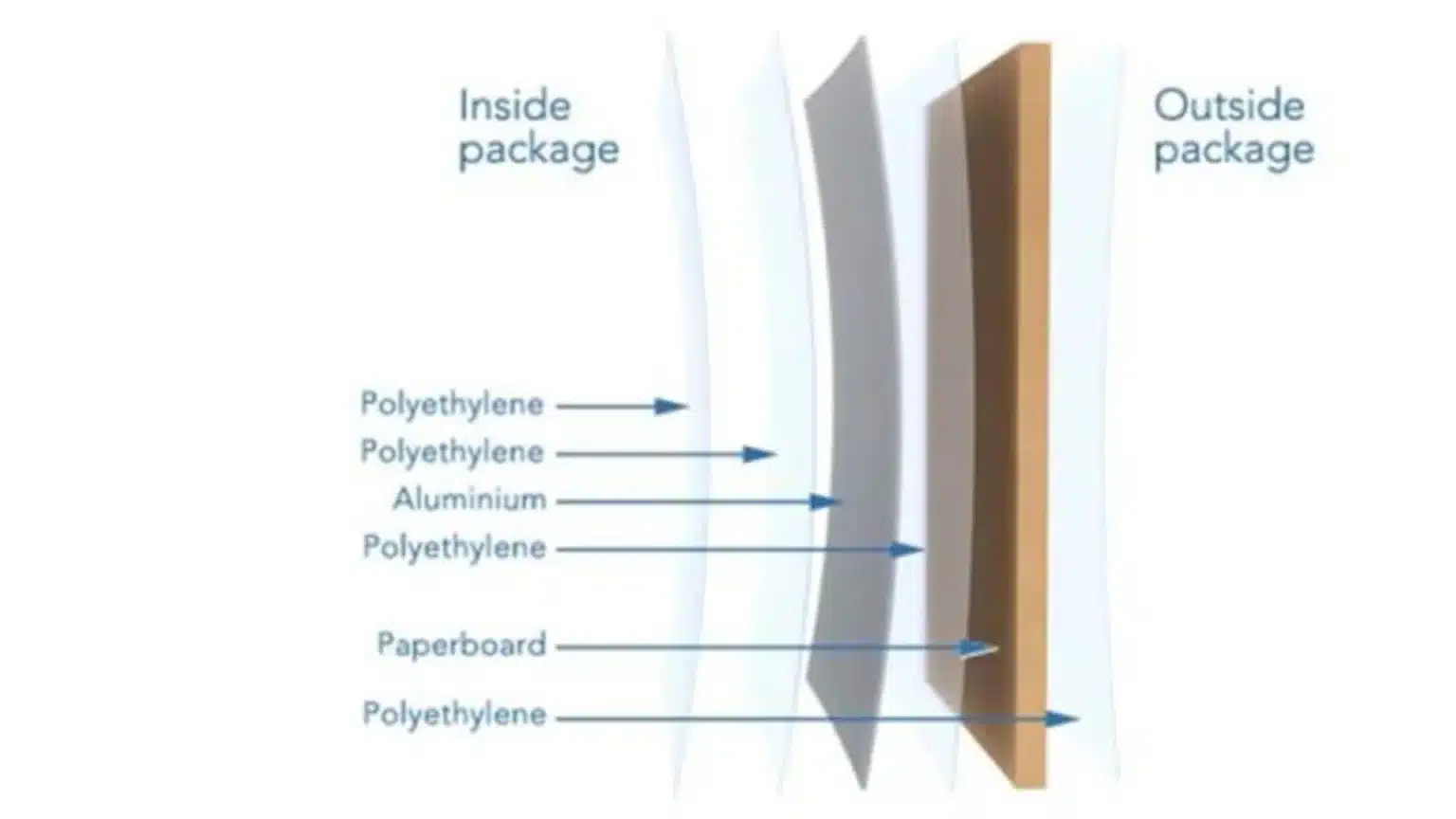
Στην εικόνα βλέπουμε ότι το Tetrapak αποτελείται από διαφορετικές “στρώσεις” διαφορετικών πολυμερών. Το χαρτί θα πρέπει να εκπλυθεί ώστε να μπορέσουμε να ανακυκλώσουμε το αλουμίνιο και το πολυαιθυλένιο. Για να γίνει αυτό, όμως, απαιτούνται εξειδικευμένα μηχανήματα και μεγάλες ποσότητες νερού και ενέργειας. Τα πιο πολλά κέντρα ανακύκλωσης δεν διαθέτουν αυτόν τον εξοπλισμό.

Σύμφωνα με το site της Tetrapak, το υλικό είναι 100% ανακυκλώσιμο. Αλλά αυτό ισχύει μόνο όταν το κέντρο ανακύκλωσης έχει τον απαραίτητο εξοπλισμό. Επίσης, θα πρέπει να δούμε και την απαιτούμενη ενέργεια για την ανακύκλωση κάθε υλικού και πόσες φορές μπορεί να ανακυκλωθεί.

Για παράδειγμα, το γυαλί απαιτεί πιο πολύ ενέργεια για να παραχθεί από ότι το tetrapak αλλά η ανακύκλωση του γυαλιού είναι πιο εύκολη και επίσης το γυαλί μπορεί να ανακυκλωθεί πολλές φορές.

Συνεπώς, η συνολική εικόνα όταν μιλάμε για ανακυκλώσιμα υλικά συσκευασίας, δεν είναι άσπρο – μαύρο, πράσινο ή κόκκινο. Υπάρχουν και καμιά τριανταριά αποχρώσεις του γκρι…


Monday, 4 March 2024

Όμορφος κόσμος… αγγελικά πλασμένος

από το cibum.gr

Την περασμένη Πέμπτη, έγραφα για τις στατίνες και τα κόλπα γύρω από τις πατέντες τους.

Σήμερα, ας δούμε ένα πολύ ενδιαφέρον άρθρο σχετικά με τα σύγχρονα “φακελάκια” που οι φαρμακοβιομηχανίες δίνουν “σε είδος” στους γιατρούς για να συνταγογραφήσουν στατίνες. (https://jamanetwork.com/journals/jamainternalmedicine/fullarticle/2520680)

Στην περίληψη του άρθρου διαβάζω (results) ότι η μελέτη επικεντρώθηκε σε 2.444 γιατρούς παθολόγους στην Μασαχουσέτη το 2011. Οι 899 (36,8%) έπαιρναν πληρωμές από τις εταιρείες, τις πιο πολλές φορές με την μορφή γευμάτων (σ.σ. μάλλον σε ακριβά εστιατόρια;) (71,1%). Αυτοί οι γιατροί συνταγογραφούσαν στατίνες σε ποσοστό 22,8% ενώ οι γιατροί που δεν ελάμβαναν αμοιβή συνταγογραφούσαν στατίνες σε ποσοστό 17,8%!

Για κάθε 1.000 δολάρια αμοιβής, το ποσοστό συνταγογράφησης των στατινών αυξανόταν κατά 0.1%.

Αμοιβές σχετικές με περαιτέρω εκπαίδευση (educational training) σχετίστηκαν με 4,8% αύξηση στην συνταγογράφηση των στατινών.

Όμορφος κόσμος…

Αγγελικά πλασμένος…

Friday, 1 March 2024

Log posts (XXVIII or κ'η')


Τα εγώ, ο προπονητής και η ομάδα...

= = = = = = = = = = = = = =  

 Killaloe, 1η Μάρτη 202

= = = = = = = = = = = = = = 

Τι είναι αμαρτία;

Ποιος ηθικός κώδικας υπάρχει σχετικά;

Έχει σημασία αν τα θανάσιμα αμαρτήματα ήταν επτά ή οκτώ;

Φυσικά, καμία.

Αλλά...

σήμερα ποια είναι η πιο μεγάλη αμαρτία στα μάτια μας;

Και το ρωτώ από την πλευρά του γονέα, του δασκάλου, του skipper...

Σε όλα όσα κάνουμε σε αυτήν τη ζωή,

ΣΥΝ-εργαζόμαστε με άλλους ανθρώπους, τον Θεό ή τον ...εαυτό μας.

Γι'αυτό άλλωστε...

και η λέξη "συγγραφέας" σημαίνει ότι γράφω κάτι μαζί με κάποιον άλλο...

τον εαυτό μας ή τον Θεό...

Και για να είναι ουσιώδης μια ΣΥΝ-εργασία, θα πρέπει να υπάρχει ενσυναίσθηση και αλληλοσεβασμός

Αλλιώς...έχουμε μεμονωμένα άτομα που κοιτάνε...

το προσωπικό τους συμφέρον

την προσωπική τους επιτυχία ή προβολή 

(αν και αυτή η προβολή είναι προΣβολή προς τα υπόλοιπα μέλη της ομάδας).

Ο εγωισμός και η αυτοπροβολή φέρνουν πίκρα και δηλητήριο,

στις σχέσεις της ομάδας...

και έτσι η ομάδα καταρρέει...

και καταντά ένα συνονθύλευμα εγωιστών...

Και οι πραγματικά μεγάλοι μαέστροι και προπονητές,

δεν αφήνουν τις πριμαντόνες να δηλητηριάσουν το ομαδικό πνεύμα...

Γιατί χωρίς αυτό το πνεύμα...

μηδενικό το αποτέλεσμα._


[Log posts on this blog are short texts/poems that I started writing in Oct 2018, I chose this name for these posts as Georgios Seferis has written poems using this title]


[Τα Log Posts σε αυτό το ιστολόγιο είναι σύντομα ποιήματα που ξεκίνησα να γράφω τον Οκτώβρη του 2018, διάλεξα αυτό το όνομα μιας και ο Γιώργος Σεφέρης έχει γράψει ποιητικές συλλογές με τίτλο "Ημερολόγια Καταστρώματος"]