Showing posts with label food safety. Show all posts

Thursday, 6 June 2024

Smoky bacon flavouring ban: Coveney lobbied EU over ‘financial implications’ for Irish firms


 European Commissioner Stella Kyriakides: In a March 27th letter, Simon Coveney said to her that industry had warned the decision to ban smoke flavouring could lead to the 'discontinuation of a wide range of products'. 


= = = = = = = = = =

 from the Irish Times


Kerry Group, which is one of the big players in smoked flavourings, claimed the changes ‘would impact’ more than €30bn worth of food products


The Government raised concerns that a recent European Union ban on certain types of smoke flavouring added to ham, rashers and smoky bacon crisps could lead to hundreds of products being discontinued, correspondence shows.

Last month, the EU approved a proposal to phase out various smoke flavourings currently added to meats and other food, such as sauces and crisps. Records show in the weeks beforehand, then minister for enterprise Simon Coveney lobbied for food producers to be given several years to stop using the current flavouring method.

In a March 27th letter to Stella Kyriakides, EU commissioner for food safety, Mr Coveney said industry had warned the decision could lead to the “discontinuation of a wide range of products currently on the market”.

There would be a “significant” impact on Irish food producers, particularly those in the meat-processing sector. “It is estimated that up to 300 products will be affected, with one individual company advising that 27 of their products would be affected,” he said.

Previous EU authorisation for the smoke flavourings had been rolled over for a 10-year period, which was due to expire. The decision to not renew permission for the flavourings had been proposed by the European Commission, the executive arm of the EU, and approved by countries, including Ireland, at committee level.

The move was taken after the EU food safety authority concluded toxicity concerns about the flavourings were “either confirmed or can’t be ruled out”. The current process, which food producers state is healthier than traditional smoking, involves purifying smoke and removing harmful components such as tar and ash, before the flavouring is added to food.

Producers will have two years to phase out the current method for adding smoke flavouring to crisps, sauces, soups and snacks, with a five-year window to stop using the method for flavouring ham, fish and cheese.

An analysis by Teagasc, the agriculture development agency, indicated that coming up with a new “replacement additive” to give products a similar taste would be “an uncertain and complex process”, Mr Coveney said. The semi-State agency had advised “that it would be almost impossible for industry to replace the smoke flavourings within the next three to five years”.

Mr Coveney told the EU commissioner it was “imperative” the period to phase out the current method was long enough to allow the sector develop new ways of adding the flavouring to food. A short transition period would have “significant” financial implications for Irish businesses and the availability of products, he wrote.

His letter, released to The Irish Times under the Freedom of Information Act, said the Department of Health, who were leading on the policy area, had requested “a minimum transition period” of two years.

Kerry Group previously warned the EU decision would cause “major economic harm” to the Irish food sector. In a January 30th letter to then taoiseach Leo Varadkar, the Tralee-based company said it estimated up to 40 per cent of the ham and bacon sold in Ireland depended on the flavouring method. Kerry Group, which is one of the big players in the smoked flavouring market, claimed the changes “would impact well over €30 billion worth of food products across the EU”.



Tuesday, 14 March 2023

Twelve years on from Fukushima’s horror, fishermen still feel the effects

 from the Irish Times.


From the port of Ukedo, Takeshi Takano can see cranes hovering over the metallic corpse of the Fukushima Daiichi nuclear plant a few miles south.

Twelve years ago, a tsunami destroyed this port, along with dozens of communities on Japan’s northeast coast, killing thousands of people and triggering a meltdown at the plant. Radiation seeped into the Pacific, forcing fishermen like Mr Takano to stay at home. “Our fish was poisoned and nobody would buy it,” he recalls.

The ban on local seafood was not fully lifted until 2020; the port finally reopened a year later. Now the fishermen face what they see as another existential threat. The plant operator, Tokyo Electric Power Co (Tepco), is about to begin releasing 1.3 million tons of treated contaminated wastewater into the Pacific. The plan, approved by the government, has infuriated them. “We’ve only just got back on our feet, so how can we accept this,” asks Mr Takano bitterly.

Wednesday, 30 November 2022

Meat can thaw on the counter, eggs should be stored in the cupboard, and other food safety myths

 source: the Irish Times


The often-used and hazardous sniff test is not a foolproof way to check if leftovers are safe to eat. It might be safer to give whatever is hiding under tinfoil at the back of the fridge a miss because when it comes to those cost-saving leftovers, there are a few rules to follow to avoid the potential of eating something that has either been stored incorrectly or is past its use-by date. For the majority of people, food poisoning is usually not that serious, but far from being simply an unpleasant experience, food poisoning has the potential to lead to long-term illness or death, making food safety a very important issue.

Storing, preparing and serving up food is awash with myths and misconceptions that can be dangerous, resulting in food poisoning. But do we really know what we’re doing in the kitchen, can we prevent cross-contamination and just how should we reheat those leftovers?

To dispel some of the most confused myths about food safety, Dr Mary Lenahan, technical executive of biological safety at the Food Safety Authority of Ireland, helps to set the record straight on how we can be conscious of how we store and prepare our food.

Myth – Leftovers kept for a long time are safe to eat

“Leftovers are a great way of making the most of your budget,” says Dr Lenahan, “however, if you decide to chill or freeze leftovers to keep for later, make sure that you are storing leftover food safely to reduce the risk of possible food poisoning. For example, uncooked rice and pasta can contain spores of bacillus cereus, a bacteria that can cause foodborne illness. These spores can survive even when rice or pasta is cooked. If the rice or pasta is left standing at room temperature for greater than two hours, these spores can grow into bacteria. These bacteria can then multiply and produce toxins (poisons) that can cause foodborne illness, the symptoms of which include nausea, vomiting and abdominal cramps.”

Tuesday, 22 March 2022

Οι καταγγελίες στον Ιρλανδικό ΕΦΕΤ (FSAI) και το HACCP

πηγή: cibum.gr

=============

Πριν από λίγες μέρες, διαβάσαμε στο cibum ένα εξαιρετικά ενδιαφέρον άρθρο σχετικά τις καταγγελίες Ιρλανδών καταναλωτών στον Ιρλανδικό ΕΦΕΤ (FSAI) κατά το έτος 2021.

Πάνω από 3.414 καταγγελίες καταναλωτών ελήφθησαν από τη Γραμμή Συμβουλών της Αρχής για την Ασφάλεια των Τροφίμων της Ιρλανδίας (FSAI) το 2021, με το 36% των καταγγελιών σχετικά με ακατάλληλα τρόφιμα και το 24% με χαμηλά πρότυπα υγιεινής. Συνολικά, οι καταγγελίες του 2021 σημείωσαν αύξηση 23% σε σύγκριση με το 2020. Το εν λόγω έτος σημειώθηκε σημαντική μείωση σε σχέση με το προηγούμενο έτος λόγω της COVID-19 και οι αριθμοί του 2021 είναι περισσότερο σύμφωνοι με τα στοιχεία πριν από την COVID-19 που ήταν 3.460 το 2019.

Από όλα έχει ο μπαξές: γυαλί σε κουάκερ και chips γλυκοπατάτας, μαλλιά σε πολλά takeaway  τρόφιμα, μέταλλο σε ψητά φασόλια, σκουλήκι σε σούπα και μια μεταλλική βίδα σε χοιρινά παϊδάκια!

Αυτές οι καταγγελίες δείχνουν ότι τα συστήματα HACCP δεν δουλεύουν με επάρκεια. H συνεχής αξιολόγηση του συστήματος HACCP είναι το ζητούμενο.

Για να επιτύχουμε μέγιστα επίπεδα ασφάλειας στα προϊόντα που παράγουμε θα πρέπει να θυμόμαστε ότι:

  1. Το σύστημα HACCP είναι και νομική απαίτηση αλλά και απαίτηση του σύγχρονου επιχειρείν,
  2. Η πιστοποίηση της εταιρείας για ISO22000 είναι ένα εξαιρετικά χρήσιμο εργαλείο για να αποκτήσει η εταιρεία μας κουλτούρα πιστοποίησης και αυτο-αξιολόγησης, όπως πολύ εύγλωττα επισήμανε πριν από λίγες μέρες ο κ. Πελτέκης σε συνέντευξή του στο cibum.

Monday, 11 September 2017

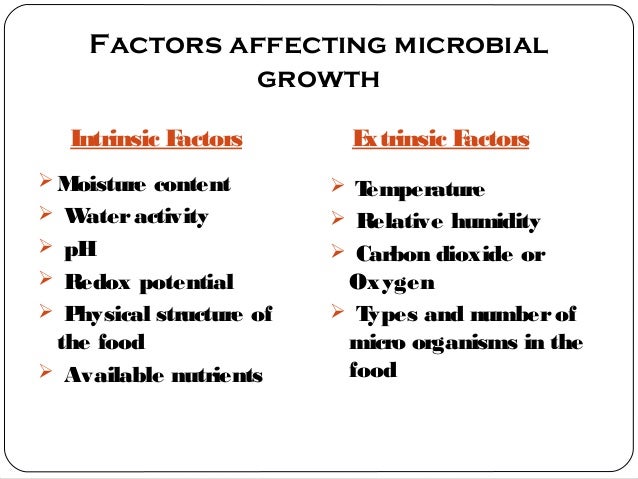
food safety and microbial growth


and now...
let's compare the intrinsic factors of:

1. almonds / strawberries
2. mussels / fish fillet
3. milk / yogurt

Thursday, 31 August 2017

open or close ended questions?


While preparing coursework for Semester 1 at UL, this is the dilemma of the day: open ended or close ended questions? I would go for a mix...
The focal point this year at FT4447 [Food Quality and Safety, Hazards, HACCP, ISO9001 and ISO22000: Food Quality ] is going to be two recent food scandals in EU:

1. horse meat and bute and

2. eggs and fipronil

Repeating the same/similar mistakes is not a good sign for the food industry in EU.
Any lessons learned this time?
Doubtful...

Yannis


Wednesday, 15 March 2017

Chemicals: risk assessment


The identification of hazards, the evaluation of their risks and the putting in place of control measures to secure the health and safety of employees is a major element for managing health and safety under the Safety, Health and Welfare at Work Act, 2005.
The Chemical Agent Regulations 2001 point out the specific requirements necessary to complete a Chemical Agents risk assessment of the chemical agents used in the work place.  

The Risk Assessment steps:
  1. Identify the chemical hazards.
  2. Consider who might be affected and how they might be harmed.
  3. Evaluate the risks,- what are you doing now and what further precautions are needed?
  4. Document and implement your findings.
  5. Update and review as required.


    [further reading here]


Wednesday, 26 October 2016

Invested interests and Public Health


What is more important : Invested Interests or Public Health?
Do not rush your answer...
Read this story first...
and now... if you think that Public Health is more precious...please sign this petition.