
26.3.2020: The US Environmental Protection Agency (EPA) has suspended its enforcement of environmental laws during the ongoing coronavirus outbreak, signaling to companies they will not face any sanction for polluting the air or water of Americans.In an extraordinary move that has stunned former EPA officials, the Trump administration said it will not expect compliance with the routine monitoring and reporting of pollution and won’t pursue penalties for breaking these rules [1].
27.3.2020: The European carmakers’ association, ACEA, and other groups
representing the supply chain called on the EU to delay implementing
regulations because the pandemic had affected its “plans to comply”.
Laws due to come into effect include tougher targets on vehicle CO2 emissions. In a letter to the EU commission president, Ursula von der Leyen, the
groups said production and sales of cars had stalled in many countries
and companies were facing a cash crisis. European laws on CO2 emissions of new vehicles have applied since 2015 and a further tightening of the rules is due in January 2021 [2].
Covid-19: mechanism of action
Covid-19 causes
in the human body a phenomenon called acute inflammation; this is coined as a “cytokine storm”: the
virus attacks the immune system and a flood of immune-related chemicals are
formed causing acute inflammation.
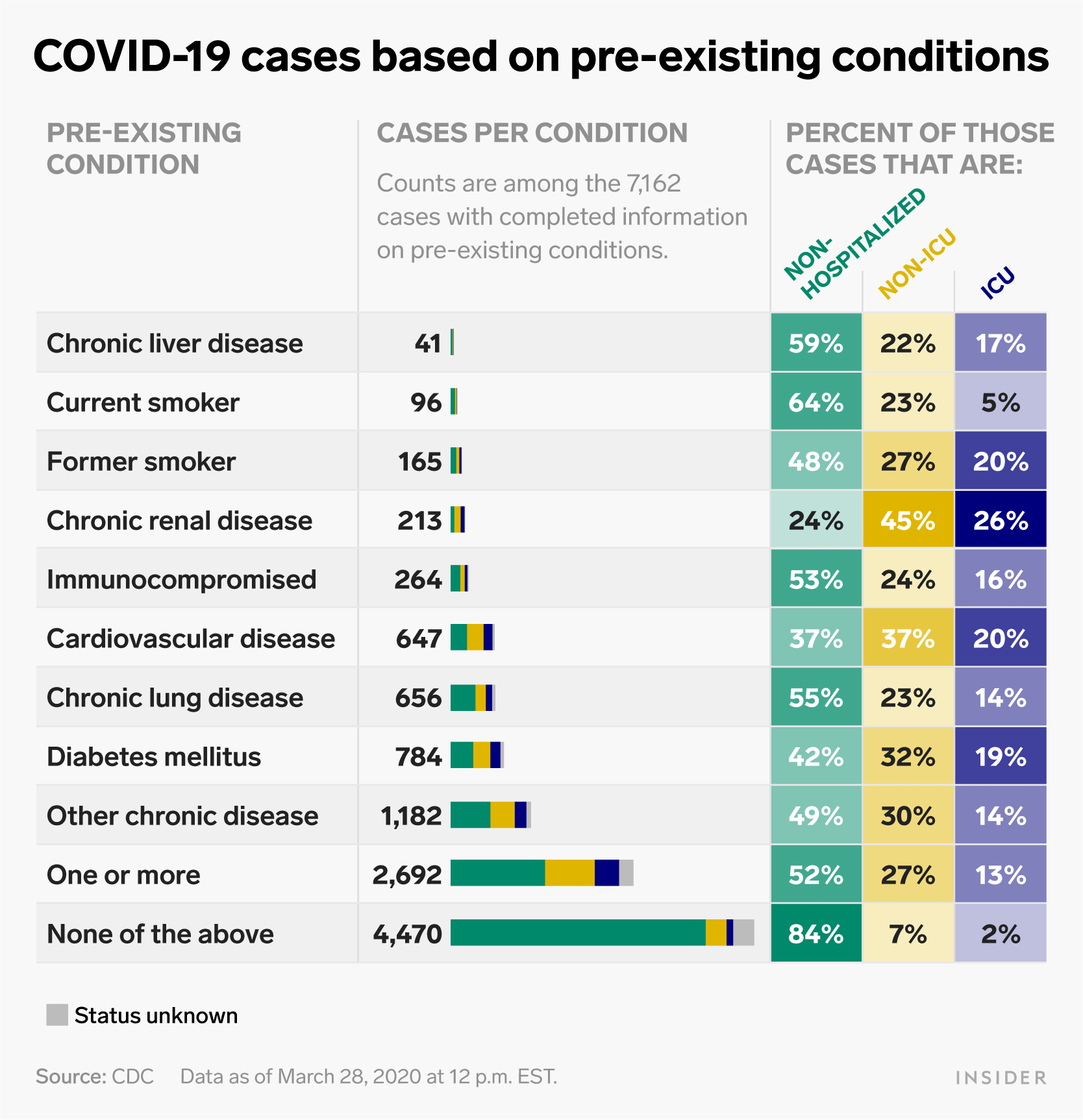 |
| source: https://www.sciencealert.com/more-than-70-of-americans-hospitalised-with-covid-19-had-at-least-1-underlying-health-condition-the-cdc-says |
Covid-19 and air pollution
Researchers from Harvard’s T.H. Chan School of Public Health noticed that many conditions known to contribute to more severe COVID-19 outcomes are also known to be caused by long-term PM2.5 exposure.They analyzed data from 3,080 counties in the United States; adjusted for variables including population size, number of people tested, weather, obesity, and smoking; averaged PM2.5 exposure over 2000–2016; and looked at COVID-19 deaths as the outcome. An increase of only 1 microgram (μg) per cubic meter (m3) of PM2.5 is associated with a 15% increase in the COVID-19 death rate [4].
Concluding...
Pollution can have a great impact to human health; we know that from Minamata and Hinkley. Now, we have requests from polluters to pollute more and also official monitoring agencies to allow it...resulting to more deadly pollution. Is this wise management?
References
[1]
https://www.theguardian.com/environment/2020/mar/27/trump-pollution-laws-epa-allows-companies-pollute-without-penalty-during-coronavirus
[2]
https://www.theguardian.com/business/2020/mar/27/carmakers-accused-of-using-covid-19-weaken-environmental-laws
[3]
https://www.sciencealert.com/more-than-70-of-americans-hospitalised-with-covid-19-had-at-least-1-underlying-health-condition-the-cdc-says
[4] https://eos.org/articles/air-pollution-can-worsen-the-death-rate-from-covid-19

No comments:
Post a Comment