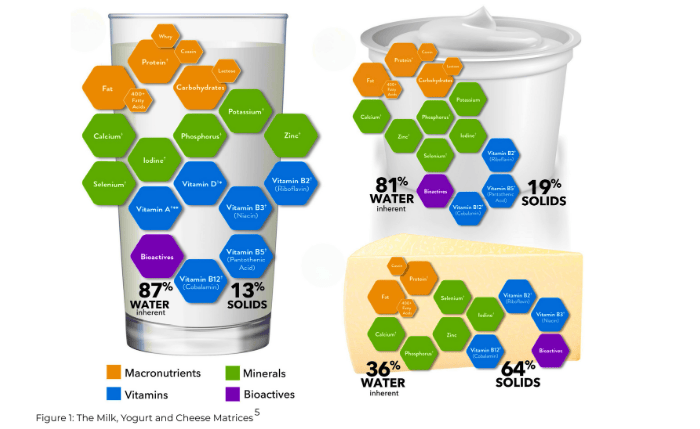
The picture is from here. Exploring the Power of the Food Matrix in Health Outcomes
= = = = = =
This is a topical paper on the food matrix.
Abstract
Background
Dairy foods are a rich source of nutrients such as protein, calcium, iodine and riboflavin, which are important for biological processes and health. Several of these nutrients have been highlighted as nutrients of concern, with suboptimal intakes reported globally. In Ireland, the dairy food category is a key contributor to these nutrients; however, suboptimal intakes are observed in some subpopulations which may have longer term health implications. Current dietary guidelines recommend ~3 dairy servings/day with low-fat varieties often recommended, as dairy fat contains >60% saturated fat which has been linked to elevated cholesterol concentrations and increased cardiovascular disease risk. However, more recent evidence indicates full-fat dairy foods may have neutral or beneficial effects on cardiovascular health, including lipid and glucose metabolism, blood pressure and anthropometry.
Aim
This article reviews the published evidence linking the dairy food matrix and health, with a focus on the Irish perspective and future diets.
Major Findings
The dairy food matrix, the interaction of dairy food structures and the nutrients contained within, is thought to influence this relationship. Several mechanisms of action have been described that may act in concert, including insoluble calcium soap formation, fat globule size, bioactive compounds such as polar lipids, as well as probiotics from the fermentation process during cheese and yogurt manufacture. Furthermore, the debate around the full-fat and low-fat dairy and health is an emerging topic, particularly in relation to food-based dietary guidelines. However, while the impact of dairy food intake on human health has received much attention, current and future research and practice must also consider environmental and planetary health.
Implications
As a rich source of several nutrients important for health and with the potential for improved environmental metrics across the food system, dairy has an important role to play in future, sustainable diets, both in Ireland and globally.
= = =
Our comments on this : dairy fats have no impact on CVD as we are writing here.
In general, evidence suggests that milk has a neutral effect on cardiovascular outcomes but fermented dairy products, such as yoghurt, kefir and cheese may have a positive or neutral effect. Particular focus is placed on the effects of the lipid content on cardiovascular health.
= = =
Our opinion on this topic is here.
The Abstract of my paper is this:
Abstract
Milk and dairy products have been consumed for thousands of years and their impact against chronic diseases has been extensively studied. However, there is no clear understanding yet of the link of dairy lipids (e.g. triglycerides, polyunsaturated fatty acids and phospholipids) with inflammation and how the food matrix impacts this link. Fermented dairy products (e.g. yoghurt, kefir, cheese) have strong anti-inflammatory activities and these activities are discussed here in relation to the structures of their lipids and the food matrix. Dairy lipids are particularly effective against a number of diseases that develop over a number of years and coined as chronic diseases (i.e. cardiovascular diseases, cancer, stroke, high blood pressure, obesity, metabolic syndrome and diabetes mellitus type 2). Today there is some understanding as to the underlying mechanisms of how dairy lipids inhibit chronic diseases, the biochemical pathways that are involved in the development of chronic diseases and also on how to control them and ultimately inhibit them. The role of dairy lipids against the onset and development of these diseases is vital and it is discussed here. This article addresses the lack of a clear link between dairy lipids, food matrix and chronic diseases and suggests ways of future research.
= = =

No comments:
Post a Comment